Andrea Lorenzo Fernández
Guest Writer
Imagine waking up tomorrow and discovering that you cannot access your savings. Your card does not work, you cannot withdraw cash, and the money you need for everyday expenses is suddenly out of reach. What would you do?
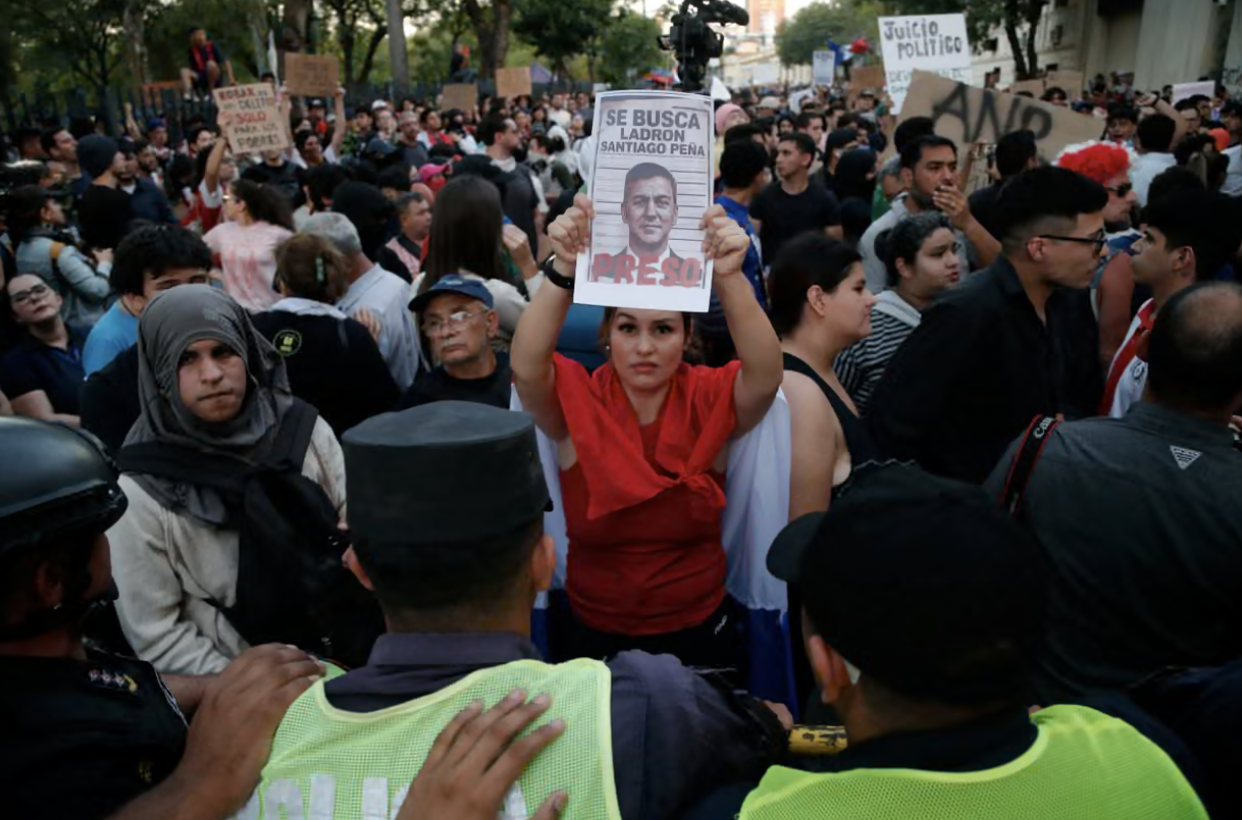
For around 2.94 million customers of Paraguay’s Ueno Bank, this became a reality after the country’s central bank intervened on November 3. What started as a banking crisis soon became a political one, leading to the removal of President Santiago Peña and leaving many people wondering when they would get their money back.
The central bank intervened because Ueno was facing serious financial problems that affected its ability to meet its obligations. Customers could no longer withdraw money or use their cards. Public institutions also had money in the bank, making the consequences even wider. Thousands of people protested, demanding access to their savings and answers from those responsible.
But behind these numbers are people with bills to pay. For a family that needs to buy food, pay rent or afford medicine, being unable to use its savings is not just a banking problem. It becomes a problem at home.
There is an important difference between losing money permanently and temporarily losing access to it. Still, that difference offers little comfort when a payment is due today.
From a Banking Crisis to a Political Crisis
On Nov. 6, all 44 senators present voted to remove Peña from office. Lawmakers accused him of using his influence to direct public money toward Ueno while regulators failed to act against risky lending. Peña, who previously owned a stake in the bank’s holding company, has denied wrongdoing.
Following his removal, prosecutors ordered his arrest as part of a criminal investigation. However, being removed from office does not mean that he has been found guilty of a crime. That is a separate question for the courts.
Vice President Pedro Alliana then became president and will complete the term ending in August 2028. He now faces a difficult task: helping people recover their money while rebuilding trust in the government.
Will the Government Keep Its Promise?
After taking office, Alliana promised to compensate those affected.
“Our fellow citizens who are going through a difficult time as a result of the financial collapse will be fully compensated. We will not leave them alone,” he said, according to EFE, in remarks translated from Spanish. He also promised to prioritize people with fewer resources.
It is a strong promise. But a promise is not the same as money arriving in someone’s account.
Some customers began receiving payments on Nov. 5, starting with balances of up to 10 million guaraníes, approximately $1,600. Deposit insurance protects around $37,000 per depositor, which the central bank says covers nearly all Ueno customers. However, this does not mean that everyone will immediately recover everything.
Important questions remain. When will people receive their money? What happens to those whose deposits exceed the insurance limit? Where will the money for additional compensation come from?
These questions are not necessarily a rejection of Alliana’s promise. They are a reason to demand a clear plan.
Paraguay’s crisis shows how closely banking and politics can be connected. A change in president may be an important step toward accountability, but it does not pay a family’s bills.
For those affected, recovery will mean more than a new leader or a hopeful speech. It will mean being able to use their money again—and having a reason to trust the institutions meant to protect it.
Copy edited by Joshua Rosenberg ’29
Featured image courtesy of César Olmedo/Reuters
Leave a Reply