Fiona Greaney ‘29
Staff Writer
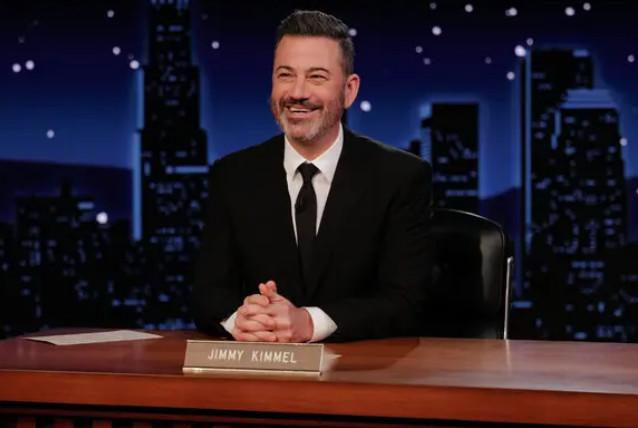
The most shocking part of the suspension of The Late Night Show was not the current administration’s restriction on free speech, but people my age caring about Jimmy Kimmel. As a native New Yorker, Kimmel would often show his face to me on the sides of buses and fronts of benches, but never on television. I have never seen a full episode of Jimmy Kimmel Live!, and I cannot say I have ever interacted with the thirty-second clips on my Instagram feed he sometimes finds himself in.
(Quick pause—if you are interested in suspension and censorship in the Late Night realm, please redirect yourself to Kimberly Von Randow’s article titled “Big Brother is Watching Jimmy Kimmel—And You!”)
Late Night used to define the culture. It told Americans what to wear, who was famous, what was funny, and what was worth talking about in the office or class the next day. These franchises made millions per episode just a few short decades ago. But now these titans of culture are on the verge of going extinct. The Late Show With Stephen Colbert is set to make its last appearance in May of 2026.
So how did we get here? Financially, these shows have been leaking money for years. The format of Late Night television requires a high fixed cost. An episode of Jimmy Kimmel Live! takes 300 staffers to put on, regardless of how much money the show brings in. Telecommunications created Late Night, then proceeded to stab it in the gut. With the advent of the internet, the business model can no longer be sustained. Advertisers are less likely to support shows on this model because of recording devices that allow a viewer to skip through ads and the fact that less and less people are watching television. Late Night shows tried to adapt as best they could by posting clips from their own shows, but platforms like YouTube keep most of the revenue from advertisements, which is a problem for a business with a high fixed cost.
Even if the business model of Late Night television was sustainable, people under the age of 60 wouldn’t tune in the same way they used to. Entertainment culture is no longer monolithic in America. Thousands of subcultures exist in the virtual realm, and algorithmic targeting guides individuals into their niche corners and coaxes them into staying put.
The comedy of Late Night television is predominately targeted at liberal, big-city dwellers over the age of 60. Since 2016, hosts with similar sounding names (looking at you three, Kimmel, Conan, and Colbert) have exhausted the “funny orange president” bit. Sometimes people want to hear a different opinion. Just look at the Joe Rogan Experience— the podcast reached 27.7 million views in August alone, which makes The Late Show With Stephen Colbert’s 2.182 million viewers look puny.
Late Night needs to change. The genre is losing relevancy, and it is losing it fast. Short-form content may be the way to go, but legacy media would be sacrificing the grandeur of their programs, as well as the large staff that depends on the production aspects. Colbert will see the end of his run in May of 2026, and I’ll bet he is not the last to go. Either way, most of us are not spending the last hours of our day with Kimmel, Conan, or Colbert. We are probably asleep, studying, or watching reels where people are funny without a 300 person staff.
Featured image courtesy of The New York Times
Copy Edited by Gail Durkin ’26

Leave a Reply