Brigid O’Malley ‘29
News Editor
In 1838, the Jesuits of Maryland, then one of the largest slaveholding institutions in America, sold 272 enslaved people to pay off debts from opening Georgetown University and to continue establishing its order of Jesuit colleges. The transaction outraged Catholics at the time and led to the exile of its key orchestrator, Thomas F. Mulledy, until 1843. On his return, Mulledy became the first president of the College of the Holy Cross.
It is this context that frames the reintroduction of the Dignity and Reconciliation Committee, charged by the president to “[engage] in a process of research, learning and reflection about the ties that the College has to the injustice of slavery.” Holy Cross is not alone in this effort, with Georgetown, Loyola Maryland, and Saint Louis University having taken public steps to confront their histories, particularly after journalist Rachel Swarns’ research revealed the depth of Jesuit entanglement in slavery.
As co-chair Kyle Woolley explained, “As a Jesuit Catholic liberal arts institution that’s part of a 500-year tradition that really centers the full dignity of each human person, this work is an expression of that tradition that we claim as Holy Cross, and that is one of the reasons why it is just central to the work we do.”
Holy Cross has taken steps to reconcile with its history before. In 2016, the Mulledy-Healy Legacy Committee examined the College’s past, leading to the renaming of former Mulledy Hall to Brooks Hall in 2020. Still, beyond these gestures, much of the College’s history remains unknown to students.
Co-chair Tomicka Wagstaff noted that, for many on campus, this will be their first real encounter with Holy Cross’s past. “The community of Holy Cross itself hasn’t really had exposure to the information… so really this is an education point,” she said. She added that the committee is committed to confront, rather than avoid, the discomfort this history brings: “We’re not hiding behind our history or trying to brush past it … we’re willing to dive deep into something that can be uncomfortable for some, difficult for some, and have those conversations and do the hard work that it takes to get to a point of reconciliation.”
This fall, the committee will host a two-day program on Oct. 8 and 9, designed to educate faculty, staff, and students on the legacy of the Healy family and to ask how the College can abide more fully by its Jesuit principles. The committee hopes to expand this work through future programs, including hopes to bring descendants of the enslaved to campus to share their perspectives. “This is just opening the door for what’s to come,” Wagstaff said. “There are endless possibilities and opportunities just from what we already know.”
The co-chairs shared their hope for education while cautioning that reconciliation cannot be denoted from above. “Who decides how reconciliation occurs?” Woolley asked. “The way in which that process happens cannot be top down.” For this reason, the committee emphasizes student and community engagement; an invitation to participate in shaping what reconciliation might mean at Holy Cross.
For Wagstaff, the importance of this work lies not just in history but in how the College chooses to handle it now. “There are a lot of rumblings about what our history may or may not be, who it may or may not have impacted and what that means for us moving forward,” she said. She hopes that hosting difficult conversations in an open forum will “show the students that we are open to having difficult conversations, that we’re not hiding behind our history … that we’re willing to confront it.”
The Dignity and Reconciliation Committee works, now, towards exposure. It aims to show the campus its history and to begin to reflect on what reconciliation might look like, both in terms of slavery and relations with indigenous people. What it does not yet do is outline concrete reparative actions.
That fact raises a pressing question: Will this committee be a foundation for change, or will it remain an exercise in dialogue and reflection? For now, Holy Cross begins with education. Whether it chooses to go further will determine how meaningful this confrontation with its history truly is.
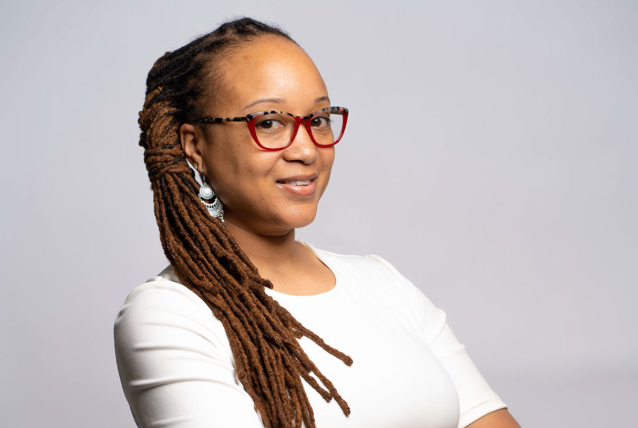
Featured image courtesy of Holy Cross Magazine
Leave a Reply