Ian Sykes ’28
Staff Writer
After the death of Charlie Kirk, I made the mistake of opening Instagram. Before even knowing what I was about to watch, I saw the video. A fountain of blood poured like none other out of his neck, and his lifeless body slumped to its side. It was a horrific sight that I do not have the privilege of unseeing. A human life gone instantly.
Making another mistake, I opened the comments. In those comments was a microcosm of the internet that day; there was an eruption of both nationalistic calls for martyrdom and of cynical celebrations of his death.
Why are we so extreme?
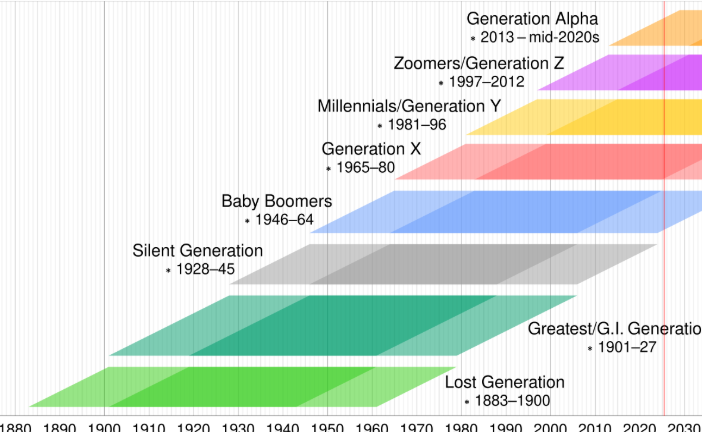
I believe that this is because Gen. Z demands a seismic reset of a system that they feel fails them on a regular basis. As a generation that has been confronted with a system that appears to be working for anyone but them, Generation Z has found that “playing the system” doesn’t work anymore.
Take issues like the cost of living, for example. Over time, but especially in recent years, the cost to simply live in America has skyrocketed, and much of Gen. Z feels like the ability to progress has fallen flat. For a country which prides itself on the “American dream” being accessible for all, Gen. Z feels like that dream was sold to the highest bidder by a failing system. When the ability to live a life sustainably is stolen, it only makes sense that extreme “solutions” become more palatable – like death.
What does death mean to us?
The way Gen. Z perceives death encapsulates how we perceive politics. In a world where school shootings, global pandemics, climate-related natural disasters, and blatant genocides are an everyday reality, death loses its importance. Death becomes nothing more than a statistic on a screen, and life takes on a nihilistic perception. When death becomes trivial, life becomes unimportant. When life becomes unimportant, politics become violent.
As such, death becomes a political reality – even a solution reasonable to some. We are a generation that supports unprecedented amounts of political violence. Naturally, if it’s so hard to make change within the system, why not cheat the system? If the system and its institutions are so worthless, why wouldn’t measures as extreme as death become more popular means of fixing it?
Social media has allowed us to see death more than ever before. 94% of Gen. Z uses social media daily, and as such, there is no doubt that our perceptions of the world have begun to devolve into what we see on it.
Through an algorithm perpetuated by an endless engagement cycle and a profit motive, social media fails to express the nuance behind our humanity. After all, reasonable takes don’t get famous. Social media devalues our humanity into not only a binary of 0s and 1s, but also into a moral binary that presents complicated moral and political dilemmas into seemingly simple problems– problems that only seem solvable with pure destruction. The Gen. Z, far-right reactionary Nick Fuentes put it best in a clip: “You know what? I don’t care. I just want to watch it all burn down.”
However, it doesn’t have to be this way. Ask yourself: what is stopping you from putting the phone down, like St. Ignatius did with his sword? Let’s take a look away from our screens and instead look at each other. Let’s embrace our humanity and move forward in this world together. In death, we are divided. Only in life are we together.
“The pen is mightier than the sword.” – Edward Bulwer-Lytton
Featured image courtesy of Wikipedia
Copy Edited by Gail Durkin ’26
Leave a Reply