Finley Cowan ‘30
Staff Writer
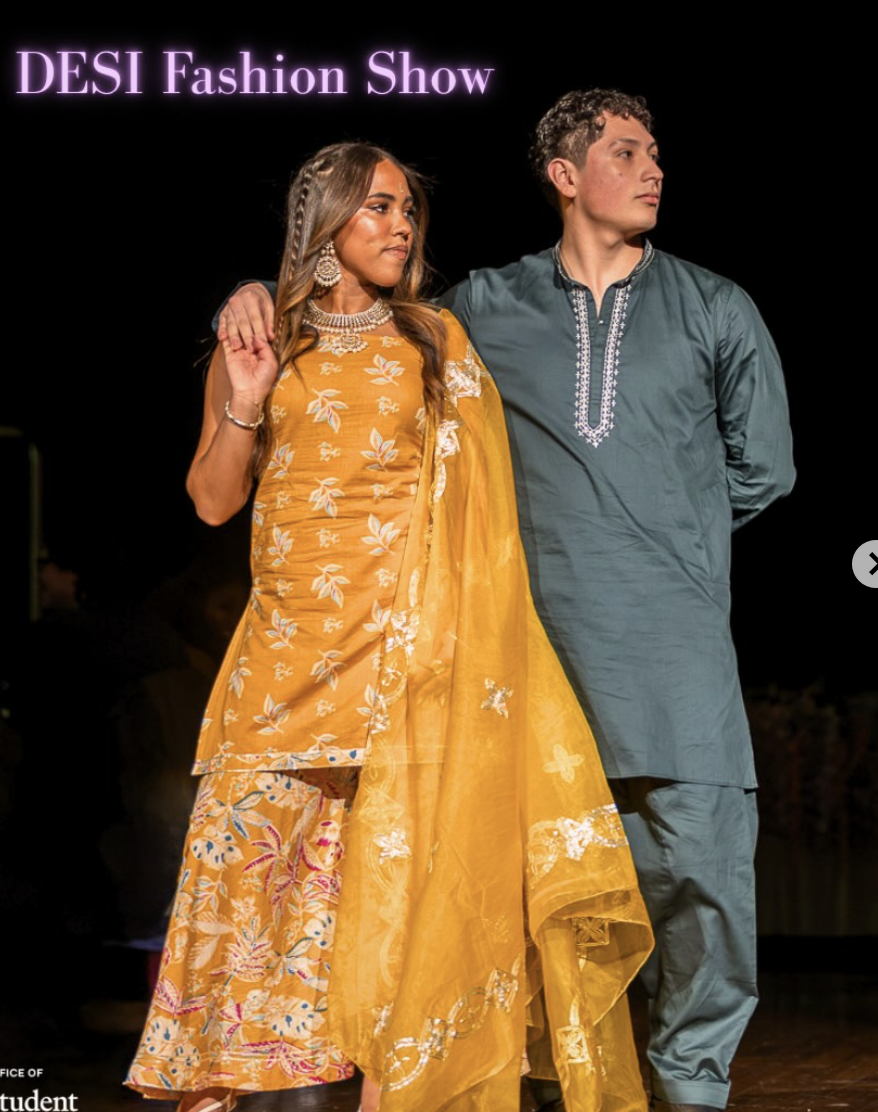
On Friday, Nov. 13, 2026, student organization Developing and Educating South Asian Ideologies (DESI) held its annual Fashion Show, with the tagline “Echoes of Time.” Taking place in Hogan Ballroom, attendees were immediately presented with a buffet of traditional Asian dishes such as chicken, curries, and rice. Inside the ballroom, the ambiance was in low lighting, with flowery elements decorating the tables. The show displayed the evolution of South Asian clothing from traditional and formal to modern streetwear while adding fun opportunities for audience participation as well as cultural performances.
Once dinner concluded, the two announcers appeared on stage and spoke about the purpose of the show and what would be presented. They spoke about how South Asian culture has changed throughout the years after British colonization and other Western influences, as well as highlighting the amount of diversity under that cultural umbrella.
The first act was titled “Virsa,” meaning heritage in Punjabi, and presented the core traditions and artistry that have been passed down through generations. It was meant to showcase where many of today’s trends originate from and how they transform. Many of the outfits were long, flowy, and consisted of pastel and muted darker colors. Additionally, silver and gold designs lined the edges of each garment, and jewelry of the same nature was worn by most of the models. The women wore traditional sarees and lehengas, while the men were styled in salwar kameez and Jodhpuri suits. Ceremonial fashion is important because it embodies some of a culture’s most sacred traditions.
Moving on, the second act by the name of “Rozana,” which means everyday in Urdu, explored almost the opposite of the former with simpler and common themes of life. The outfits had similar colors, but much less embroidery, and represented what you would see on some of the streets of South Asia. Sarees and salwar suits were yet again present, just in a more casual style. Everyday kurta sets were also a common theme throughout the act. This exemplifies the significance of day-to-day fashion because it was presented with the same respect as the fancier designs.
Following the second act, there was a wonderful performance from Holy Cross’s KXPLOSION, a K-pop dance group that celebrated modern South Korean dance culture.
The third act, named “Naksha,” translating to pattern from Bengali, celebrated the reimagining of traditional attire contemporarily. By taking regular designs from delicate nature to inspirational embellishments, a connection is formed between past and present history. With more Western influence in each outfit, it is proven that traditions can be reimagined without losing their core. This act finds new life in valuable traditions and implements it into modern culture.
During the next intermission, another dance group called ROOTS performed a mix of traditional Afro-Caribbean dance and modern African music.
Finally, the fourth act titled “Andaaz,” meaning style or manner of expression in Hindi, presented the South Asian cultural identity inspired by Western streetwear. Many outfits consisted of casual materials and urban styles, but with touches of cultural elements. The section embodied how important it is to recognize and reference older traditions along with creating new trends and fashion statements. They do not have to remain separated; they can blend and mold an entirely new and relevant style that encompasses incredible history.
This fashion show exemplifies the multitude of cultures that influence our everyday trends and apparel. Popular styles integrated with traditions from all over the world represent world unity, the blending of cultures, and a collective interest in preserving traditional heritage.
Copy edited by Lauren Zerella ‘29
Featured image courtesy of @hc_osi on Instagram
Leave a Reply