Drew Butler ‘29
News Editor
As vote tabulations and recounts occur across the nation, the party composition of both chambers of Congress for the next two years is becoming clearer. In the past week, Democrats have flipped another U.S. Senate seat in the state of Mississippi. Democratic challenger Scott Colom has defeated incumbent Republican Cindy Hyde-Smith by roughly one percentage point.
In Alaska’s Senate race, Democrat Mary Peltola is well-positioned to defeat incumbent Republican Dan S. Sullivan. Peltola leads the race with 49.9% of the vote, just shy of the over 50% mark that is needed to win outright, since the state operates under a ranked-choice voting system. It remains to be seen whether outstanding ballots will pull Peltola over 50% or if the race is headed to ranked-choice ballots, where Peltola is likely to be victorious. With a win in Mississippi’s Senate race and a high probability of flipping a Republican-held seat in Alaska, Democrats are projected to win 56 Senate seats, a nine seat net-gain.
In the U.S. House, nine races are undecided. Currently, Democrats have won 256 seats, while Republicans have won 170 seats. Republicans have only flipped one Democratic-held seat in the entire nation. After ranked-choice tabulations in Maine’s Second Congressional district, Republican Paul R. LePage defeated Democrat Matt Dunlap by roughly two points. Two of the remaining House races are in Louisiana, both of which are going to runoffs in December. Of the outstanding seven seats uncalled, Democrats lead in House elections in North Carolina, Tennessee and Minnesota while Republicans have an advantage in North Carolina, California and Alaska.
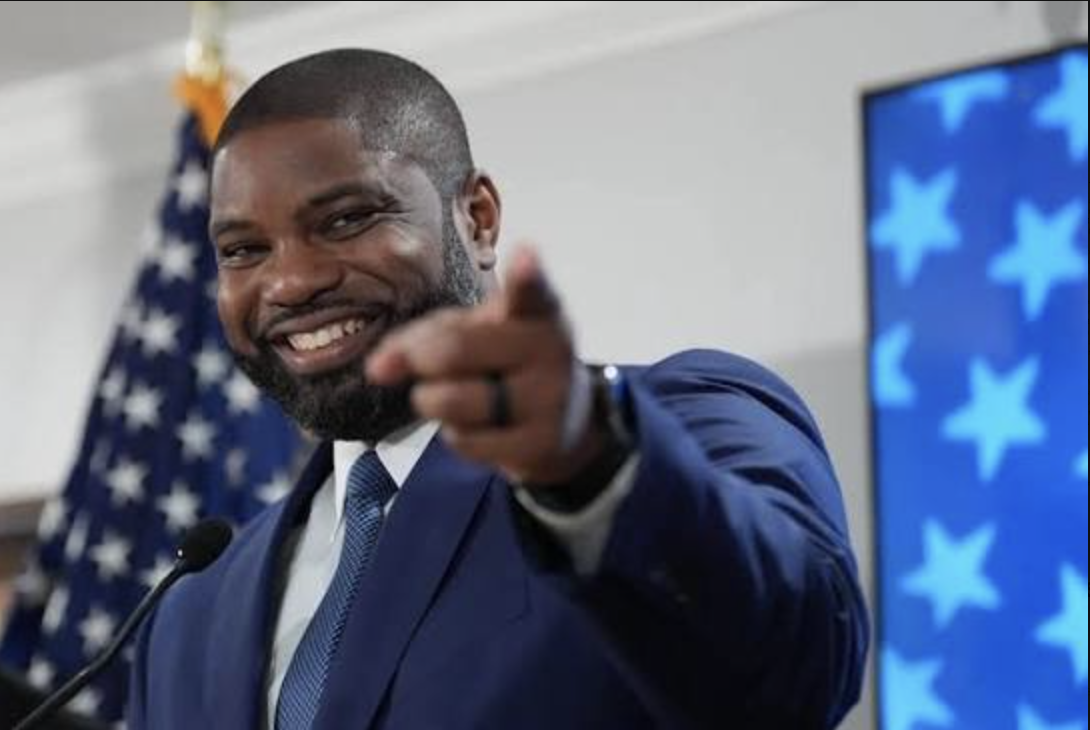
While Democrats won in a landslide fashion from coast-to-coast, Republicans did have a bright spot in the state of Florida. In the U.S. Senate special election to finish Secretary of State Marco Rubio’s term, appointed incumbent Republican Ashley Moody defeated Democratic State Representative Angie Nixon. Moody won by more than 200,000 votes, a roughly 3-point victory. In the gubernatorial race, Republicans also secured a key victory in the open race to succeed term-limited Governor Ron DeSantis. Republican Byron Donalds, a congressman from the Naples area, defeated Democrat David Jolly, a former Republican congressman who became a Democrat last year. Donalds won the election by roughly 100,000 ballots, a 1.3% margin.
Florida’s gubernatorial race also features a Holy Cross connection. Governor-elect Donald’s son, Damon, is a Holy Cross class of 2025 graduate. Damon Donalds majored in economics and played on the football team as a defensive lineman. During his senior year, he appeared in 11 football contests and was highlighted for a blocked kick in the Crusaders’ win at Lafayette on October 26, 2024.
With the Midterms in the rearview mirror, attention is now turning to the 2028 presidential election. Post-Midterm polling reveals that for the Republican nomination, three candidates are frontrunners: Vice President JD Vance and Floridians Marco Rubio and Ron DeSantis. According to a recent “Economist/You Gov” poll, Vance leads among primary voters with 41% of the vote, followed by Rubio with 34% and DeSantis with 12%. At this moment in time, the Republican nomination is wide open since there is no clear frontrunner; however, both Floridians are polling cumulatively at roughly 46% of Republican primary voters.
After a challenging Midterm cycle, Republicans will be forced to rebuild their messaging and coalition of voters over the course of the next two years. Will Vance be heir to the Republican nomination, or will a Sunshine Stater be the leader of the Republican Party for the 2028 presidential election?
Copy edited by Lauren Zerella ’29
Leave a Reply