Finley Cowan ‘30
News Writer
In the Hogan Ballroom last Wednesday, the fall semester Dialogue Dinner took place, where abolition in the 21st century was discussed and what slavery reparations should look like. However, the night also established Holy Cross’s connection to slavery and how it funded our education.
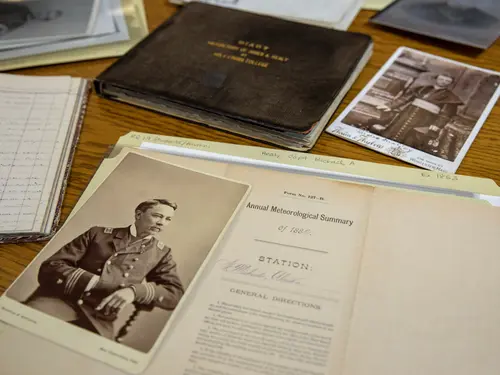
Before the discussion, host Mike Bonner introduced us to the Healys, the family that enormously expanded Holy Cross in its early years. The Healys were a family of ten children born to their biracial enslaved mother, Mary E. Smith, and their White father and enslaver, Michael Healy. In an effort to give his children a better life, Healy shipped his kids from their Georgia plantation to the free state of Massachusetts, where five of them passed as white and began their studies at the newly founded College of the Holy Cross. They had to take on white identities to preserve their safety and status in society. The eldest, James Healy, followed by his brother Patrick, graduated as some of the first valedictorians and pursued Catholic positions with the college post-graduation.
However, in their quest to pass as Caucasian, they lost touch with their true identities and became resentful of other African Americans. In his diary, James expressed his distaste for the growing abolitionist movement in Worcester and made no effort to support it. Additionally, any letters or visits in relation to their father failed to mention their mother, so that side of their family had become fairly extinct in their day-to-day lives.
In 1855, however, there was a devastating fire in Fenwick Hall – which was the only academic building at the time – that destroyed the majority of the building. In an attempt to restore it, Patrick Healy donated $2,500 of his father’s inheritance and covered a notable percentage of the funding. However, a large portion of his inheritance was 51 enslaved people his father owned before he died. A year before the fire, he no longer wanted to hold them, so he sold his entire inheritance for $29,876, which equates to almost $89,000 in present-day currency. Additionally, many of the first students at Holy Cross were from slave-owning families, so tuition was often paid for by the profits of slave labor.
This broaches the question of reconciliation from the school and how Holy Cross should move forward in recognizing its history. The panel of Worcester African American activists attempted to address this question and came up with a couple of solutions. Many came to an agreement that when Jesuits attempt reconciliation, they seek other Jesuits for guidance instead of the descendants of the enslaved people sold. This causes inadequate subsidization and more anger among those affected, putting a damper on any positive outcomes. Additionally, slavery isn’t widely taught in schools, and the consequences are telling others to “let it go” and “move on from the past.” This is incredibly harmful because it disavows all of the individual experiences of enslaved people and causes their descendants to feel irrational or ashamed to bring their grievances to light.
Fortunately, there is a solution. Having friendships with people who encourage good behavior as well as check harmful beliefs is crucial to personal development. Without people to maintain accountability, one can only count on oneself, which is known to produce an incredibly unreliable result. Ultimately, conversations like this can minimize those comments and educate people on arguably one of the most important aspects of American history. The more people are confronted with the truth, the less likely they are to brush off the voices of those affected because they now know how horrific and dehumanizing slavery really is.
Image courtesy of The College of the Holy Cross
Leave a Reply