Olivia Rembert ’28
Guest Writer
As I approached the Dinand steps on Monday, September 14, I saw a small group of older adults holding signs that read “No ROTC at Holy Cross” and “Thou shall not kill.” Intrigued, and also spurred by the promise of extra credit for one of my classes, I talked to the demonstrators about their cause.
The demonstrators, many of whom were Holy Cross alumni, insisted that Holy Cross should not have an Reserve Officers’ Training Corps (ROTC) program because it promotes an institution whose purpose is to normalize the use of military force, which they believe conflicts with Catholic anti-war values.
I am not Catholic. However, I do believe in our college’s mission statement, which asks, “What is our special responsibility to the world’s poor and powerless?” Is part of our “special responsibility” exploiting low-income and minority teenagers who may not have the means to afford college without financial incentives offered by a corrupt military? Is part of our “special responsibility” teaching young minds that war is a justified or necessary response to conflict? Especially considering the U.S. military’s reprehensible decisions to support genocide in Gaza and bomb schools in Iran, we should not be encouraging our students to join in these atrocities.
Furthermore, ROTC should be examined within the context of the systemic racism and economic disparities that are already so ingrained in American society. ROTC can provide valuable access to education. But this raises an uncomfortable question: why is military service one of the avenues through which young people from disadvantaged backgrounds gain access to opportunities that should not be so difficult to obtain in the first place? We should be especially critical of systems that can make military service appear to be one of the most accessible paths toward economic and social mobility.
Holy Cross prides itself on being a place where students question institutions around them, examine their beliefs, develop their own moral frameworks, and stand for justice. ROTC, however, prepares students for a career in an institution that supports repressive hierarchies and unquestioning obedience. Holy Cross should not promote and facilitate this process that trains young people to be subservient.
By presenting military service as a respectable form of leadership, discipline, and public service, ROTC makes participation in the military seem like an obvious or even admirable response to conflict without encouraging students to seriously question the violence military service can involve. Holy Cross does not need ROTC to teach students about leadership, discipline, service, or responsibility. These are values already ingrained in the academic programs and community life the College provides.
My goal with this article is not to condemn or alienate ROTC students. My goal is to critique the institution of ROTC and encourage students to think about whether this program aligns with our college’s Jesuit values.
The demonstrators I talked to on September 14 have been speaking out against ROTC’s presence at Holy Cross for more than 30 years, and before them, student activist groups at Holy Cross in the 1960s and ‘70s also protested ROTC. Their persistence makes me wonder why we have become so comfortable with institutions that previous generations of students were willing to challenge. We need to relearn how to constantly evaluate and critique the institutions around us in order to promote a community that our mission statement urges us to cultivate–one that “seeks justice within and beyond the Holy Cross community.”
Copy edited by Lily Deforge ‘28
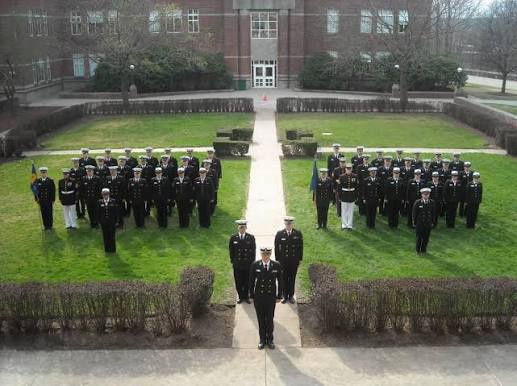
Featured image courtesy of The College of the Holy Cross

Leave a Reply