Drew Butler ‘29
Staff Writer
In recent times, much of American politics and news coverage has been focused on America’s Southern border, primarily driven by the issue of immigration. However, two unique political battles are brewing to the north of Holy Cross: contentious United States Senate elections in New Hampshire and Maine. Control of the Senate for both Democrats and Republicans will possibly hinge on outcomes in both of these states.
Holy Cross lies roughly 32 miles south of the New Hampshire border. Democratic incumbent New Hampshire Senator Jeanne Shaheen is not seeking a fourth term, causing this election to be an open race. Four-term Democratic U.S. Representative from New Hampshire’s First District Chris Pappas and former Republican U.S. Senator John Sununu are vying to be the state’s next senator. In bordering Maine, five-term Republican incumbent Senator Susan Collins is being challenged by former Democratic state senator Troy Jackson, who replaced former Democratic nominee Graham Platner, after he withdrew this summer.
As border states, the ongoing issue of tariffs between the United States and Canada has been a core issue of each race’s respective campaigns. During the August Republican primary Senate debate, Sununu remarked: “it doesn’t make any sense to engage in a trade war with Canada…” Likewise, Pappas, in a joint September 1 press release with fellow Democratic Congresswoman Maggie Goodlander (NH-2), shared that “…recent tariffs, continued threats of additional trade restrictions, and increasingly adversarial rhetoric are creating uncertainty for businesses, workers, farmers, and consumers on both sides of the border…”
In Maine, in an interview earlier this month, Senator Collins asserted that “I think the administration has very much underestimated the impact on Maine families, on small manufacturers, on our agricultural products…” In a counter to Collins’ position, Jackson recently contended: “what has she done to stand up, to get Trump to back off of parts coming in from Canada, fertilizer coming in from Canada for farmers…?”
Despite New England’s Democratic lean in elections, New Hampshire and Maine are the region’s most competitive states. According to official 2024 presidential election results, then-Vice President Kamala Harris defeated Donald Trump by 3% or roughly 23,000 votes in New Hampshire and by 7% or roughly 58,000 votes in Maine. According to polling, both Senate elections appear to be neck-and-neck and within reach for either party to win.
In the Granite State, an August 20-24 University of New Hampshire poll had Sununu with a 45% to 43% lead over Pappas. In contrast, a September 16-17 Insider Advantage poll reported a 48% to 40% edge for Pappas. Over in the Pine Tree State, a September 8-10 Rasmussen Reports poll showed Jackson with a 46% to 45% lead over Collins. Conversely, a September 14-15 Quantus Insights poll gave Collins a 47% to 46% advantage over challenger Jackson. These differing numbers showcase that no candidate in either race has a clear and definitive lead heading into Election Day with roughly a month and a half to go.
In New Hampshire, Republicans have not won a Senate race in the state since 2010, nor a House of Representatives seat since 2014. The GOP has fared better statewide; Republicans have held the governorship since 2017. In neighboring Maine, Democrats have not won the Senate seat up for election this year since 1972. In 2020, Democrats were confident in defeating Collins. Nearly every single pre-Election Day poll had then-Democratic challenger Sara Gideon with a clear lead. However, on Election Day, Collins secured an eight-point victory, defeating Gideon by roughly 70,000 votes.
With a current 53-47 seat majority for Republicans in the Senate, the races in New Hampshire and Maine will most likely play a considerable role in determining what party controls the upper chamber of Congress for the next two years. A Democratic hold in New Hampshire and a flip in Maine will most certainly aid Democrats in gaining control of the Senate. A Republican flip in New Hampshire and a hold in Maine will make the math extremely difficult for Democrats to have a viable path to gaining a Senate majority. A Democratic and Republican split victory across both states would not give an edge to either party. As of now, both races appear to be in a dead heat. But one thing is for certain: a political battle is unfolding along America’s Northern border, and it is not finished yet.
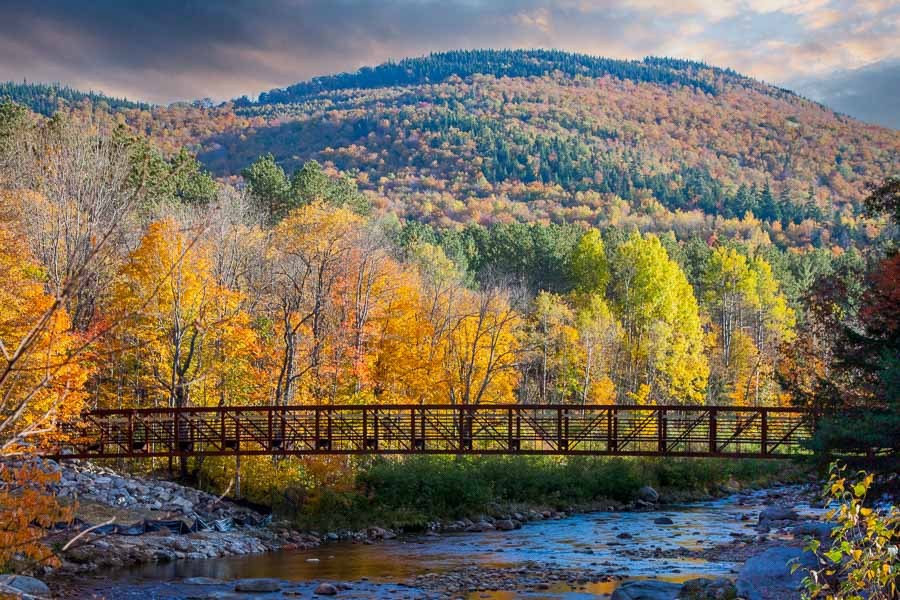
Photo:
Source: https://jeff-foliage.com/2018/07/28/a-scenic-drive-in-western-maine-route-113/ (according to the source, the photo was taken near the New Hampshire/Maine border)
Leave a Reply