
Fiona Greaney ‘29
Opinions Editor
Four astronauts just flew around the Moon. In 2026. Was it worth it?
We live in an era of self-driving cars, AI, and satellites that can identify what kind of car you drive from orbit. So why did NASA just spend tens of millions of dollars sending four humans on a trip around the moon?
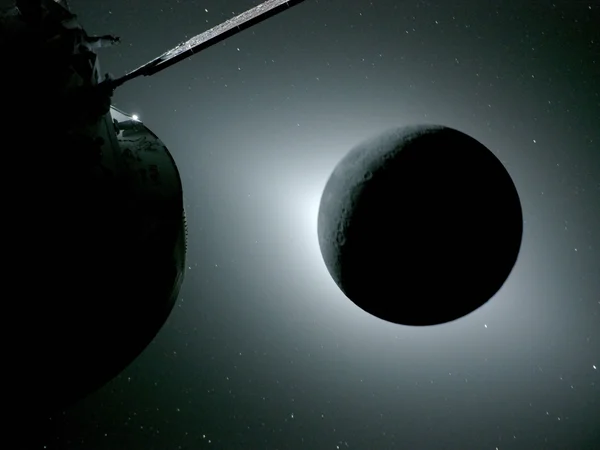
Artemis II is NASA’s first crewed mission of the Artemis program, and has sent four astronauts on a 10-day flight around the Moon and back to earth. The mission launched from Kennedy Space Center on April 1, and will land just off the coast of California later today. The Artemis II crew is traveling further into space than humans have gone since the Apollo era, and earlier this week, they accomplished the first lunar flyby in over 50 years.
The mission is primarily focused on verifying the rocket Orion’s spacecraft systems, including life support, for future human missions to the moon. But is sending humans to the moon worth it? Why would NASA, the world’s leading space agency with a multi-billion dollar budget, still be focused on sending human beings into space? Do they not have more advanced models that capture data more accurately and efficiently than any human can?
You would think that sending humans into space is not worth the hassle. Satellites are significantly more cost-effective than people. A satellite can take pictures, probably better than a human can, without the hassle of water, oxygen, food, sleeping quarters, and a bathroom. A satellite can map every inaccessible place in our solar system and instantly communicate it back to scientists on earth. Humans, on the other hand, are sensitive to different temperatures and biological factors that limit where and how they are able to travel to these far off places. A satellite can stay awake 24 hours a day, seven days a week, for 365 days per year. A human needs at least some sleep to function effectively. All in all, there are some major advantages to using satellites. So why did NASA choose to spend 93 million dollars to send four humans into space for a 10-day joyride around the moon?
But after viewing the objectives set out by NASA for Artemis II, one sticks out as something a satellite cannot accomplish. The astronauts are challenged with describing “nuances in shapes, textures, and colors.”
Human eyes far exceed the capabilities of cameras, even the most advanced ones. Eyes instantly adjust to drastic light changes. Cameras have a less dynamic range and usually require HDR modes to adjust. Humans also have higher processing power. The eye works with the brain to constantly process and analyze visual information in real-time. And most importantly, the human eye is adaptable. It can handle a wide range of brightness, contrast, and proximities without needing to adjust settings. In other words, humans can better capture “nuances in shapes, textures, and colors” than a satellite can.
One thing that satellites cannot do is understand and communicate the particular illumination conditions to people. While livestreaming, the astronauts call out the colors they see. According to Kelsey Young, who is the head lunar scientist on Artemis II, NASA understands “what the moon is made of” and what the topography is, but that they do not know “what the crew are going to see in these specific illumination conditions from a scientific perspective.”
NASA’s willingness to send four humans into space shows that our era is not over yet. With the advent of AI and other new technologies, it sometimes appears as if humans have become obsolete. But despite our inefficiencies, we continue to be invaluable to our own progress. Because at the end of the day, we are not just collecting data about the universe. We are trying to understand it. And understanding always has, and always will, require a human being.
So was $93 million worth it? Satellites gave us the Moon’s composition. Satellites gave us its topography. But for fifty years, no machine has been able to tell us what it actually looks like when you’re there. That is irreplaceable.
Featured image courtesy of Scientific American

Leave a Reply