Fiona Greaney ‘29
Opinions Editor
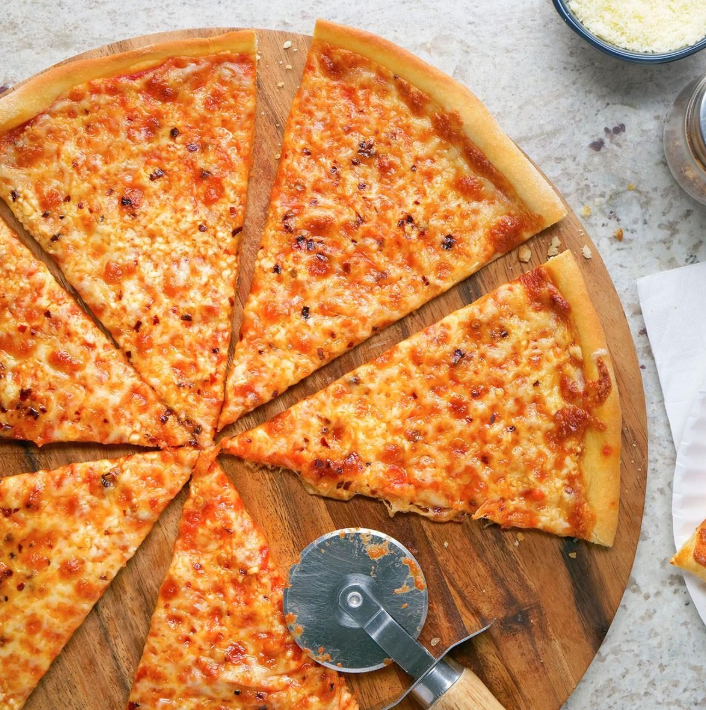
It’s a Sunday night, and I am at Volturno’s in Worcester for a belated Galentine’s Day celebration. I order the brick-oven cooked margherita pizza and, when it arrives, I immediately go for a bite. Like Lawrence of Arabia was transported back in time to the Ottoman provinces during World War I, I was transported back to the fall football games of my first semester at Holy Cross, where I first encountered Holy Cross’ brick oven pizza. The “Holy Crust” has eluded me ever since. It was crunchy and flavorful, and a noticeable step up from other pizza available on campus (looking at you, Croads pizza). Every time I would hear that the “Holy Crust” would be at an event, I marked my calendar. But I would arrive at the event and to my dismay, there would be no pizza. At Volturno’s, my quest to reveal the secrets of the Holy Crust was reignited. Schrödinger’s Pizza Oven would escape me no more. So I met with Marty Dudek from Holy Cross Hospitality to learn more about the wonderful brick oven pizza available at Holy Cross.
Martin says the idea originally came from a conference he went to where he saw the oven on a trailer. The pizza oven was funded by the surplus in the dining budget and was unveiled at a staff event in July. Since then, it has been used for sporting events, the reunion weekend, catering endeavours, and a few student events. Marty said that “it’s great because it only takes ninety seconds to cook a pizza,” meaning that many students will be able to savor the recipe. The chef, Brian, was sent to a special pizza-making school where he learned the ins-and-outs of dough making. The level of thought and work that went into making this pizza a reality is admirable. This pizza is enticing. My friends and I have planned to go to events just to get a bite of this glorious crust. Despite our efforts, we have only been able to try this pizza twice.
I asked Marty where we could see the pizza oven next, and if there is any way students could get more of the pizza outside of sporting events. He said that “as soon as the snow goes away, we are hoping to have some on the Hoval or quad.” Hospitality Services is currently looking into purchasing an enclosed trailer that would allow pizzas to be made in the colder months. There is also talk of potentially having the pizza available in Kimball in the coming years. As a student who has an appreciation for the “Holy Crust,” I would love to see this. Having this pizza year-round would convince me, and probably a number of other students, to attend different events on campus. In Kimball, this pizza would enhance our dining experience and definitely make our dining hall one of the highlights of our campus.
In the meantime, Marty revealed that the pizza available at the Luth is made with the same recipe and ingredients as the Holy Crust, just without the brick oven. For now, I will have to get my Holy Crust fix there, probably while watching a Hockey game. Quality pizza unites us. Having more of it around would enhance our events while fostering unlikely connections in our community. Schrödinger’s Pizza Oven is both alive and dead when covered under the football stadium. But when brought out, it is a 5,500 pound catalyst of campus culture.
Featured image courtesy of Taste of Home
Copy Edited by Molly Croft ‘29


Leave a Reply