Why Eastern Latvia Holds the Key to the Future of Europe
Bryce Maloney ‘26
Opinions Editor
“Are we ready to die for Daugavpils?” These were the words of a senior British Diplomat in a 2016 documentary aired by the BBC which used war room scenarios to gauge the possible response of the nation’s government to the potential outbreak of World War III. Employing a Pandora’s Box-like approach, fictitious separatist uprisings of ethnic minorities in Eastern Latvia were weaponized as the pretext for the conflict. This was highly criticized at the time by political leaders and reporters across Latvia and the world as entirely far-fetched. However, in the context of Russia’s invasion of Ukraine in 2022, it feels increasingly as though the integrity of the European Bloc hangs in the balance.
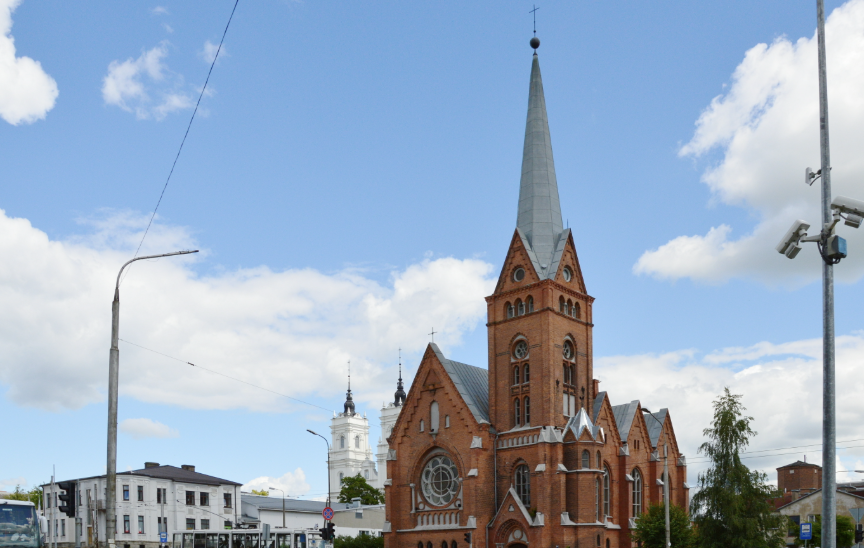
The Latgale region of Eastern Latvia is home to a diverse population of people whose roots lie throughout Europe. The region’s largest city, Daugavpils, hosts a population that is primarily comprised of Ethnic Russians. With a population just shy of 80,000, Daugavpils is the largest Russian-speaking community anywhere in NATO or the European Union. Latgale’s countryside is also the native homeland of the Latgalian people: the region’s long-neglected indigenous inhabitants, who have seen their culture diminished and their language undermined. The unitary nature of the modern Latvian state ensures that on top of their social, linguistic, and cultural differences, these ethnically diverse parts of Eastern Latvia stand in direct defiance of a central government whose nation-building efforts often diminish the rights and privileges of minority groups. Inevitably, the grievances created by such an imbalance leave room for foreign exploitation.
In recent years, Russian speakers and other ethnic minorities in Latvia have become collateral damage amidst the Latvian government’s attempts to counter Putin’s aggression. For example, the Latvian Saeima (parliament) recently moved to ban the Russian language on State Media platforms. Although Latvian is the only language with official status in the country, the nearly 40% of Latvians who speak Russian at home will no longer be able to access both television and radio news in their mother tongue through the nation’s largest news outlet. Therefore, many Russian-speaking Latvians have set up illegal Television Satellites which can pick up programming in the Russian language from just across the border. Amongst game shows and soap operas, those who choose to watch Russian state television also intake a healthy dose of Kremlin-sponsored propaganda.
With a strategic location on NATO’s Eastern flank and rising tensions amongst regional ethnic minorities, places like Latgale very much hold the key to the future safety, stability, and integrity of Europe. These realities on the ground in Eastern Latvia and amongst the Russian-speaking communities of the Baltic States bear many of the same hallmarks as the Donbass region of Eastern Ukraine before the commencement of widescale separatist violence in 2014 … and Vladimir Putin knows it. In recent years, social media posts calling for Latgale to break away from the rest of Latvia have grown in popularity. It became such an issue that Latvian Minister of Foreign Affairs (and now President) Edgars Rinkēvičs was forced to comment on the issue, calling participants “internet hooligans,” responsible for creating an “atmosphere of uncertainty.” Young Russian speakers in Latgale likewise see their language as a symbol of defiance against a government they feel no longer represents them. Latvian-language slogans like “Paldies Dievs Ka Esmu Krievs” (Eng. Thank God that I am Russian) have been popular ways that Latgale’s youth poke fun at discriminatory language laws. In 2022, just after the start of Putin’s war in Ukraine, Latgale experienced an explosion of right-wing populism: resulting in a massive surge at the ballot box for pro-Russia populist parties at the end of the same year.
Instability in Latvia, a key NATO ally of the United States and a former Republic of the Soviet Union, would expose a weakness that would shake the alliance to its core. Many have argued until now that Putin would not dare to violate the sovereignty of a NATO country. However, recent memory would prove otherwise. On September 19, the world held its breath as Russian fighter jets violated the airspace of Estonia, Latvia’s neighbor to the north, for more than 12 minutes. This coincided with deadly attacks launched by the Russian leader on Ukraine the night before. The symbolism of this move could not be clearer. In the eyes of Vladimir Putin and his regime, the war in Ukraine is only part of his ultimate goal to undermine the legitimacy of NATO. Thus, the mood of small communities like the Russians of Eastern Latvia may have massive ramifications on the future of our world. Therefore, while you may not yet be ready to die for it, to ignore Daugavpils is to gamble with the future of Europe and the world.
Featured image courtesy of Google Images
Leave a Reply