Maggie Baum ‘25
Guest Writer
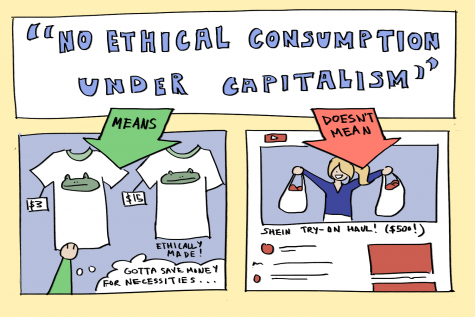
I hate when people say, “There is no ethical consumption under capitalism.” I don’t necessarily disagree. At its core, the phrase harps on the “lesser of two evils” concept, the idea that all businesses contribute to the climate crisis and have some level of unethical practices, and notes that we are the victims of an unjust system. The saying is thrown around to justify a Shein or TikTok Shop purchase, after a guilty use of single-use plastic or simply following an overindulgent lapse of retail therapy. “No ethical consumption under capitalism” is a cop out. It grants people peace of mind when carelessly spending money on cheap products that they will inevitably throw out in three months. It also allows people to write off the conflict between their consumption habits and their political and moral values with a hot button phrase that others will accept without question.
Ethical consumption has been on my mind with the rise of ChatGPT. Though I have many qualms with its impact on critical thinking and creativity, the environmental effects are what’s concerning me. I don’t claim to know exactly how AI works, I am a far cry from a woman in stem, but I have read about the heating and cooling processes required for such high-powered systems. The water usage of these OpenAI models is atrocious. When people use ChatGPT as frequently as they do to write an email or make a grocery list, I cringe. Our actions have consequences, and using AI for ordinary tasks has serious environmental ramifications.
People are often ready to defend their habits by saying that one person’s actions are a drop in the ocean. Here at Holy Cross, we are asked to be men and women for and with others. Many of us feel called to participate in community service in Worcester and even dedicate our time after graduation to a year of service or non-profit work. We recognize and acknowledge that there are large systemic issues at play, and that our one hour a week at the Mustard Seed or Vernon Hill School may not be doing much to change those systems. And yet we still go. We still pursue careers in service or advocacy because we know change starts small and that cumulatively our actions do make a difference. So, why does this not translate to the way we consume? Why, in that area, do we say “well what difference will it make if I stop buying Shein?”
There is great nuance to this issue. First, the topic of equity muddies the argument. Areas and populations with limited access to more sustainable options, plus the lower prices of Shein and similar products, means many people’s consumption habits are out of necessity or circumstance. The same goes for the issue of time. Thrifting takes time, something someone working two jobs might not have, for example. By no means is the consideration of ethical consumption an option for everyone, nor should it be. Secondly, is what I think the phrase originally gets at: too much responsibility is placed on the consumer. Yes, the biggest contributors to our climate problem are big corporations. Capitalism itself has undeniably benefited off the sustainability movement, guilt tipping consumers to switch to more sustainable options. By no means is this article meant to continue this trend: only blaming individual actions and purchases. And yet, just because it is not the sole fault of consumers, does not mean we should be absolved of any blame.
I’m by no means a perfect example, I like to use a straw even on those lids that don’t need one, and I love my phone case from Amazon. The system is literally designed to suck us in and click “buy now,” making it almost impossible not to fall into this trap, but it’s about being intentional. I am an avid thrifter, and find so much joy in discovering an unexpected treasure (and often the bonus of saving money!) I have found a prom dress, an air fryer, a winter coat and more for under $10 each. So, use that Tupperware you own, thrift instead of resorting to Shein, and I’m begging you, stop asking ChatGPT to write your emails.
Featured image courtesy of Scot Scoop News

Leave a Reply to AnonymousCancel reply