By Julia Kane ‘27
Opinions Editor
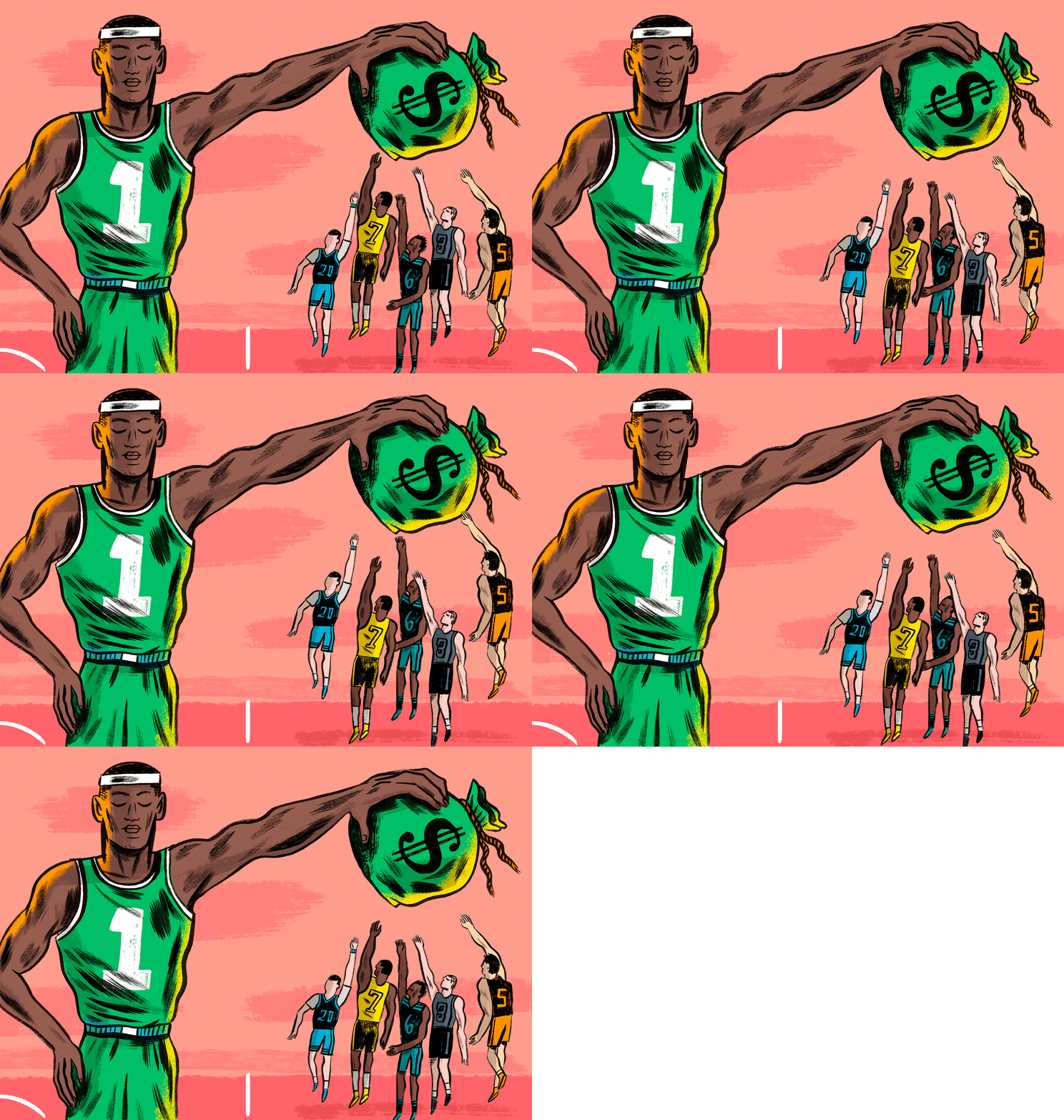
No matter your interest in spectating sports, nearly everyone in the US is cognizant of March Madness, the yearly NCAA tournament that also serves as a cultural phenomenon. For me, watching March Madness has always been something to look forward to in the spring and a highlight for my family in particular. Though I am a Celtics fan, I often find college basketball more entertaining than the NBA, as my Dad and I love picking our favorite team and rooting for them in the tournament. I’ll never forget my commitment to the 2018-2019 Virginia Cavaliers, with my Dad surprising me by bringing us to see my favorite team take on the Boston College Eagles. March Madness is far from an average tournament; it is a bonding opportunity for family, friends, and acquaintances to watch the games together and make their respective brackets. However, the NCAA now allows students to profit off of Name, Image, and Likeness (NIL) deals, which is controversial in conjunction with the transfer portal. Within college basketball and the lucrative nature of March Madness, this decision has negatively altered the tournament and the game itself.
In 2021, the Supreme Court case NCAA v. Alston ruled that the NCAA’s previous rules limiting student athletes from profiting violated the antitrust law. With the change in regulations, the average men’s basketball player makes around $65,000 annually. Conversely, Duke’s breakout star Cooper Flagg, as a player who has gained fans and overall popularity, has an estimated combined NIL value of $4.8 million. He has secured deals with New Balance, Gatorade, Fanatics, and other household name brands, which benefit from his presence in commercials and using or wearing their products. With monetary gain as an additional factor to consider, players nearly become the school’s employees as each program wants not just to win, but to profit.
In 2018, the NCAA launched the transfer portal to allow college athletes to move between schools and programs, drastically changing college basketball. While attempting to give collegiate athletes more freedom, the transfer portal can be abused while players consider how much money they will earn. Additionally, they no longer need to sit out for a year after transferring, making the process often overused. Hailey Van Lith, for example, started her college career playing for Louisville between 2020 and 2023, transferred to LSU for a singular year, and played this season for TCU for her final eligible year. Though Van Lith transferred for non-monetary reasons, this demonstrates the many teams college athletes can play for in their careers. With the easy ability for athletes to transfer and the surplus of funds and resources at powerhouse programs, it may be more difficult for March Madness to retain its charm through underdog school upsets.
Although some players may want to stay with smaller programs to gain more recognition and time on the court, it is tempting to want to play for a school that consistently makes it to the Elite Eight and Final Four rounds of the tournament. If a player has a standout season at a small school, bigger schools can tempt them to transfer through potential brand deals, the likelihood of being drafted, and more perks. Additionally, the coaches of top teams, such as Auburn’s Bruce Pearl, have salaries upwards of $5.5 million annually. With the high salaries of certain coaches, players are drawn to such programs to be recognized by boosters and brands to make a profit themselves.
While I do believe that players should be compensated for their hard work, especially if their coaches are being paid millions of dollars, I disagree with college athletes being transformed into nearly professional athletes and employees. Many students likely do not go to class, as in 2014, the University of North Carolina at Chapel Hill held widely criticized “paper classes” for their student-athletes to receive faux high grades to keep them eligible. The NCAA is now a fully functional business that funnels money, power, and great players into the richest programs, contributing to this year’s men’s and women’s Final Four primarily made up of 1-seeds. Athletes will have plenty of time in their professional careers to make money, as many advance to the WNBA and NBA, and March Madness would be better off without the influx of money. With fewer brand deals, the tournament can retain its authenticity and viewers can cheer on small schools who have a chance. Student-athletes can certainly have fans, but millions of dollars riding on twenty-somethings can be a lot to handle. The NCAA needs to consider the implications of its finances because, without the Cinderella story, the essence of what makes the tournament so exciting and unpredictable is lost.
Featured Photo from The New York Times
Leave a Reply