Bryce Maloney ‘26
Opinions Editor
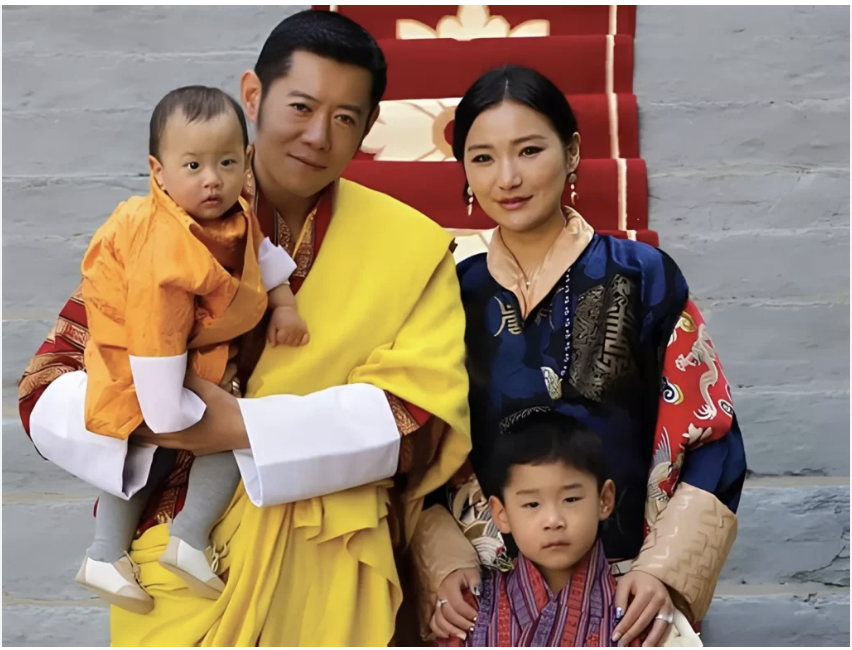
Bhutan is a small kingdom nestled deep in the Himalayas. Steeped in beautiful tradition and a unique brand of pageantry, this largely Buddhist nation works arguably harder than anywhere else on earth to maintain its indigenous culture. As the winds of change clash with the unforgiving terrain of a landscape which has been left unscathed for thousands of years, one unifying force seeks to strike a balance between these two contradictions: the symbol of the monarchy. From the moment you walk down the steps of your plane at the nation’s only international airport, you’re greeted by a larger-than-life poster bearing the image of the King. In fact, his face is quite literally everywhere. In shops and homes, on street corners and lapel pins, His Majesty greets his subjects. Often smiling beside his young family, seldom with so much as a hair out of place, it has become ubiquitous with what it means to be in Bhutan.
When I first arrived in the country, these displays took me a little by surprise. ”To have a picture of the President smiling down on us would be unthinkable,” I would remark to myself. The only exposure I’ve ever had to this brand of symbolism comes from some of the world’s most ruthless dictatorships, and most relentless cults of personality. But, this is not consistent with the society which I have found here in Bhutan. Modern Bhutanese are proud of their democratic tradition. Active and engaged, they speak freely on issues that are important to them, and challenge common narratives on a number of pressing issues. While many would say that a monarchy is inconsistent with modern democracy, I would disagree. Unlike in other countries around the world where popular movements have brought tyrants and autocrats to the ground, there was no massive outcry for democracy in Bhutan. Rather, many Bhutanese would tell you that democracy in their country was ushered in as a “gift” from their fourth King, albeit rather unpopularly at the time. In many respects, the King provides a sense of balance in Bhutanese life: a part time check-and-balance to the power of the elected government of the day, and a full time arbiter of the nations culture and tradition. It could rightfully be said that the King is Bhutan. And, in a sense, I think that is exactly what makes constitutional monarchy work in the modern day.
Similar examples can be seen throughout the world. In Spain, King Juan Carlos I was the anointed successor of the nation’s fascist dictator Francisco Franco, in an attempt to ensure the succession of authoritarian ideals in the country. However, upon acceding to the throne in 1975, the King went about re-implementing democratic institutions, whilst simultaneously tearing down the fascist apparatus which had ruled over his people for nearly half a century. And, when a group of military officers loyal to the old guard attempted a coup d’etat in 1981, the King used his moral and traditional authority to bravely defy the armed insurgents which had taken over his capital, saving Spain’s young democracy. A bridge between the tradition of old and the ideals of the future, Juan Carlos I became the derivative of the rights and freedoms afforded to Spaniards today.
While the rest of the world grapples with the internal fight between the conservation of tradition and the human need for advancement, countries like Bhutan prove that these social divisions needn’t be so vast. A monarch, unlike any other brand of leader, proves that the two can not only cohabitate, but thrive. When implemented in proper doses, their leadership can both effect change and preserve the values on which some of the world’s greatest societies have been built. I think the Japanese constitution put it best when it described the role of a modern monarch as that of a “symbol of the state and the unity of the people.” In short, monarchy utilizes the personage of a living, breathing entity to prove that the cultural and social values we hold can too live, breath, and flourish in the context of our modern world.
Featured image courtesy of Metaphor Magazine
Copy Edited by Lilly Baumfeld ‘27


Leave a Reply