Viveca Stucke ’26
Chief Features Editor
1. What is your name, where are you from, and what was your role?
My name is Andrea Francalanci, from Florence, Italy, and I was an Italian FLA for the 2023-2024 year.
2. Why did you decide to be a FLA?
I decided to be a FLA because of the great opportunity this position represented. As my personal goal is to become a language teacher, I thought such an opportunity would provide me with the necessary tools that are needed when pursuing a teaching career.
When I heard about this possibility, it was a no brainer for me. I applied, and was lucky enough to both get the position and also to achieve what led me to apply for it in the first place.
3. What was your favorite part of being a FLA?
My favorite part of being a FLA was without a doubt helping the students out in their journey of learning the Italian language. As a language student myself, I know how challenging learning a foreign language can be. Seeing the look of satisfaction when some students finally understood something they initially found difficult was one of the best feelings I could have experienced.
4. Why is the FLA program important?
The FLA program is extremely important in the Holy Cross experience for a variety of reasons. I like to think about it as an essential complementary part of the language department itself. Considering the wide amount of “study abroad programs” that the college offers, the FLA position is a vital element for language students. When learning a new language, there is nothing scarier than freezing in social situations where said language is required. Without the FLAs, most of the students who may head abroad for a semester would not be able to practice the language with anyone besides their language professors. Although this may sound of little importance, FLAs help students feel more confident with each language. Providing additional tools, filling the gaps a regular professor might not be able to fill, and several other reasons.
During my year as a FLA, a lot of students would come to me telling me that they decided to go abroad in Italy and continue to study Italian, citing me as one of the reasons they decided to do so. As a human being, there isn’t a bigger testament of joy than that. And it also signifies that, for an important portion of students at least, the FLA position can’t be overlooked like it is at the moment.
5. How did you see students grow with the FLA program?
I will always remember how shy and insecure some students were at the beginning of the year, only to turn the tables around by the end of year. As a future teacher, you’re happy with all the progress one has made. As a native speaker, it is so amazing to witness one person understanding and talking back to you in your native language. This is a legitimate proof that the hard work of both the students and the FLAs has beneficial outcomes
6. What is your best memory with the FLA program?
The best memories are certainly my first and last classes I taught. My feelings were of course different on the two occasions. I went from very nervous in the first ever class to very emotional in my last one. I felt repaid for all the hard work the students and I both put in throughout the year.
7. How did students benefit from the FLA program?
The students benefit from it in a variety of ways. Firstly, hearing constant progress in language acquisition, as a teacher, is one of the best feelings in the world. As I said earlier, many told me that they decided to minor, somebody even major, in Italian. A lot of them decided to go abroad and to cement themselves even more in Italian. And as far as the FLA program is concerned, this is also an unspoken goal that makes this position so special.
8. Why does Holy Cross have to keep the FLA program?
Holy cross has to keep the FLA program into existence. Eliminating it would only lead to the sterilization of a learning experience that needs these special “interpreters”. What’s the point of going to college and learning a language if one has only to barely speak it with their main professors? This pattern already exists; it’s called Duolingo, and it’s free!
Additionally, if we take a look at the numbers of how many HC students go abroad yearly, taking off this additional help would only mean to harm and disadvantage those students who decided to go abroad and challenge themselves. Canceling the FLA program would mean losing interest in the language program, which would lead to a decrease in language aimed study abroad experiences. Is that not enough to state that this doesn’t have to happen?

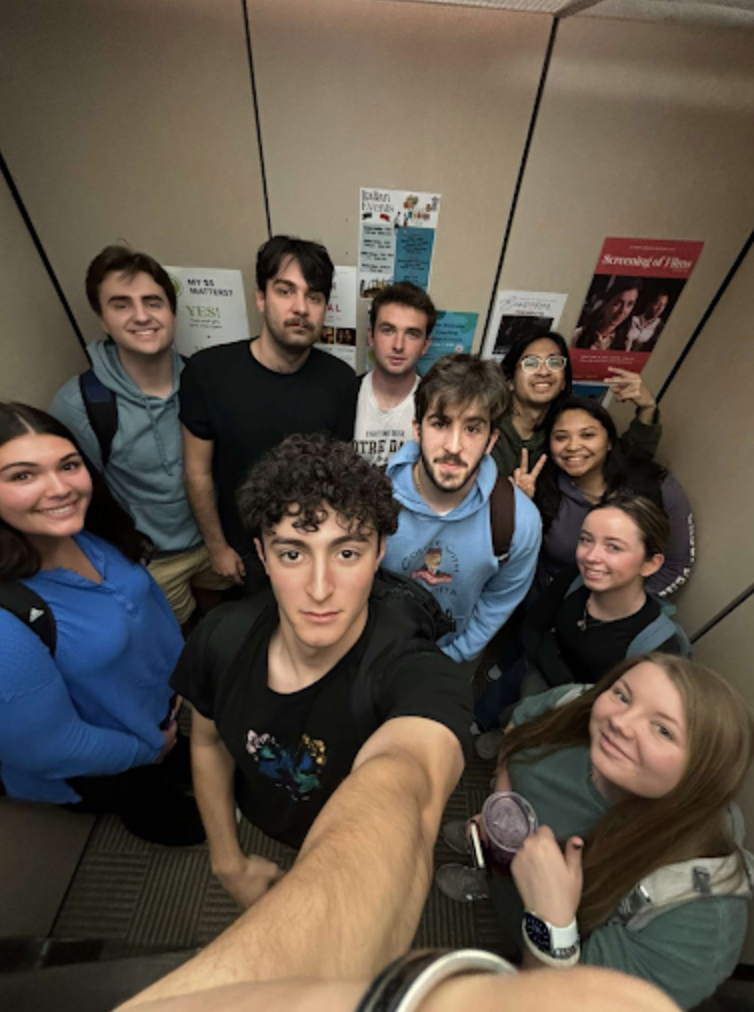
Featured image courtesy of Viveca Stucke ’26
Leave a Reply