Kate Santini ‘27
Chief News Editor
Since the 2022-2023 academic year, the College of the Holy Cross has covered tuition for students coming from families with annual incomes of less than $75,000. This past academic year alone, 65% of the student body benefited from the $76.5 million the school set aside for need-based scholarships.
Having been among the first colleges in the nation to adopt test optional policies in 2005, the College has long been committed to making higher education accessible to students from all different backgrounds. On October 9, President Vincent Rougeau underscored this commitment to provide education irrespective of students’ financial situations and issued a statement that the school has expanded its parameters for full tuition scholarships. Reasoning that “one of Holy Cross’ top priorities is to ensure that talented students from all backgrounds can access a Holy Cross education and be supported to flourish on our campus and beyond,” Rougeau announced that starting the upcoming academic year, the College will cover full tuition for students coming from families with an annual income of less than $100,000.
The College hopes to alleviate concerns regarding the rising price to attend college and universities across the country, a trend that has coalesced with inflation and a general increase in the cost of living. The U.S. News and World Report recently reported that the average price to attend a private college has increased by 2.5% in the past year, with many New England private schools now charging tuition and additional fees that accumulate to over $90,000 per year. The median American family income, on the other hand, has decreased in recent years, going from $76,330 in 2021 to $74,580 in 2022.
While not exempt from the trend of rising tuition, the College of the Holy Cross has been a pioneer in the movement to make college education more accessible and was even ranked number five in Money Magazine’s list of “Best Value Liberal Arts Colleges.” While standard tuition including room & board, the meal plan, and other miscellaneous fees now accumulates to a total of $83,320, the average cost for students after financial aid is $36,000.
Holy Cross remains among a group of less than 100 colleges across the nation that meets 100% of a student’s “demonstrated financial need” at the time of admission. The College’s website underscores various avenues of lowering tuition, stating that “from robust merit scholarship offers, to generous need-based aid, you and your family have multiple opportunities available to minimize your cost.” The Financial Aid Office personally reviews and allocates money based on the financial need demonstrated by students’ FAFSA and CSS profiles.
Maintaining the College’s tradition of inclusivity and commitment to equal opportunity, Rougeau concluded his October 9 announcement with the statement that the College is “proud to deepen [its] commitment to expanding educational opportunities for more young people.”
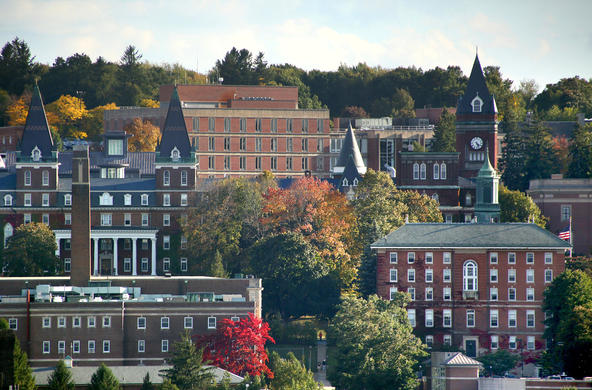
Featured image courtesy of College of the Holy Cross
Copy Edited by Lilly Baumfeld ’27
Web Edited by Zexuan Qu ’28
Leave a Reply