Bryce Maloney ‘26
Opinions Editor
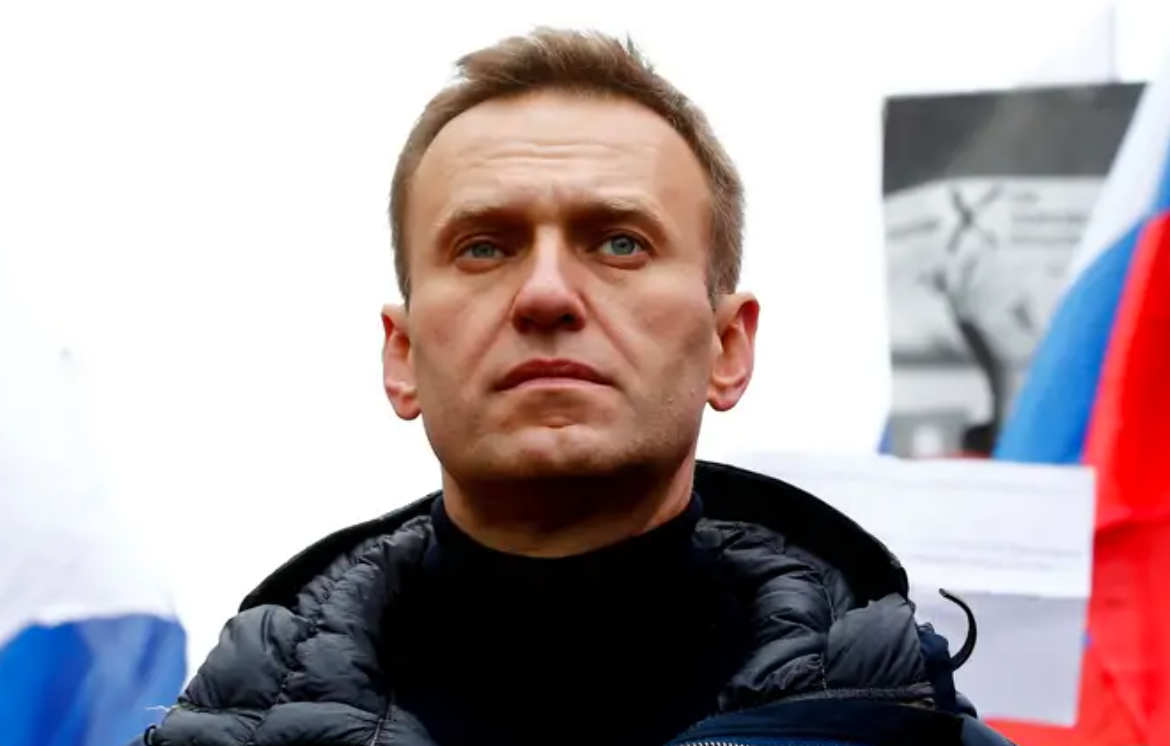
Alexei Anotoleyovich Navalny, the man who dared to stand up to Vladimir Putin and the Russian regime, has died aged just 47. The political figure and dissident passed away under suspicious circumstances after a nearly three-year-long imprisonment. Navalny fled Russia in 2020 after being poisoned with a nerve agent by a group of intelligence officers on a flight from Siberia to Moscow. He narrowly escaped death and was transferred to Germany for treatment with his family. Directly upon his return from exile in Germany in 2021, he was imprisoned on charges which were largely considered to be politically motivated and almost entirely fabricated. Navalny started his political career as a lawyer and local politician in his native Moscow but rose to fame in Russia after a failed attempt to run for Mayor of the nation’s capital. The unsuccessful campaign cemented his role as a prominent critic of the Putin regime and of the corruption which has plagued Russia under its rule. In 2018, Navalny sought to run for the Presidency of the Russian Federation, becoming one of the first people to launch a serious campaign directly against Putin.
As his voice grew stronger, so too did the government, cracking down on his activity in a desperate attempt to stop the growing star power of Navalny. His campaign sought to cast a wide net of supporters from all backgrounds in a coalition created with the sole purpose of restoring trust in civil administration and ending the plague of human rights violations and corruption which had become so characteristic of modern Russia. He was threatened with prison sentences, attacked in the streets, doused with a green dye which reduced visibility in one of his eyes, and almost murdered on many occasions, all in the name of the freedom of the Russian people. Nicknamed by Putin as “the Berlin Patient,” he used empathy and courage to counter the forces of evil which sought to encapsulate and weaken him in all that he did. By the end of his life, Navalny had begun to grow tired, thin, and physically very frail in direct contrast to the movement he had begun. As dissatisfaction with the Kremlin grew, so too did the number of those who courageously took to the streets and demanded better from their government. There is a feeling in the air today that Russia is awaiting its next great change, and one cannot help thinking that Navalny was at the center of that change.
After a not-so-successful war in Ukraine, which has claimed hundreds of thousands of Russian lives, a slowing economy, and a government which has fully morphed into an authoritarian monster, many of Navalny’s countrymen have grown wary of Moscow’s leadership. What makes Navalny so unique and so nuanced to many of his fellow Russians, is the fact that he quite simply provided a choice for his people that had been so wrongfully denied. In the annals of history, it should be said of Alexei Anotoleyovich Navalny that his greatness came not from the might of his fist but rather from the goodness and honesty which so uniformly defined him as a person. For many who mourn his loss, he will be held as a reminder of what Russia should be. He looked beyond common narratives and saw a nation of over 150,000,000 souls, with a rich history and an undying passion for freedom and justice, suppressed by the iron fist of the strong men who have sought to reign over a group of people as singularly unique and truly vast as the unruly Russian landscape. Navalny provided his fellow citizens, and indeed the entire world, with an example of a Russia which could be both proud of its unique society and yet at the same time not bound by the constraints of those who have come to call themselves their leaders.
By the end of his life, as Navalny’s frail existence withered away in the cold Siberian prison colony nicknamed the “Polar Wolf,” his existence became less about what he could do and more about what he meant to all Russians who believed that their country was better than the scornful nature of its leaders. While for many Russians, the idea of a free Russia dies along with him, Navalny’s own words in a message released in the case of his death speak volumes as to just how untrue that idea is. In 2022, he said of his death “If they kill me it means we are incredibly strong.” While the world has rightfully venerated and exalted the memory of such an incredibly courageous man, I think that he needn’t be immortalized or genuflected to like other age-defining Russian leaders of the past. In fact, in writing this article, my mind was drawn back to the death of Robert Kennedy, an American hero who himself sought to restore faith and trust in our institutions.
Upon his death, it was said of him that he “need not be idealized, or enlarged in death beyond what he was in life; to be remembered simply as a good and decent man, who saw wrong and tried to right it, saw suffering and tried to heal it, saw war and tried to stop it.” Let us today remember the life of Alexei Anotoleyovich Navalny as that of an ordinary person called to do extraordinary things. As we review the fullness of his legacy, let us also commemorate the fact that his demise must serve as just as much of a symbol for liberty and emancipation as he represented during the time in which he lived among his people. For the struggle to free the masses of Russia from the hands of authoritarianism and deliver them into the warm embrace of democracy, his memory will always be a blessing.
Featured image courtesy of ABC News
Copy Edited by Lauren Backstrom ’27
Leave a Reply