Lara Coby ’26
Staff Writer
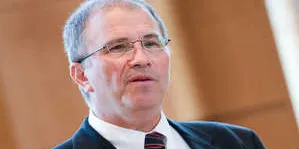
On Wednesday, November 15, Rabbi Norman Cohen ‘72 spread pieces of Jewish wisdom and teachings during his annual visit to Holy Cross. Cohen, who was recruited to diversify the campus population by former Jesuit Father Brooks, stated during a Shabbat Dinner on Friday that Holy Cross was where he found his Jewish identity. He expressed that his experiences attending the college made him pursue a career as a Rabbi, and eventually become the founding Rabbi for the congregation of Bet Shalom in Minnetonka, Minnesota. To fully grasp the lasting impact that Rabbi Cohen had on his visit, it is necessary to go over the teachings and traditions he brought with him.
On Wednesday night, Rabbi Cohen gave a talk titled “Jewish Views of the Afterlife: A Journey Through Texts from the Bible to Contemporary Sources” in Rehm Library. The first of the many theories surrounding the afterlife has to do with immortality. Rabbi Cohen introduced the terms Pharisees, meaning souls are immortal, and Sadducees, meaning souls die with bodies. It is debated within the Jewish faith whether or not a Heaven or Hell exists in the Hebrew Bible. He explains that “Sheol” is a purgatory and “Gehenna” is punishment. Although punishment may not last forever; a type of repenting cycle called “Kaddish” exists in the Jewish faith. The Torah provides readings that refute and support all of the above theories, but from a prophetic perspective, Rabbi Cohen contends that there could be nothing that happens after one passes, that there could exist a Heaven and a Hell for good and bad people, that immortality is the memories of loved ones that currently live, and that our body turns to dust and our soul turns to God. Rabbi Cohen concluded with the idea that the uncertainty of what happens after we pass on is an invitation to have faith in scripture, a beacon of hope and comfort for those conflicted with the ideas of the afterlife.
On Friday, Rabbi Cohen hosted a Shabbat Dinner in Campion House along with Father Jim Hayes. The room was filled with students and faculty alike, although Rabbi Cohen made a point that the student representation was all-female, an ironic sentiment to the fact that the last time he was a student at Holy Cross was before their invite to Co-education. The dining room was filled with candles and ornately decorated with silverware and glasses. Each person was given a guide to the Shabbat prayers, and as Rabbi Cohen led the singing and praying, the faculty and students joined him all together. We prayed before and after the meal, and most notably thanked God for the food that we have as well as the table we eat it on, a sentiment that I felt was geared towards thanking God for luxuries that typically go unnoticed. We prayed for peace, which I felt was for the innocent lives suffering in Israel and Palestine, a moment that stuck with me even after the dinner had ended
The meal consisted of three courses, tokened with the Jewish delicacy Matzo ball soup. The conversations we engaged in were so informal, that it felt like a family dinner. The comfort of Campion certainly added to this effect, however there was something special about having prayer and reflection time. For a whole two hours, I was not reaching for my phone and I was not worrying about missing my Friday night plans. I was talking with students I would have never otherwise met and was making connections with Jewish faculty who were more than happy to participate in prayer. I was reflecting, I was laughing, and I was learning. Shabbat is not something that is just to reiterate religious traditions, rather it is a time of respite and reflection, a new lesson I will hold on to for a very long time. It is not everyday that a person gets to have dinner with a Jesuit Father at one head of the table and a Rabbi at the other, but Holy Cross has proved to make many things possible.
Rabbi Cohen left more than just an ounce of wisdom on this campus. He gave Holy Cross a lens into a religion that is otherwise stereotyped and ridiculed, a new light in an unexpected setting.
Featured image courtesy of Worcester Telegram
Leave a Reply