Nathan Howard ’25
Co-Editor-in-Chief
“Always Be Around” Corita Kent, Community, and Pedagogy is a contemporary art exhibition that celebrates the work and teachings of 20th-century American pop artist, educator, and social justice advocate, Sister Corita Kent. The exhibition opened in The Iris and B. Gerald Cantor Art Gallery on Oct. 2nd and will remain open through Dec. 15th. Rachelle Beaudoin ‘04, a Professor of Practice in the Department of Visual Arts, curated the exhibition.
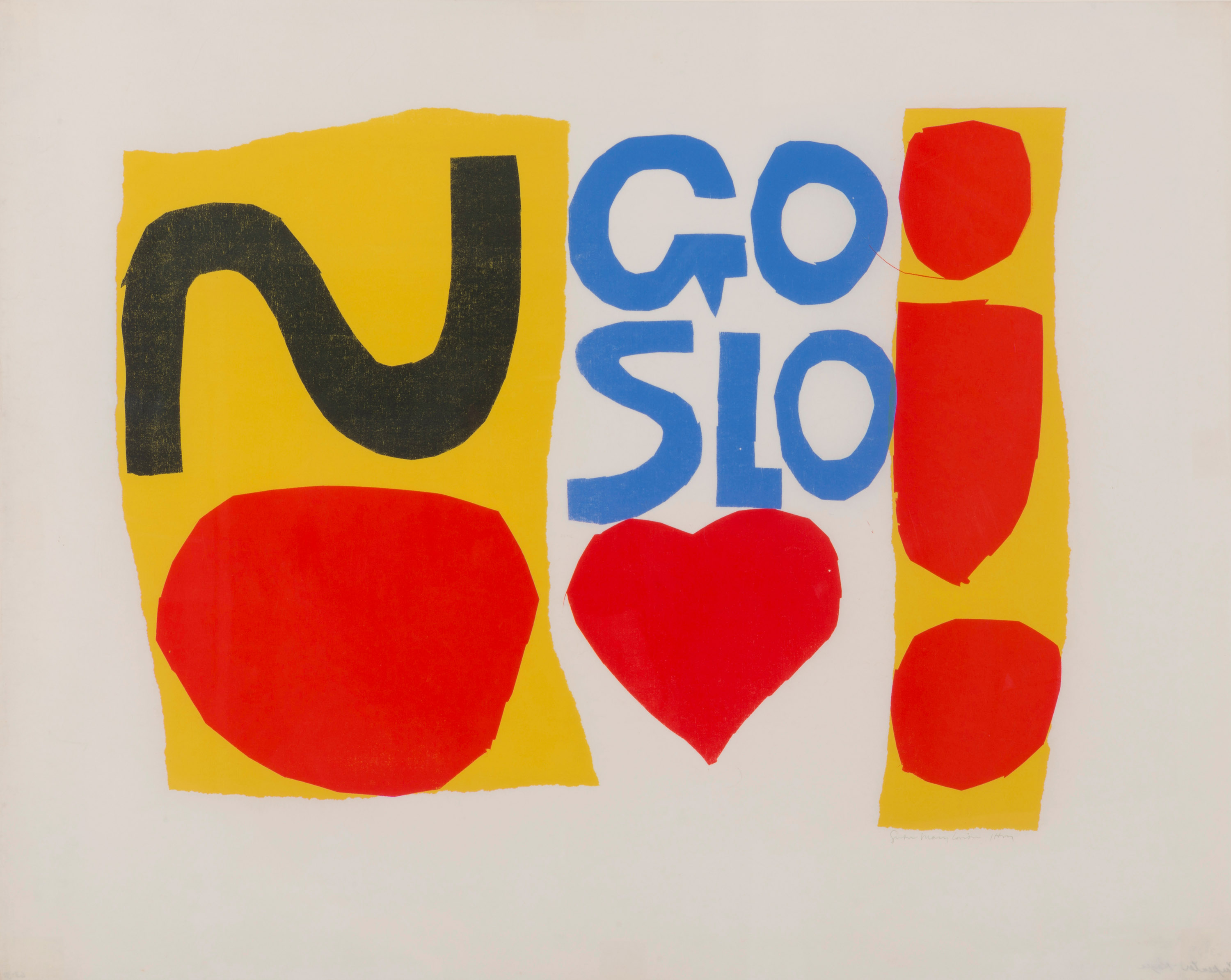
Corita Kent’s work is well known for its vibrant use of color and overarching messages of social justice. Throughout the gallery, Corita’s work is paired with contemporary responses from a variety of artists including Breanne Trammell, Mary Banas, Lukaza Branfman-Verissimo, Roz Crews, Jen Delos Reyes, Christine Sun Kim, Jorge Lucero, Mary Lum, Maria del Carmen Montoya, Aaron Rose and Lee Walton. By coupling Corita’s own work with contemporary responses, this exhibition explores how her collaborative and pioneering methods of teaching inspired these artists, each of whom integrate collective activism into their own artistic application. These contemporary artists also engaged with the Holy Cross community by inviting students, faculty, and staff to participate in community-built artwork and experiences at the Cantor Art Gallery. This includes a recreation of the 1964 Mary’s Day event by artist Roz Crews. Mary’s Day was an important event in Corita’s career as an educator at Immaculate Heart College, where she transformed a formerly solemn tradition into a vibrant celebration of religious observance, feminism, and everyday life. In the Prior Performing Arts Center, Roz Crews, along with members of the Holy Cross community, recreated the memorable event with a focus on equity and LGBTQIA+ awareness.
Much of Corita’s artwork was directly influenced by her pioneering career as an art educator, which was defined by her unique teaching philosophy centered around the practices of close-looking and finding sources of inspiration through unconventional means. As a teacher, Corita produced inventive assignments that encouraged students to be open-minded and acutely aware of their surroundings. Additionally, through class outings in the city streets of Los Angeles, Corita taught her students that inspiration can be found anywhere, and that everything can be used as a source for this inspiration. Corita’s unique teaching philosophy became evident in her own work as well. Her colorful serigraphs of the 1960s took inspiration from unconventional sources by appropriating promotional culture and advertising found by Corita in her everyday life. Because of this, Corita’s utilization of her own unique teaching methods solidified her role as a pop artist and her influential career as an art educator has continued to inspire artists, teachers, and students alike.
Through the Weiss Summer Research and fall Research Associates programs, I was able to assist Professor Beaudoin with the curatorial process of assembling the exhibition, including writing wall labels for a variety of Corita’s prints and accompanying her on art studio visits. I had a wonderful and truly memorable experience working with Professor Beaudoin on this project and I hope that this exhibition will continue to inspire other students to become interested in studying the realms of art history and social justice advocacy.
Featured image courtesy of Corita.org
Leave a Reply