Sean Rego ’26
Opinions Editor
It will never cease to disturb me how little we seem to appreciate the absolute chaos that is the Middle East. Simultaneously (and just as dangerously), it disturbs me that the educated class can be so disconnected from reality, and are willing to rationalize some of the most evil of institutions.
In this time of grave uncertainty in the Middle East, I find myself worried about the West’s position there. We rely on the Middle East for their vast oil supplies, but we’re also concerned with their growing militaristic capabilities. Particular anxiety stems from the growing tensions between Iran and Saudi Arabia and Israel, all of whom could/do have nuclear weapons.
As mighty as she is, America cannot settle affairs in the region by herself, so the question is who can we trust there? Which state can relate to our ideals of life, liberty, and the pursuit of happiness? With our need for foreign oil and the dangers of global jihadism, we need to at least consider our options, even if meager.
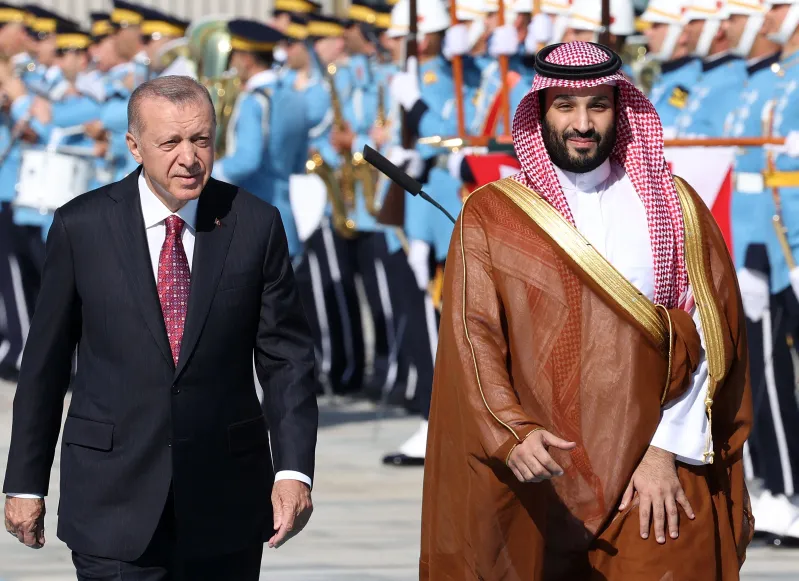
Perhaps the strongest ally of ours on paper is Turkey, a NATO member but also a zealous country ready to assert her power. Turkey is nominally secular and our friend but nevertheless has her own goals. Since 1991, the country has taken steps to restore Ottoman domination of the Balkans and Levant. Turkish President Erdogan is known for his mediocre views on democracy and his strong support for Islamism, including support to the Muslim Brotherhood. It is questionable to call Turkey a like-minded ally by many metrics, especially when one looks at their continual efforts to quash the existence of the Kurds and intimidate Greece in the Aegean Sea. Just recently, Turkey’s close ally Azerbaijan ethnically cleansed the Nagorno-Karabakh region of thousands of Armenians, in what I can only assume is another step towards turkification of the Caucasus. All that being said, the Turks still seem cooperative with the West. With such a large appetite though, I don’t know how long this marriage of convenience will last.
Saudi Arabia is another strange case. The House of Saud was lucky to come to such heights, as it started as a desert tribe. But, with oil under their feet and Wahhabist fundamentalism on their side, the Saudi Kingdom became incredibly powerful over the 20th Century. Today, the Saudis remain an important energy partner and a strategic counter to Iran. No matter who is in charge, we always seem to back the Saudis. For example, President Biden said that he would not associate himself with the Saudis only to go to Riyadh a year later asking for oil. Ultimately though, Saudi Arabia’s spread of Wahhabism has caused woe for the West in forms of terrorism, which itself needs to be considered when considering relations.
And perhaps the nation with the most controversy (as is due) is Iran. Something I’ve never understood is the absolute hate given to the West for their dealings with Iran. Indeed, there were a lot of shady things throughout the 19th and 20th Centuries, but when we’re told that the USA and UK overthrew a democratically elected leader (Mohammad Mossadegh), they forget to mention that he had seized complete control of the British owned oil refineries (which were key sources for global oil) and then dissolved the Iranian parliament to rule by decree. It would be internal factions that would then overthrow Mossadegh (with the help of the Brits and Americans). Of course, this doesn’t mean what happened was right, but just that there is more going on than told. Imperial Iran would go on for about two more decades, where enfranchisement to non-Muslims was granted and Western culture was introduced. Things were relatively nice in Iran until the 1979 Revolution, when ultra-conservative Shia theocrats took over. Since then, Iran has been under the unquestionable rule of the Supreme Leader and his Islamic jurists. The theocracy has been on the path to nuclear weapons, with American foreign policy unable to stop it currently. And worse, current Iran may well rival the Third Reich in levels of jew-hatred, with “Death to Israel” (as well as “Death to America”) being commonplace. It’s sad to see such a great and mighty nation in such a brutish state.
There’s really only one Middle Eastern country I genuinely think we can trust. It’s obvious to some, but unthinkable to others. But truly, I want people to understand that little Israel is the best hope the Middle East has. Just think for a second, beyond personal views. Which country in the region has free and fair elections? Which country has the rule of law? Which country is inclusive to different beliefs, races and orientations? Which country has strong relations with the West, and tries her best to commit to peace? Only one country, Israel, is and has those things. As I’ve stated before, Israel is by no means a perfect country or the best ally of America. Yet she is far better than any I can see in the Middle East. Actively, Israel is trying to enter into relations with her neighbors, much thanks to the recent Abraham Accords. Desperately, the likes of Hamas terrorists and Iran are trying to stop that, though.
I say this not to bash other Middle Eastern nations, for there are indeed others with whom we should at least be willing to cooperate, but the fact is Israel is far and away the most trustworthy. While we should strive to persuade Turkey and Saudi Arabia to turn to our values, we must acknowledge the more dangerous countries as the threats they are. Some of them want us dead after all. In these cases, we must remember that trust is a limited resource, more so than oil or gold. Our trust should only go to the like-minded and the strategic. While there may be more than one of those in the Middle East, the best contender remains Israel.
Featured image courtesy of Getty Images
Leave a Reply