Owen Whaley ‘24
Chief News Editor
This past March, more than 15 Senate leaders issued a joint statement urging the federal government to take sweeping action to address the nation’s housing needs. “Whether they rent or own – whether they live in urban, rural, suburban, or Native communities – too many Americans cannot afford a safe place to call home in their communities,” read the letter. “Our nation’s housing is an essential piece of infrastructure, but it is a sector in crisis.”
In the aftermath of the pandemic, a confluence of challenges – labor shortages, dwindling housing supply, skyrocketing costs – have led to higher rates of homelessness across the U.S. In cities small and large, the nation’s housing crisis has manifested itself in sprawling tent encampments, overcrowded shelters, and loud calls for policy reform.
Worcester, with its disproportionate population of renters, has been particularly affected by rising housing costs. The Massachusetts Housing Partnership’s Center for Housing Data estimates that half of local residents are cost-burdened, meaning more than 50% of their income goes toward housing expenses. Increasingly, households not traditionally considered at risk for homelessness are facing the effects of the crisis. While 9% of Worcester residents earning between $50,000 and $74,999 were considered cost-burdened in 2010, that number has increased by 152% to more than 23%, according to data from the American Community Survey. A recent report by the National Low Income Housing Coalition found that the average monthly price for a two-bedroom apartment in Worcester is $1,635. While a minimum income of $65,400, or $31.44 per hour, would be required to afford this price, the average renter earns only $18.22 per hour.
Local nonprofits – Jeremiah’s Inn, Homeless Outreach and Advocacy Program, Worcester Community Housing, Triage Center – have long provided a crucial safety net for the city’s unhoused. But their resources are limited, and many homeless individuals are slipping through the cracks.
In an Oct. 16 message to the campus community, administrators from a range of departments advised students “not to go on unmarked trails beyond the campus’ borders,” and to remain within marked areas. The email explained that Holy Cross staff had recently learned of “several small tent encampments nearby in woods along McKeon Road” and engaged the inhabitants in a “productive conversation with a shared understanding of the circumstances as neighbors.”
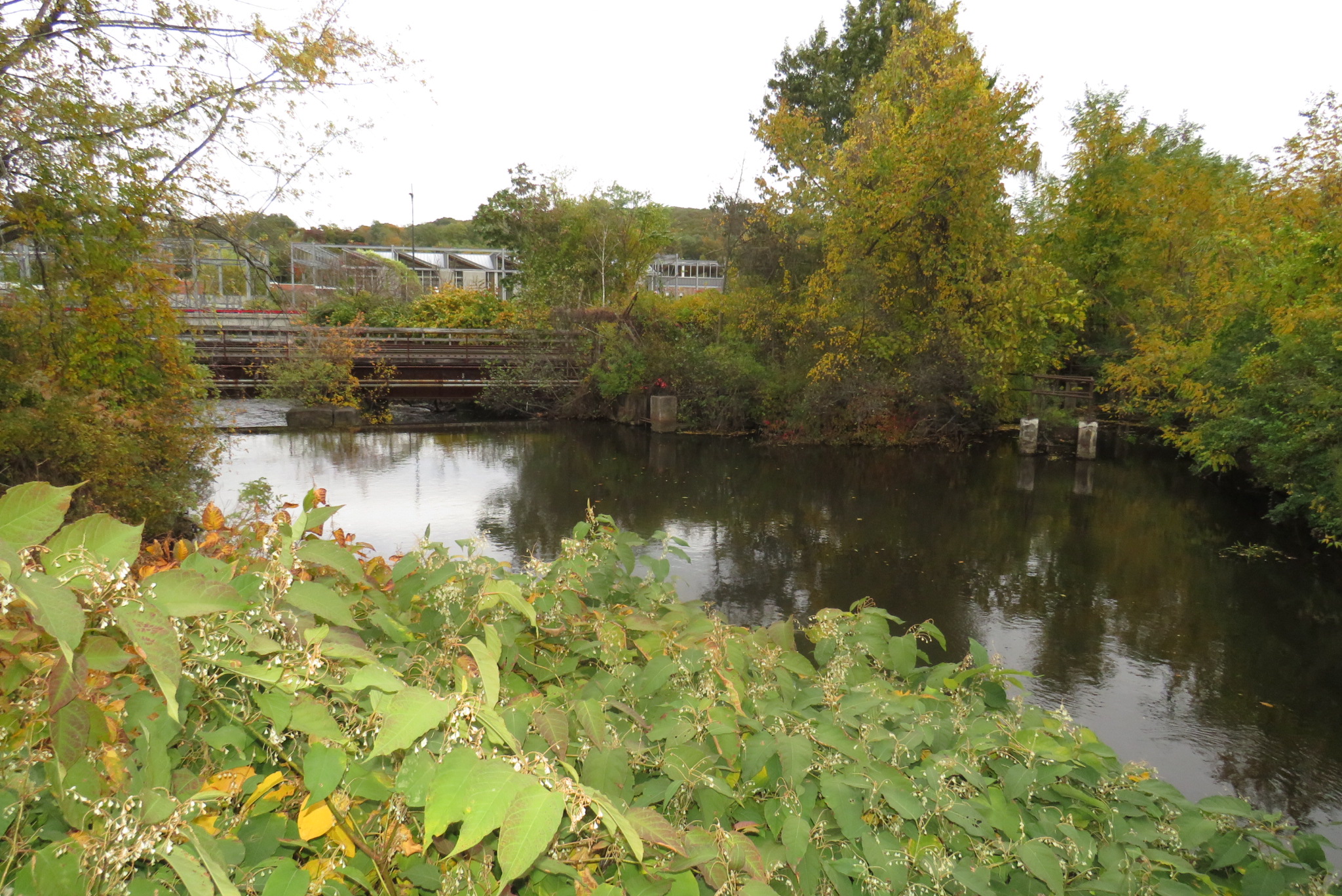
As of Oct. 22, tents and debris could be seen scattered around Blackstone Gateway Park, a 30-acre stretch of paths and boardwalks off McKeon Road described as a “hidden gem” for “nature enthusiasts” and “anyone who enjoys birdwatching” by Worcester Magazine this past June.

Photo Courtesy of Owen Whaley ‘24
Homeless encampments can pose serious risks to public health and safety. Smoke billowed over Boston University earlier this month after a fire broke out at an encampment on campus. Public health experts warn that these encampments are often hotspots for pneumonia, tuberculosis, Hepatitis A, and COVID-19. And as winter approaches, their inhabitants face dangerous conditions. The National Coalition for the Homeless estimates that 700 homeless individuals die of hypothermia in the U.S. each year.
The Oct. 16 message highlighted local groups serving the homeless, including Mustard Seed, Salvation Army, and Quinsigamond Village Community Center, noting that “the College actively works with these groups and supports their efforts to secure appropriate, safe housing, and access to vital resources for unhoused individuals.”
Over the years, Holy Cross has provided financial and other support to Worcester organizations combating homelessness. Student Programs for Urban Development volunteers assist with efforts to feed and support the unhoused through programs such as Ansaar of Worcester, Abby’s House, Visitation House, and Dismas House. Since 1989, the College has raised nearly $1 million for United Way of Central Massachusetts, which funds a range of local causes. Holy Cross actively supports the Dismas Family Farm, a 12-bed rehabilitation program for former prisoners and recovering addicts in Oakham, and recently sponsored its Oct. 14 Fall Festival.
But as housing insecurity and homelessness in Worcester and other cities reach a crisis point, administrators and students have struggled to respond. Last year, Yale volunteers threw away clothing and tents found at a homeless encampment while participating in an initiative to clear litter from a local river. The site supervisor who oversaw the effort was condemned by the program’s leaders and accused of facilitating acts of “violence” and “theft” against the homeless.
In late September, Democratic and Republican officials from across the western U.S. submitted briefs to the Supreme Court advocating for the expansion of state and local authorities’ power to clear homeless encampments. “It’s gone too far,” California Governor Gavin Newsom said in a Politico interview at the time. “People’s lives are at risk.”

Leave a Reply