Drew Butler ‘29
News Editor
Known for sprawling prairies, cattle towns, stagecoach robberies, and noon showdowns, the Wild West is an integral part of America’s story. The West’s rugged terrain shaped the nation in its quest for expansion and the extension of America’s borders into new territories. Through the trekking and bravery of thousands of pioneers, the route to the Pacific Ocean and the development of America’s West were carved. Despite the many dangers and setbacks that the pioneers faced, the ambition of exploring the unknown was achieved. Yet, this new land did not entirely yield to the hope of expansionist glory; its unique landscape provided solace. Theodore Roosevelt found this, held onto it, and was ultimately forged by the Frontier’s landscape itself.
On Valentine’s Day 1884, Roosevelt lost his wife, Alice, and mother, Mittie, in the same house on the same day. From their deaths, Roosevelt was stricken with loss, pain, and devastation. In order to escape the agonizing grief, he decided to head west to the North Dakota Territory. It was here, in the Dakota Badlands, a vast, dramatic landscape of rock formations, that Roosevelt found what he was looking for–the hope of rebuilding his life.
During his time in the Badlands, Roosevelt worked as a cattleman and built his own ranch in the remote territory. Roosevelt even tracked down outlaws through his work as a deputy sheriff. Through his experiences on the Frontier, he grew to appreciate the land and became passionate about conservation and America’s West as a whole. As he notes, the Dakota Badlands were “where the romance of my life began.”
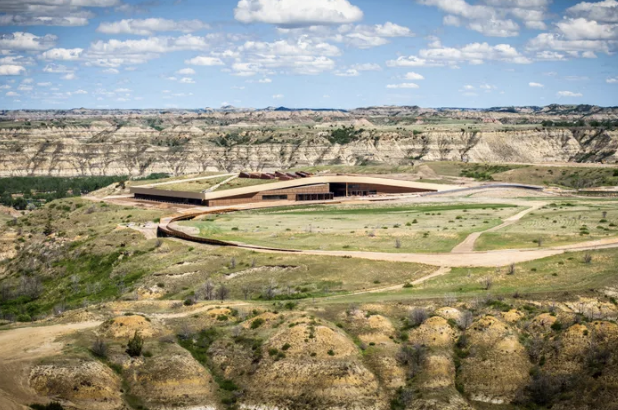
On America’s 250th birthday, July 4, 2026, the Theodore Roosevelt Presidential Library was officially opened in Medora, North Dakota. Located in the heart of the Badlands, the library provides visitors with an immersive and memorable experience. The library is home to many original artifacts and features an AI-powered presidential avatar, enabling visitors to have conversations with Roosevelt himself. Medora was chosen as the site of the library because it was here that Roosevelt had his transformation from suffering to healing.
As the 26th President of the United States, Roosevelt is often known for his conservation efforts, progressive reforms—like the Square Deal and trust busting—and aggressive foreign policy tactics. Roosevelt is known for following the motto: “speak softly and carry a big stick.” Through his achievements in consumer protection, the construction of the Panama Canal, and his days as a Rough Rider during the Spanish-American War, Roosevelt is largely regarded as one of the nation’s most effective and greatest presidents. During his presidency, Roosevelt did make another memorable trek–this time, though it was out east, up Mount St. James.
On June 21, 1905, President Roosevelt visited Holy Cross and delivered the commencement address to the graduating class on Fitton Field, which allowed for the accommodation of a large number of visitors. During his address, Roosevelt focused on the study of Celtic literature and the importance of being a good citizen. In the closing line of his speech, he remarked: “What counts is the spirit which makes a man decent and yet sends him out into actual life able to hold his own.”
The American Frontier turned Roosevelt into a new man. The rugged landscape enabled him to find new strength in his life and instilled in him values of individualism, courage, and protecting an environment and land that we all share. The Frontier brought Roosevelt comfort. He was then able to bring comfort and hope to the nation during his time as president and even through his words to Holy Cross students. The Frontier made Roosevelt, and it all began on that trek out west to the Dakotas.
Leave a Reply