Terence Connors ’28
Staff Writer
AI slop is everywhere.
Walk around campus, and the amount of AI generated content adorning the halls quickly becomes obvious. Clubs, organizations, debate teams, communal events, all advertise themselves using content that they clearly asked an LLM to generate. Even online, there is little relief. Various organizations have taken to making their social media visibly AI generated, often with questionable results.
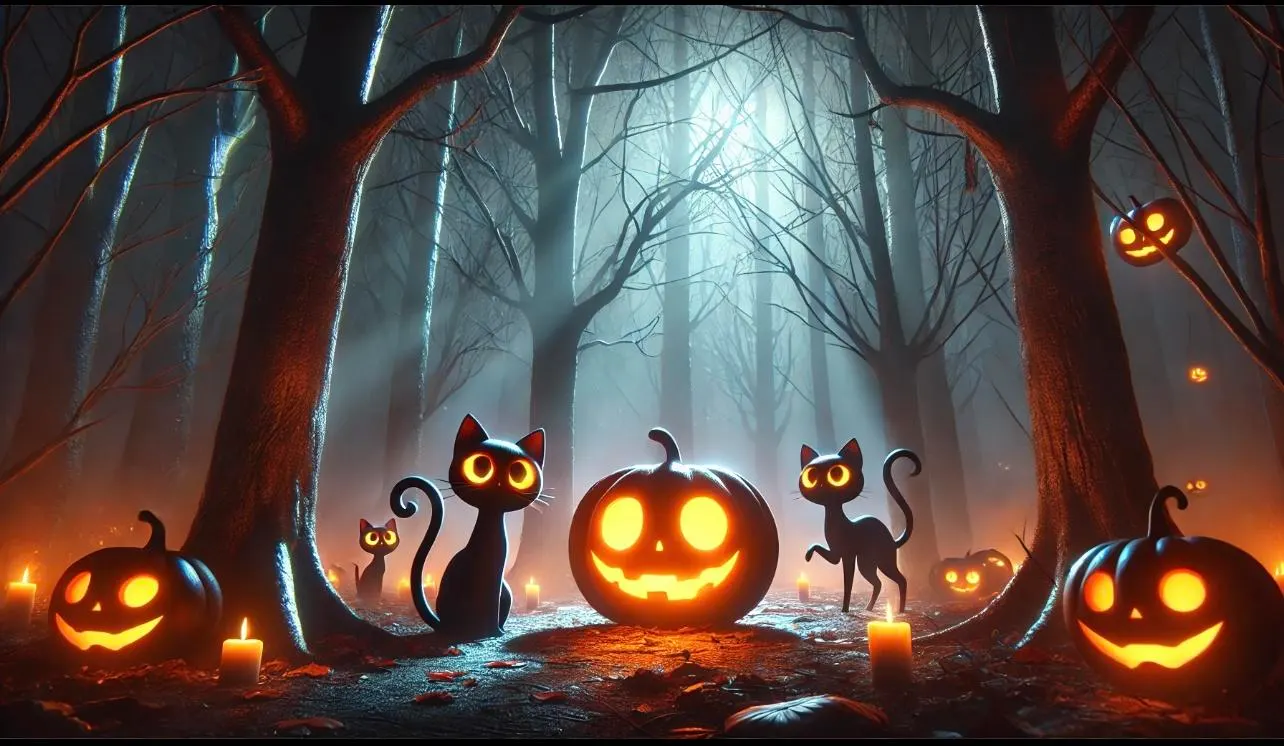
This is, perhaps, most egregious this week. With Halloween right around the corner, many organizations have decided to generate a poster for a themed event using AI. Misshapen tombstones, lopsided pumpkins, and robotic text in various “spooky” fonts are everywhere, forming a sea of crudely made images.
If it is not obvious, I do not like AI artwork. I think it is cheap, hollow, and soulless. It lacks any of the humanity which makes artwork truly shine. It makes something which should be authentic and human into something that is just another facet of the endless corporate machine. This is, of course, assuming it even looks good (which it very often does not).
I find it particularly revolting to AI generate Halloween art, however. Why? First, some history is in order.
Historically, Halloween (or All Hallow’s Eve) emerged as the liturgical vigil for All Saint’s Day, a principle feast day which occurs in the Western Church in November. Even today, it continues as a time to remember the saints, whose examples and intercession are believed to guide the Church. Soon after, the Feast of All Souls takes place, where the Church honors the souls of all who died in faith. Many will be most familiar with All Souls through regional manifestations, such as Dia Da Los Muertos in Mexico, or may remember it from church if they were religious. However it is celebrated, a common theme remains; This is a time to remember and honor our ancestors and heroes, and to feast in the hope of rejoining them in eternal life. Together, these three holidays form the core of Allhallowtide, a liturgical season which is fundamentally about human connection, our bonds with others, and the honor their memory deserves.
What, then, does it say about us when we outsource the creative work of this season to a robot?
Halloween, obviously, has drifted far from having any religious purpose in the minds of the broader cultural consensus. It has now mostly become a commercial enterprise, where children and adults like to purchase poorly-made and questionably sourced costumes, with the kids eating candy and the adults drinking dubiously flavored beers (Wormtown’s Pumpkin Ale remains an all time low for me) along with various “fall” cocktails.
Yet, even in its modern capitalistic state, some flickers of the true sense of Halloween remain. What is Halloween without trick or treating, parties, or group costumes? On some level, we still acknowledge that Halloween is not found truly in plastic vampire fangs or Kit-Kats from Dollar Tree, but in each other.
With this in mind, I think my condemnation of AI Halloween art begins to make a bit more sense. At its very root, Halloween (and the season associated with it, both traditionally and today) is about community and interpersonal relationships. It is about our connection to those both living and those departed. In light of this, I think it is ridiculous to outsource the labor of the season to something which cannot think, cannot feel, and cannot connect.
Look, I have managed clubs. I get it. We are under an immense amount of pressure, and AI art seems like an easy way to take some stress off oneself. But I do not think a club poster has to be ornate to be better than AI. Throw together something in Canva. It will take all of fifteen minutes, and will show an actual devotion and passion towards your organization.
This Allhallowstide, remember and rejoice in your humanity.
Copy edited by Annamaria DeCamp ’27
Featured image courtesy of Forbes
Leave a Reply