Addy Woodbury ‘29
Staff Writer
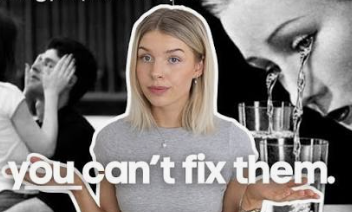
There is something to be said about humans and our desire to fix people. It’s almost absurd how sometimes, the desire to claim responsibility for repairing a tortured soul, or mending a broken heart can be so intense that it becomes the driving force for wanting to get close to someone. It’s difficult to tell if this impulse comes from a selfish or selfless place, but to me, that really depends on the individual. Yet this savior complex poses a larger question that is applicable to a general audience: is it really possible for you to “fix them?”
Simply put, I think that is a very nuanced question. I like to approach abstract concepts like this by reflecting on personal experiences and reviewing what I’ve learned from each one, hoping that eventually, I’ll be able to come to some sort of conclusion, even if it’s vague.
I think a good place to start is to examine where we get messed up. What I’ve found is that if you truly care about someone, it’s difficult to be honest with yourself about their imperfections and the ways in which they could improve. So the easy solution becomes thinking about who the person could be, because then the journey to helping someone seems much more fun and enticing. It is this mindset that causes us to falter—one in which we fall in love with the idea of someone’s potential rather than the reality of who they are.
This warped sense of romanticism can easily cause us to fall into a trap of attempting to sculpt people into the person we want them to be. Ultimately, this is detrimental to both parties because investing your time and energy into the mere idea of someone ignites a gradual loss of one’s self as time progresses. As for the person being “helped,” their actual needs are cast aside and the efforts of the “helper” shift to focusing on finding a solution for the sake of relieving their own internal discomfort rather than sincerely wanting to help the other person. To me, this creates an inauthentic relationship where both people involved are not dealing with the completely honest version of the other.
It is also worth noting that it is no one’s job to save someone. I believe that if you undergo challenges with someone repeatedly and their behavior disrupts your way of life, you obtain the right to walk away from that person and/or situation. Staying in a relationship that doesn’t add to your quality of life in the hopes that you will be the one to fix them and change the way they navigate relationships is not worth risking your time. You can’t do someone’s healing for them, they must want to do it for themselves.
With all this being said, my answer is no, we can’t really “fix them.” The difficult truth is that we have to meet people where they are, not where we want them to be. The best thing to do for others is support them and encourage them to take the appropriate steps to success because at the end of the day, personal growth requires genuine motivation from the individual, regardless of how much support we have in our corner.
Leave a Reply