Kimberly Von Randow ‘28
Opinions Editor
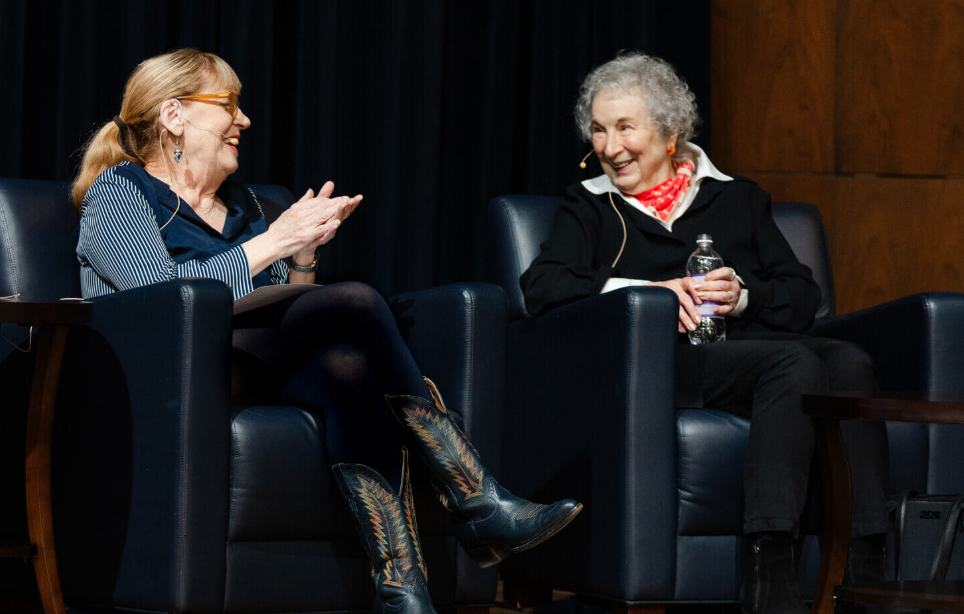
When Margaret Atwood came to speak at Holy Cross, it proved to be a defining moment for the student body. As one of the most influential literary voices of our time, her presence alone was enough to generate excitement across campus. And to be clear, the talk itself lived up to expectations. Atwood was sharp, thoughtful, and engaging—everything you would hope for from a writer of her caliber. And also as a participant of her seminar prior to the talk, she exceeded my expectations in her witty and honest answers. But while the event succeeded intellectually, the way it was managed left many students feeling like an afterthought.
The main issue wasn’t at all the content of the talk—it was access.
Despite being a campus event hosted by our college, a significant number of seats in the main Hogan Ballroom were taken by people who were neither students nor staff or faculty. Community engagement with the people of Worcester is important, and opening events to the public can be a positive thing. However, not if it negatively affects the experience of hardworking faculty, and students paying a small fortune to attend this institution. Many students, the very people the College is meant to serve, were pushed into overflow rooms where they had to watch the talk on a television screen instead of experiencing it live.
There’s a meaningful difference between being in the room and watching from a distance while sitting in makeshift chairs, reclining against walls, and resting on tables just to hear her talk. Live events carry an energy that simply doesn’t translate through a monitor—the subtle pauses between answers, the audience reactions to her life stories, the sense of connection between speaker and listener. Students who ended up in overflow spaces missed out on that experience, even though they are the primary stakeholders in the college community.
This raises a broader question about priorities. When a college hosts a major speaker, who is the event really for? While it’s understandable that the school wants to build relationships with the surrounding community or highlight its impressive cultural programming, those goals shouldn’t come at the expense of student access. With some students being unable to attend the talk at all despite needing it for class credit. They shouldn’t have to compete with outside attendees for a seat at an event taking place on their own campus.
A more balanced approach could have easily prevented this issue. The college might have reserved the Hogan ballroom seats for students, staff, and special guests, while still allowing a limited number of tickets for the public. Alternatively, they could have implemented a priority system, ensuring that students had first access before opening remaining spots to others. These are not complicated solutions, they simply require intentional planning and a clear understanding of who should come first.
It’s also worth noting that events like this are not just entertainment; they are educational opportunities. Hearing directly from a writer like Atwood can inspire students academically and creatively. I can personally say that the talk has shaped my perspective and sparked ideas, both as an English major and a student as well. None of this is to say that the event was a failure. On the contrary, it was a huge success in many ways. Atwood’s talk was insightful and memorable, and the fact that it drew such a large audience speaks to its importance. But success should also be measured by how well it serves the student body. In that regard, the event fell short.
Going forward, the college has an opportunity to learn from this experience. By placing students at the center of planning decisions, it can ensure that future events not only bring in impressive speakers but also provide the full experience to the people who matter most. Because at the end of the day, a great talk shouldn’t leave students feeling like outsiders in their own space.
Featured image courtesy of Holy Cross Magazine

Leave a Reply