Thomas Healy ’28
Staff Writer
The Holy Cross men’s basketball team continues to be hounded by the transfer portal. After an 11-22 season, head coach Dave Paulsen and his crew turn towards the college basketball offseason–a time that has become significantly harder to navigate in recent years.
For Holy Cross, a small liberal arts college in the Patriot League, the struggle to compete in the offseason (retaining players, finding new ones, etc.) is largely associated with their position on the D1 athletics pecking order. As one might assume, trying to compete with the SECs and ACCs of the world is a futile strategy for Holy Cross’s offseason. We simply don’t have the funds to compete.
Therefore, it’s imperative that we have a philosophy–a gameplan that maps out our priorities heading into an offseason. In short, every program has a philosophy, but the further you go down the financial ladder, the less a team can dictate its recruiting ideals and the more it must adapt to whatever talent the market leaves behind.
Every squad must determine how much time and resources are being allocated to player retention and the portal. Overall, a program’s offseason strategy is simply how a team wants to construct their roster for the next season. For low-major schools like Holy Cross, player retention is arguably the most vexing issue to date. For every talented first year coming to play basketball at Holy Cross, there is no guarantee that they will stay after their first year.
Higher tier schools love to poach young players who have outstanding Freshman and Sophomore seasons. Holy Cross has had three of the last seven Patriot League Rookies of the Year (PLROYs) and all three have left after one year at the school. The same goes for the rest of the Patriot League and similar conferences.
Player retention is a key indicator of a team’s success. The rule of thumb goes like this: the more guys you return, the better off you will be next year. Returning players that have already played together can help bolster a team’s cohesiveness on and off court. Retention speaks loudly about team culture and chemistry as it does about keeping your most talented players.
Although we’re still in the nascent stages of the 2026 transfer portal, which opened up on April 7, Holy Cross men’s basketball has already seen six players enter their name into the database. DeAndre Williams, Tyler Boston, Will Aljancic, Gabe Warren, Aiden Disu, and Tim Finau have all joined the sweepstakes.
Boston, Warren, and Disu were three everyday starters for the program this season, with Boston leading the team in scoring and Disu in rebounding. Losing three reliable producers in this age of college basketball is certainly not an anomaly in the sports, as some high major teams have lost 10+ guys in one offseason.
But for a team like Holy Cross, replacing players is much harder than at a high major school. Drawing interest by offering NIL deals, guaranteeing multi-year contracts, and promising an integral role to a player in the portal sounds more like a business venture than anything else.
What’s perhaps even more worrisome is that two of the six transferees are entering their senior year of college. One might beg the question: Why not stay one more year and graduate with a Holy Cross degree? It’s a perplexing question that isn’t close to being answered.
Holy Cross men’s basketball has the ability to be competitive in the Patriot League, like every other team in the conference. This goal of being competitive for years to come and winning a bid to the NCAA tournament cannot be attained if the portal keeps luring away our best players.
Until some party (Holy Cross, NCAA, Patriot League, etc.) can find a sustainable way to retain its core talent, the Crusaders will remain trapped in a cycle where every promising season is undone before it begins.
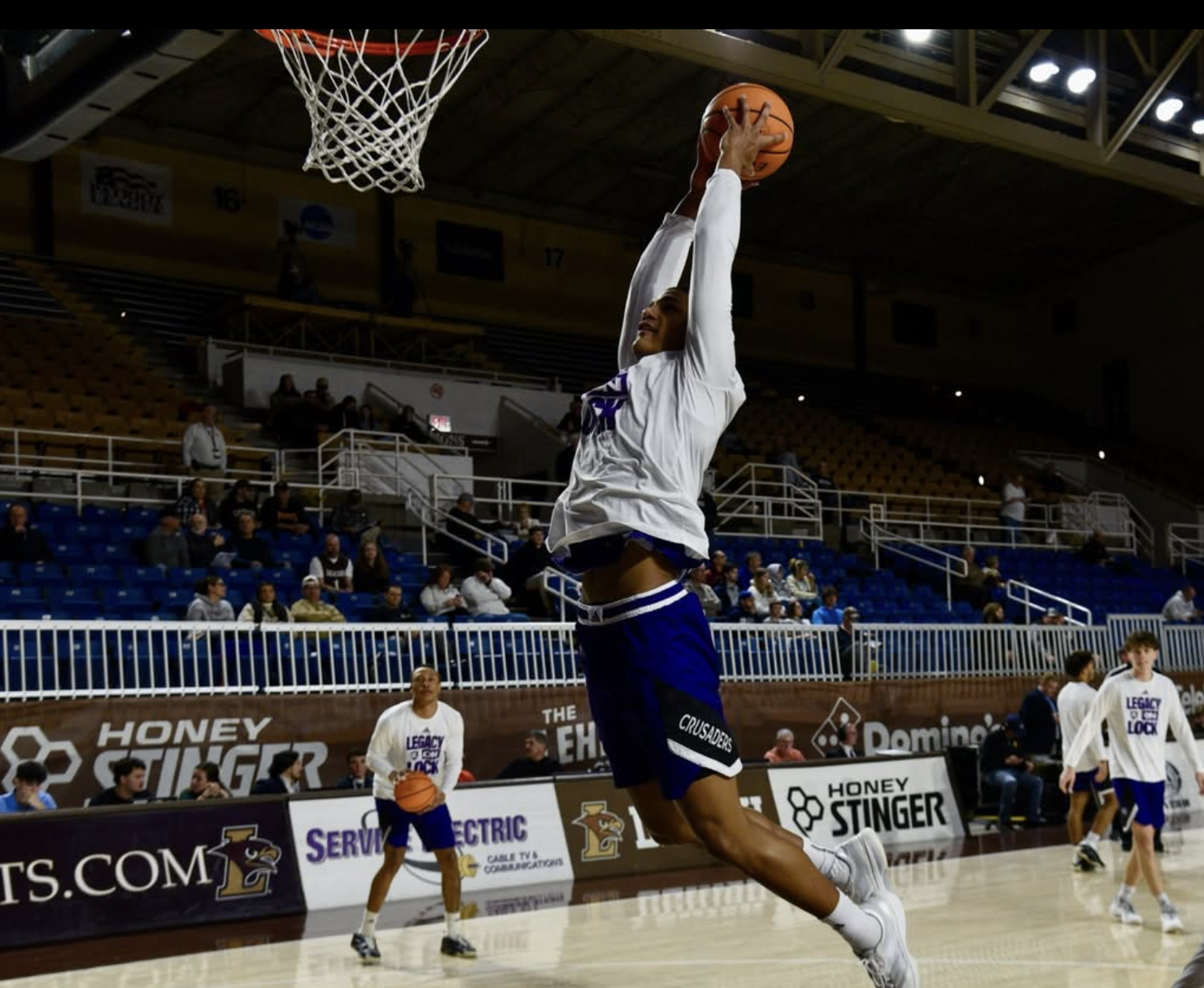
Featured image courtesy of Holy Cross Men’s Basketball Instagram
Leave a Reply