Zach Verdun ‘27
Staff Writer
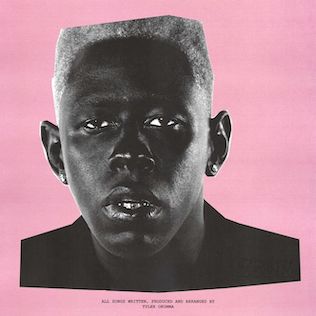
Tyler, The Creator is an artist that has continued to redefine himself with each and every piece of work he has put out. Each album strives to explore a different aspect of himself as an artist, whether it is as provocative as Cherry Bomb or as personal as Flower Boy. Nevertheless, what remains constant throughout all his albums is his ability to completely shock both his audience and the genre as a whole. Perhaps his greatest example of this is what many, such as myself, consider to be his magnum opus: Igor.
Coming off of an extremely personal album with Flower Boy, many questioned where Tyler, The Creator would adventure into next. Some thought he would get more into his rapping abilities as shown with Flower Boy, while others thought he would pivot back to his old rabble-rousing roots.
Personally, I thought he would dive deeper into his singing ability and create an R&B album. What people never expected, however, was a narrative-driven album inspired by the likes of funk music.
From the opening, we are immersed into the new world that Tyler, The Creator presents for us, dominated by synth-heavy backdrops alongside his rather unique singing voice. These are features that remain present all-throughout the album, where each and every song sees himself pushing his singing voice further and using synths in new and innovative ways.
Narratively, the album follows the character of “Igor,” who is assumed to represent Tyler, The Creator. Within media surrounding the album, predominately music videos, Igor is often dressed in bright suits and blonde wigs. Personally, I took this as representing a character who although is flamboyant and cool, is also weird and quirky.
As a whole, the story of Igor follows the protagonist falling for a man who is seemingly already in a relationship with another woman. As we adventure through this world, we see how the character of Igor navigates these feelings of wanting a relationship he knows he can never have. Many consider the album to be split into multiple parts, but how many parts there are is not definitely concrete. I personally believe there are two distinct parts found within Igor.
The first part of this album, I believe, sees the character of Igor fall into love with this mysterious man. Throughout the first six songs of the album, we are exposed to Igor experiencing feelings of love that soon turn to jealousy. With each and every song in this first half, we see him fall deeper and deeper into an unhealthy relationship, fueled by obsession. This culminates with the song “New Magic Wand,” where Igor imagines having a “magic wand” to eliminate the competition he feels in this relationship.
“A Boy is a Gun” marks a pivotal moment in the narrative, where Igor begins to see how destructive his relationship has become toward both himself and his love interest. He begins to regain perspective and becomes aware of the fact that he has lost control of himself by
attempting to pursue this metaphorical relationship. In what many consider to be the best song(s) on the album, “Gone, Gone/Thank You,” Igor reflects on what has happened in this love triangle and how to best move forward. This immediately flows into the next song “I Don’t Love You Anymore,” where he accepts the fact that he no longer is in love and willing to move on.
The concluding track “Are We Still Friends” ties the theme of the album as a whole together. We end the album seeing Igor question whether he and the guy can still remain friends after everything that has taken place. Just as the album opened with Igor questioning whether love is possible, he now similarly questions whether friendship is as well. This takes us full circle around the album, embodying the core cycle between love and heartbreak that Igor continues to fall victim to.
Copy edited by Gail Durkin ’26
Featured image courtesy of Wikipedia
Leave a Reply