Kimberly Von Randow ‘28
Opinions Editor
Newspaper comics are becoming increasingly more overlooked as the years pass. It’s now something you glance at for a quick laugh before moving on to the real headlines. But that mindset overlooks the enormous cultural impact comic strips have had for more than a century. If we want to better appreciate the history of storytelling, satire, and visual humor, we should take newspaper comics more seriously and read them with the same attention we give other forms of art. Unlike comic books, which are as popular as ever, newspaper comics are overshadowed by the rest of the sections and sometimes not included in the papers at all.
Some of the most influential characters in modern culture began as humble newspaper panels. Charlie Brown and the rest of the cast from Peanuts became global icons, shaping how generations of readers think about childhood and friendship. The strip was more than a one-dimensional depiction of children; it explored everyday struggles with a surprising amount of emotional depth for such a short comic. What started as a small daily strip grew into television specials, books, and an unforgettable cultural legacy that still resonates today.
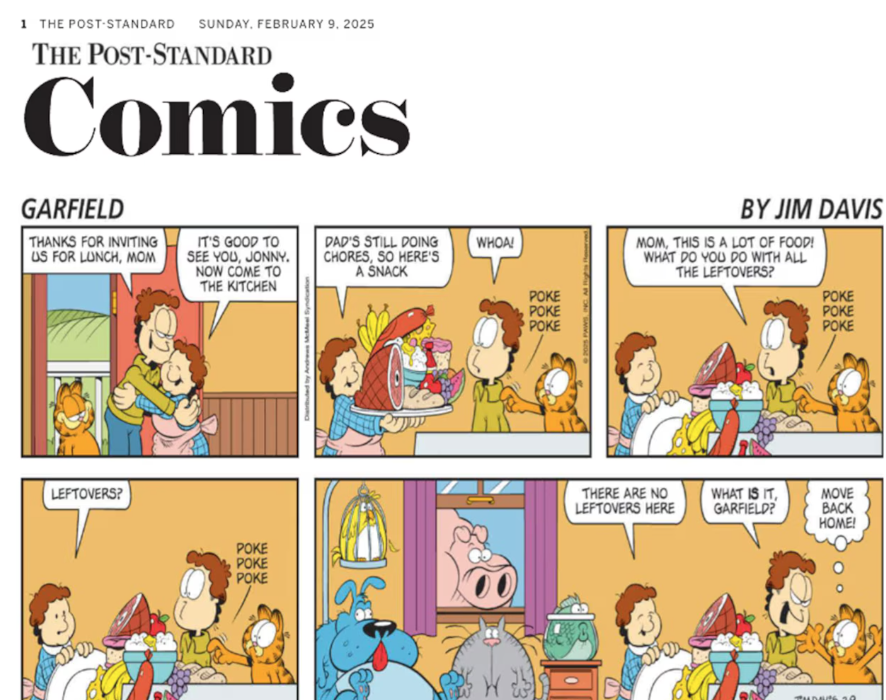
Another household name, Garfield, also began in the newspaper pages of “Garfield” by Jim Davis. The gluttonous orange cat was also used, through simple humor, to connect to the daily lives of its readers. To imagine that the next Garfield or Charlie Brown could never be discovered and put onto an international spotlight because newspaper comics are dying out and its reading rate plummeting is heartbreaking.
Such comics are also valuable as a form of cultural criticism. Because they are written and published daily or weekly, comic strips often reflect the attitudes and social issues of the time in which they were created, and such discussion is needed now more than ever. Cartoonists, like other comedians and satirists, frequently use humor and exaggeration to comment on real-world problems in ways that are easier for readers to digest. For example, “The Boondocks” by Aaron McGruder used satire to explore race, politics, and media culture in the United States through characters like Huey and Riley Freeman.
Part of what makes newspaper comics so important is their timeless accessibility. Unlike films, novels, or television shows, comic strips require only a few seconds of a reader’s time each day. Yet within that small space and minimum amount of panels, cartoonists manage to deliver jokes, develop characters, and sometimes comment on society. Over time, those tiny daily installments add up to rich stories and beloved characters that become part of everyday life and routine.
Unfortunately, as print newspapers decline and readers move online, comic strips risk being overlooked. Many younger readers may never develop the habit of checking the comics page each morning. That’s a loss not just for newspapers, but for cultural history. The comics page has long been a training ground for artists who go on to influence animation and graphic novels.
The potential for bonding over such comic strips is then lost as well. Even in “Diary of a Wimpy Kid,” Greg Heffley connects with his father over their shared hatred for the newspaper comic “Li’l Cutie.” Sure this may be a fictional example, but how else would multiple generations share the love for “It’s the Great Pumpkin, Charlie Brown” if it wasn’t for its newspaper beginnings?
If we slow down and appreciate them, newspaper comics reveal themselves as launching pads for some of the most recognizable characters in popular culture. By giving them the attention they deserve, we keep alive a tradition that has entertained, challenged, and inspired readers for decades.
Featured image courtesy of Syracuse.com
Copy Edited by Sophia Olbrysh ’28

Leave a Reply