Kaitlyn Richards ‘29
News Editor
A campus-wide power outage left students, professors, and faculty alike without electricity during the afternoon of Monday, March, 9, 2026, disrupting studying, residence halls, and classes, as the buildings suddenly went dark. The blackout began around 2 p.m., affecting all academic buildings and dormitories, leaving everyone to rely on emergency lighting. Students across campus reported that lights shut off abruptly, leaving hallways and common areas dimly lit by natural light. Internet access and Wi-Fi were also affected in most areas, making it difficult for students to complete assignments or for professors to teach virtual material.
Shortly after the outage shut down campus, the College’s alert system released a statement stating that they were aware of the outage and that “the college’s emergency response team is contacting National Grid to gather more information,” which brought uncertainty as to when the electricity would return. The school quickly followed up by explaining that “National Grid reported an estimated 4:30 p.m. restoration time,” and that “Public Safety is still available for emergencies,” during the outage, yet the cause remained unknown.
“I was in the Dinand Library, down in the stacks, when the power went out,” said first year student Olivia Zimmerman. Zimmerman explained that “it went pitch black, and I had to take out my phone to flashlight to gather all of my belongings before exiting the library. The atmosphere immediately changed. Then, once I made my way upstairs, I could see swarms of students exiting the library, and everyone started packing up their stuff and leaving to find solace in the natural light, as professors were convening to ensure the safety of all those in the building.”
Another student explained that “it was an uncanny feeling watching the campus go dark. I was in my dorm in Brooks Residence Hall, and suddenly all of my fans turned off, but I did not think anything of it as I had light from my window.” The student stated that “as I exited my room, to a pitch black hallway, and students stuck outside due to the outage. I was relieved that it was a nice day outside, allowing everyone to use the light, and luckily the power was not out for too long.”
Classes across campus were also disrupted by the electrical outage, which continued throughout the afternoon. Some professors chose to cancel classes entirely, while others allowed students to leave early due to the lack of lighting and technological access. For others, classrooms that had natural light sources shifted coursework from technology to discussion of already printed readings.
Despite the inconvenience, many students used the unexpected rest time to soak up the warm weather and sun with large groups gathering outside residence halls, in the Hoval, or even outside of the Prior Performing Arts Center. Students, enjoying their time, went for walks, listened to music, or even read a book, which has become a rare sight as students took a step away from their academic endeavors. Additionally, Kimball Dining Hall remains in service as it is powered by a generator to preserve food in the case of an emergency.
By late afternoon, electricity gradually began to return to campus one building after another as National Grid worked to restore the power around 4:00 p.m. Since the power outage, the cause has not been officially released to the campus community. Slowly, lights flickered back on in the building, and internet access returned. While the electrical outage halted classes, work, and overall campus productivity, it reminded all students, as well as faculty of the dependence of the campus hold on electricity and brought a rare moment of pause to bring students together.
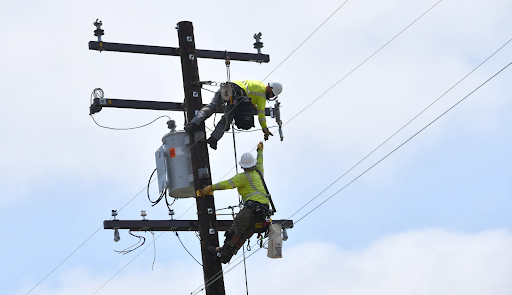
Image courtesy of Newsweek
Leave a Reply