Jake Ruderman ’26
Opinions Editor
Last week, Charlie Kirk became a victim of the political climate he worked so tirelessly to create. While that sentence undoubtedly rings insensitive on the heels of his gruesome killing last week, it’s the unfortunate reality our country now faces in the aftermath of such shocking political violence. I’d like to emphasize that Kirk’s murder is a disgusting, shameful act that should be punished as such, and one that counters the very notions of free speech and debate that this country was built on. There is no place for political violence of any kind in our society. That being said, I’d be remiss if I refused to acknowledge the incredibly divisive and fracturing impact Kirk had on American society; as Reverend Dr. Howard-John Wesley eloquently summarized last week, “how you die does not redeem how you lived.”
Kirk spent his career sowing seeds of political chaos and instability at every turn, creating communities of individuals hellbent on defending the ‘traditional American values’ he preached so highly. While I’m choosing not to delve into the breadth of Kirk’s hypocrisy and slew of horrendous, hateful opinions (it doesn’t take long to find a compilation of Kirk decreeing the passing of the Civil Rights Act was a mistake, assuring that Western culture is far superior to all nonwhite cultures, and fearmongering about the cultural takeovers of Islam and woke, transgender ideology), I will, instead, focus on the parasitic nature of ‘othering’ in our world today, and the toxic famine of empathy sweeping the US as we speak.
The rhetoric that Kirk became infamous for is cut from the same cloth as the MAGA movement at large and stems from the foundational construct of ‘us vs. them.’ This incredibly simple ideology has bred infighting between humans since the dawn of civilization and continues to divide us today. Through the constant denigration of marginalized groups in society, like immigrants in America right now, the largely unaffected majority is taught to vilify those who they choose not to identify with. They’re told repeatedly by trusted voices, both in politics and out, that those people are the problem; they are the ones you need to be scared of; don’t let them win and take your land, your jobs, your rights, your country; they are the enemy.
Through the creation of an intangible they, political figures are able to intensify the focus on ‘undesirable’ groups and further their overarching agendas that are so often built on notions of racism, sexism, xenophobia, homophobia, and white supremacy. While these constructs have been deemed ‘woke’ by those who haven’t been forced to open their eyes to the realities of the world, they undermine nearly all facets of life, even today.
While othering certainly yields jaded worldviews and inspires anger and vitriol at large, it’s most destructive when combined with the inherently apathetic practices of social media. The era in which we live in, where a figure like Charlie Kirk can rise to prominence spewing unvetted opinions that are distributed, primarily, over the internet, has unquestionably created a far more individualistic society; it’s simply too easy to view posts on social media as nothing more than content, not the genuine experiences of real people. This concept compounds on a much larger scale for a platform of 5 million+ followers, like Kirk’s, who believe his rhetoric as 100% truthful, and all opposing rhetoric as unequivocally false. The product of such a vast lack of exposure to conflicting viewpoints is the rise of extremism, where beliefs gravitate towards the more intense opinions of the political spectrum, like an echo chamber amplified to the umpteenth degree. This is exactly where Charlie Kirk thrived.
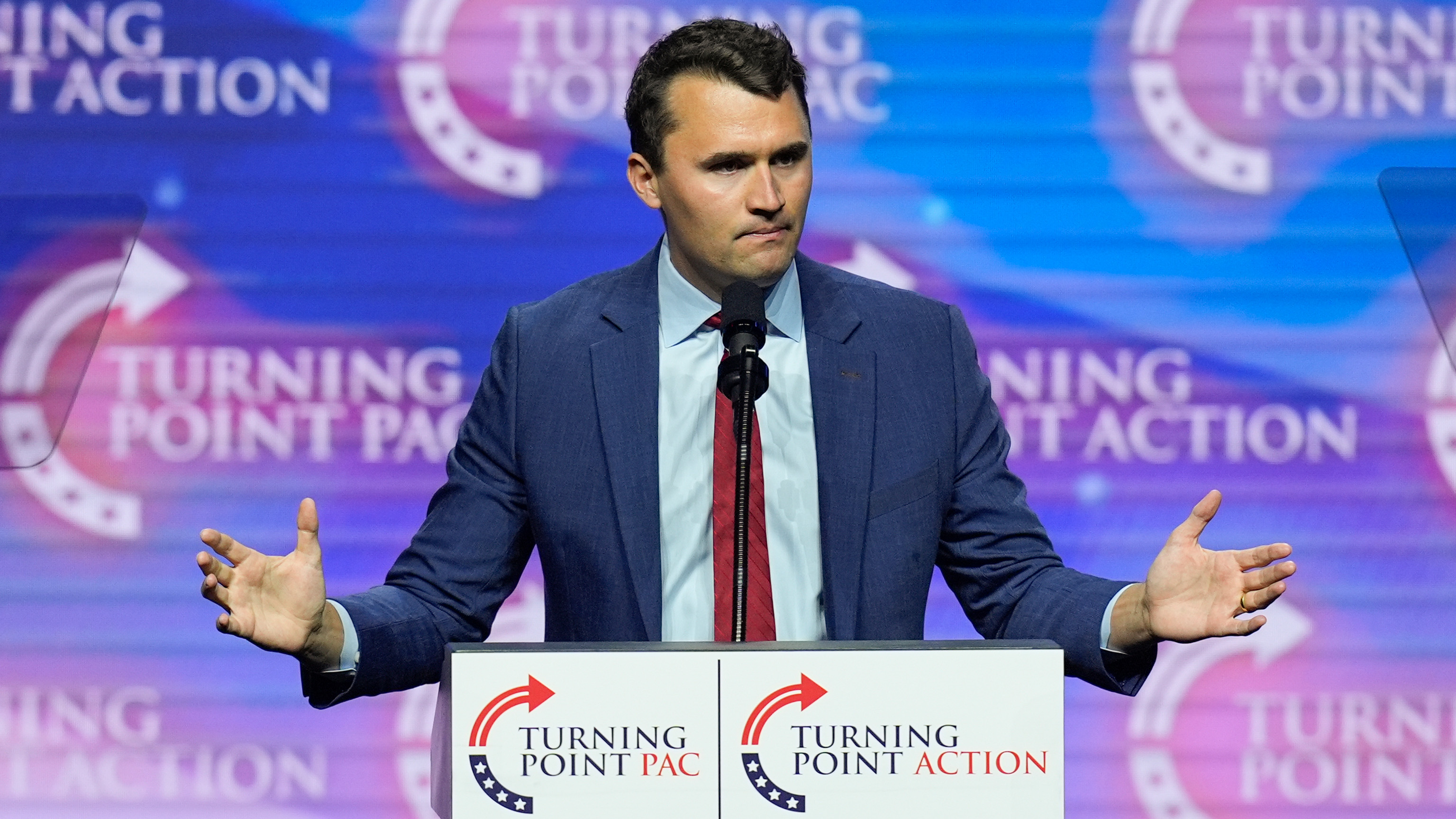
Through the perpetuation of othering, Kirk preached with an iron fist on the absolute necessities of maintaining the rights and freedoms that America was established on; chief among those rights, in his view, was the absolute “God-given right” to bear arms. In his repeated analyses, Kirk emphasized the necessity of being realistic about the nature of gun deaths in America. At a Turning Point USA event in April 2023, Kirk explained that “Having an armed citizenry comes with a price, and that is part of liberty.” He continued on, saying “We will never live in a society where you have an armed citizenry and won’t have a single gun death. That is nonsense.” But ultimately, despite his recognition of the unavoidability of lost human lives, Kirk decided that “it’s worth it to have a cost of, unfortunately, some gun deaths every single year, so that we can have the Second Amendment, to protect our other God-given rights. That is a prudent deal. It is rational.”
While that trade-off may have seemed rational to Kirk in 2023, it’s impossible to see any world in which Kirk would continue to stand by his assessment today, after his life was cruelly taken from him as a result of that armed citizenry he so vehemently defended. While hindsight is as cruel a tactic as any, the underlying point I’m attempting to make is that Kirk’s assessment never considered the fact that his life could become one of those trade-off lives. In his judgement, the lives worth trading were those that had already been traded for decades: the lives of innocent schoolchildren, the lives of predominantly marginalized, lower-class communities who bear a disproportionate burden of gun deaths, and the ‘gang members’ and criminals Kirk was constantly eager to position at the root of the problem. After all, the only way to stop a bad guy with a gun is a good guy with a gun, right? Except, of course, in the instances where one’s life is taken so suddenly and shockingly that no amount of good guys with guns could have prevented it…just as Kirk’s life was so mercilessly ripped from him.
While Kirk and I would’ve happily engaged in heated debate over just about every political issue in the book, I still mourn his passing. Not, honestly, for the individual he was, but for the unfortunate precedents that the silencing of his debate-first style will bring about. The welcoming of confrontation, the willingness to engage in honest debate, and the overwhelming sense that free speech is the greatest freedom of all were qualities he and I could’ve found commonality in. I naively hope his death will serve as the impetus for positive, bipartisan policy change to prevent such incidents from occurring again. Though, realistically, I think his death will come to be remembered only as yet another terrible instance where gun violence reared its ugly head, but changed nothing.
Featured image courtesy of Google Images
Copy Edited by Charlotte Collins ’26

Leave a Reply