Bryce Maloney ‘26
Senior Advisor to the Editors-in-Chief
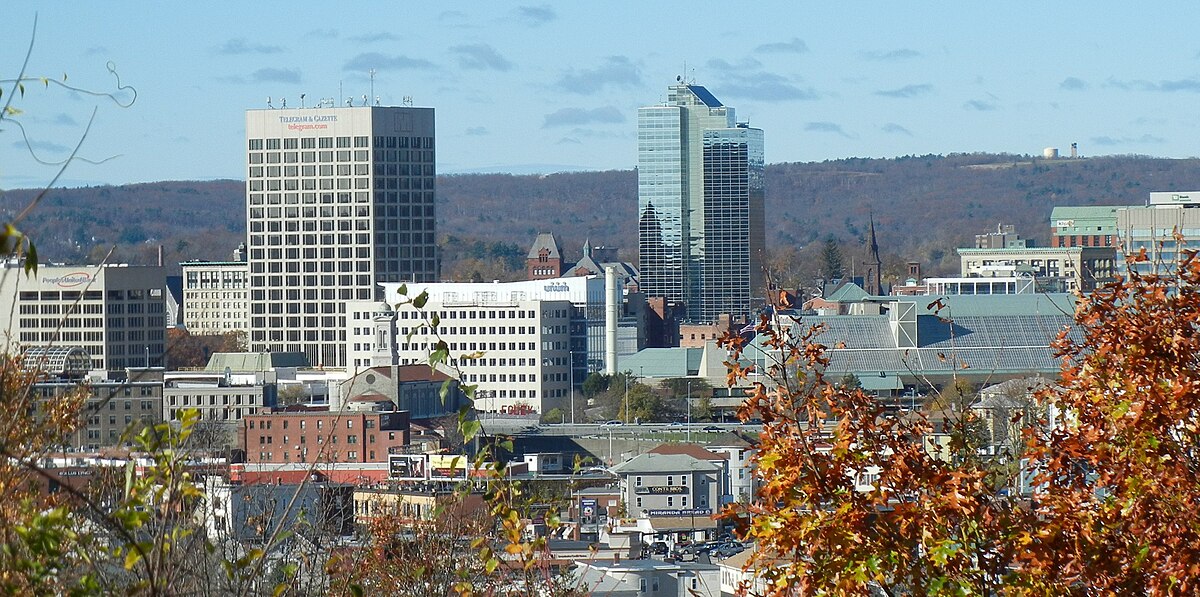
The words “Proud to call Worcester home” are boldly printed in rich crimson text at the top of the community section of Holy Cross’s website. In recent years, the college has made great efforts to embrace the wider Worcester community as part of its mission, but a number of inconsistencies prevail. For those of us who live the dual reality being both a Holy Cross student and a Worcester native, the relationship between this institution and the community which hosts it similarly seems a bit less wholesome.
For instance, I have lived in Worcester for almost my whole life, but it wasn’t until I moved to Mount Saint James that I heard the terms ‘Dirty Woo’ and ‘Woo Rat.’ For those unfamiliar, they are common ways in which the city and people of Worcester are described by many students at Holy Cross, and it is quite frankly disgusting. If you use that language to describe this community or its people, quite frankly, you are too. It’s a disgusting way to refer to the community within which most of you are guests.
In many ways, acts like these also translate into real challenges for students adjusting to life in Worcester. When asked what her favorite thing to do in the city was, my freshman year orientation leader said quite simply that she never leaves campus due to a fear of interacting with locals. For newcomers, comments like these cement a phobia of interaction with the parts of this city which lie beyond College Street. For Worcesterites like me, it creates a sense of isolation and otherness, which is ironic considering the fact that Holy Cross is no more than a 15 minute drive from my house.
Calling someone a ‘woo rat’ doesn’t just affect those people whose lives lie out of sight beyond our gilded wrought iron gates. It describes the people who clean up after your messes, fix the doors you tear down, the ceiling panels you pulverize, and the furniture you deliberately disembowel. It also is an umbrella phrase which would incorporate many of the people who teach your classes, tutor you, prepare your food, and even study alongside you. And unfortunately, all too often, the feeling is mutual. Unlike the many other higher education institutions in the city, Holy Cross does not retain the reputation within this community that many people would like to think that it has.
A few days ago, I took an Uber home from a bar downtown where I had spent some time with friends. On the short ride back, I talked with the driver about his day. Working from 5pm to midnight, he spent most of his time that evening shuffling Holy Cross students to and from their weekly pilgrimage to White Eagle, the iconically Worcester-esque Polish bar on Green Street. Jokingly, I asked “Were they behaving themselves?” With a serious expression, he said “Not really. With other colleges, I usually have no problem. But with Holy Cross, there always seems to be an issue.” He then went on to explain that Holy Cross students frequently leave trash in the car and ask him to make a bevy of unscheduled stops. While this doesn’t represent the whole of the campus community, it is the most recent of many experiences I have had which are indicative of the lack of good will towards this school in the community. And, for many reasons, this has serious implications for students as well. Our reputation, prestige, and high regard amongst our peers is what keeps our degree valuable. Conflict between a school and its host community decreases the desirability of a school. Should our relationship with Worcester worsen, so too will Holy Cross’s reputation itself.
While successive school administrations have worked hard over the last decade to talk about Worcester in a way that is more reconciliatory, this attitude has yet to trickle down to the campus community at large. When understanding why that is, you must first understand the reason Holy Cross has needed to reconcile with the local community at all. A scathing 2010 article from Worcester Magazine entitled “Minding the Crusaders” points out very clearly what the major issues were. Written after a weeks-long row between the City Council and the college’s leaders, the article points to what it calls an “us vs them” mentality as the school navigated the crisis. The opinion piece follows an open letter to HC officials from members of the Worcester City Council, in which local elected officials point out the student body’s role in “the long-standing culture of disrespecting the neighborhoods of Mount Saint James.” Now, more than decade and a half later, the councillor’s collective words still ring true. As someone who has lived much of his life across the street from another college campus in this city, I believe Holy Cross students still show a unique disregard for the community around them. College Hill community stakeholders still complain regularly about the same damage to property, loud parties, and “reports of public urination, hundreds of students in the streets late at night and vandalism,” that were referenced in the article more than 15 years ago. In many respects, much of the reason these issues still persist is because of the way we talk about Worcester. The culture which is cultivated on this campus as it relates to its immediate surroundings is one which still combines “no rules and little consequence.”
I do not mean to suggest that the actions of some Holy Cross students represent the values of this entire campus. Many students come to Holy Cross and happily immerse themselves in the city’s culture. The pull of our school also means that people from all over the world leave their mark on this place. But for those of you who are still not convinced or concerned, I would only say that after four years, Worcester will have become a part of you. For the rest of your life, this city will follow you wherever you go. Whether you like it or not, you are at least a little bit of Worcester. Changing the way you talk about it will change the way the world perceives you.
Copy Edited by Ella Woei ’26
Featured image courtesy of Wikipedia

Leave a Reply