Kate Santini ‘27
Chief News Editor
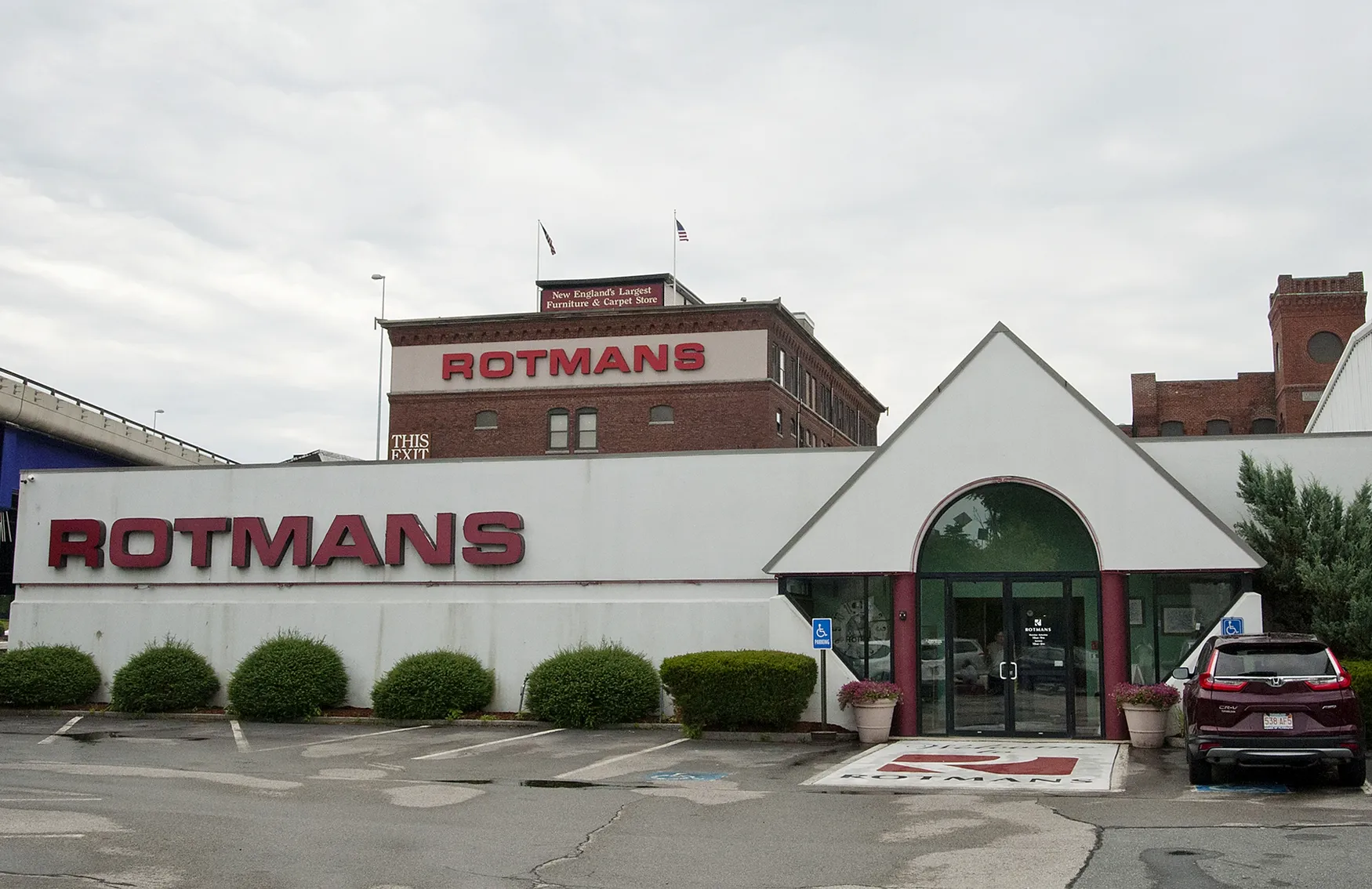
This past semester, the College’s purchase of the 300,000 square foot Rotmans Furniture property on 725 Southbridge Street has been the talk of campus. There has been a flurry of speculation amongst students on The Hill about creating off-campus dorms, a food spot, and even a graduate school. The College administration, however, has yet to make an official decision on how to proceed. Regardless of the uncertainties surrounding the purchase, President Vincent Rougeau has referred to it as “a strategic investment in our future.”
Lying directly beyond Interstate 290, which divides campus from the rest of Worcester, the former furniture store opens a more direct pathway to the city. The 1968 alum and founder of Student Programs for Urban Development (SPUD), Patrick Clancy, feels that this property presents an opportunity for Holy Cross students to connect with the wider community.
During his time at the College, Clancy volunteered at a settlement house situated in a black neighborhood. His experience volunteering was a formative part of his education and later inspired him to continue his commitment to public service by studying law. In a letter addressed to the Spire, Clancy fondly recalls his liberal arts education yet added that while “a distinguishing characteristic of Holy Cross has long been the strong moral character of the education it provides…it sits on a hill at the edge of its host city…and as if geography were in fact destiny, its connection to Worcester remains to this day quite limited.”
The campus’ isolation raises the question of whether Rotmans, or at least a portion of its vast space, can be carved out for community-based events. Current SPUD leadership responded to this idea with enthusiasm and issued a statement agreeing that, “there is a clear and pressing need to strengthen our connection with the local Worcester community, and a dedicated space where Holy Cross and Worcester residents can come together, regularly and intentionally, for community-based events and collaboration would be transformative.”
Clancy also urges project managers to incorporate student voices in the construction process. In an email addressed to the school, Rougeau voiced that while “it’s too soon to say what role this property will fill for the College…[the administration] plan[s] to invite input from the Holy Cross community as a part of that process.”
In recent years, esteemed colleges and universities have undertaken massive construction projects directly relying on student input. Project manager of the Emory University Student Center, Benjamin Perlman, alongside his team, was awarded the highest honor in the 2020 Building Team Awards. Initially proposed in mid-2013, the Emory University Student Center’s construction culminated in 2019. From the project’s outset, Perlman knew that it was “inherent in student center philosophy to have students involved.” The project began with a “feasibility study,” involving focus groups who “brainstormed” a general outline for the center and dealt with budget constraints. Perlman stressed the importance of gauging the opinions of a wide variety of students, not just the ones heavily involved in campus life. One such way he “solicit[ed] student feedback” was by inviting them to browse models submitted to a design competition by various architecture firms. Even after Duda Paine Architects and Holder Construction signed onto the project, students were kept in the loop on the center’s construction through Instagram “this or that” polls and guided tours of the construction site.
Because construction was completed immediately before the outbreak of COVID-19, it is difficult to discern whether the project had a notable impact on admissions. However, Perlman noted that the $98.6 million project drastically improved the lives of Emory students. As the university’s largest non-academic project in history, it markedly improved the student experience by providing a gathering place, better dining options, and incorporating furniture and amenities that had been directly voted on by students. While Perlman has taken on a new position at St. Louis University, he shared that the Emory University Student Center is still the “thing he is most proud of in his professional career.”
Given Holy Cross’ small size and close-knit community, incorporating student insight into the Rotmans project is in the College’s best interest. SPUD leadership echoed this sentiment by pointing out that Holy Cross is “our shared home” and that it calls for “a shared vision for what it can truly become.” Whether or not Rotmans is made into a community center, it is imperative that student voices play a central role in guiding its construction.
Featured image courtesy of the Worcester Telegram
Copy Edited by Charlotte Collins ’26
Leave a Reply