Julia Kane ’27
Opinions Editor
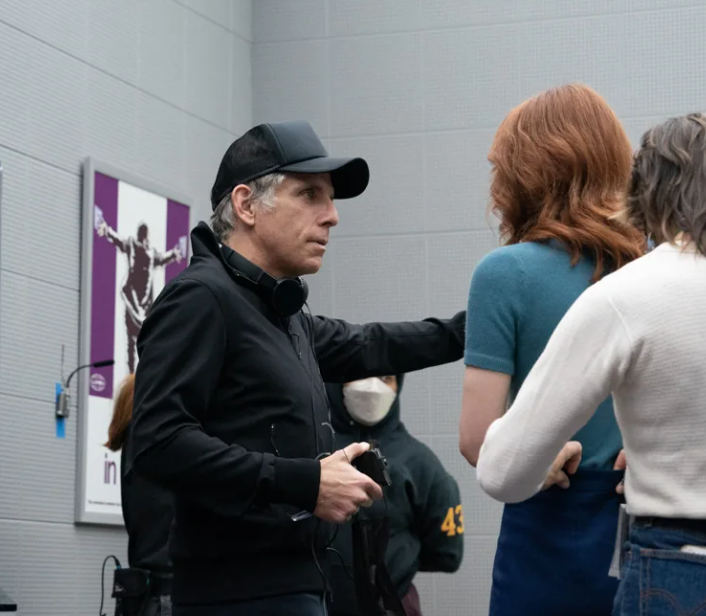
Ben Stiller is often best known for his roles in classic films such as “Zoolander” (2001) and “Night at the Museum” (2006), but many are unaware of his immense skill as a director, showcased in the Apple TV original, “Severance.” Although the first season of the series debuted in 2022, it has become a phenomenon that has taken the world by storm in recent months alongside season two. Much to the neglect of my schoolwork, curiosity got the better of me and I had to see if the show lived up to the grandiose expectations of thousands of viewers. Seeing Adam Scott in the cast, whom I loved in “Parks and Recreation” (2009-2015) as Ben Wyatt, reassured me that at least the acting would likely be up to par. Truth be told, I was swept into the series and watched up until the current episode in a matter of weeks, enamored by every minute of “Severance.”
If you are someone who enjoys clues, puzzles, and deciphering mysteries, watching “Severance” is a game in itself to attempt to figure out the mysterious environment and inexplicable components of the dystopian universe. On his podcast with Scott, Stiller has stated that everything in the show is intentional, showing the intense attention to detail and masterclass world-building that comprises “Severance.” Even just by glancing at your phone or multitasking while watching the series, you may miss an integral detail that could help you to understand the characters’ fates. There are countless rabbit holes of theories and predictions on internet platforms through which viewers can find community and share their thoughts on what may happen. Most of all, though, the series has caused me to reflect on its themes and lessons surrounding our current society and typical workplace norms in the US.
“Severance” occurs in a disconcerting, sterile office building of a company called Lumon, complete with tiny office cubicles and menial incentives like a deviled egg bar. To be severed means to undergo a chip implantation procedure in which your outside being, called an “outie,” is completely separate from who you are at work, your “innie.” Your outie has no recollection of your innie’s day at work, and are essentially two independent beings living in the same body. To me, even the mere concept of severance is representative of the clear distinction between someone’s work life and personal life. Although the concept of work-life balance, referenced repeatedly throughout the show, appears to be a priority for corporations, employees are overworked, underpaid, and treated poorly more often than not. Lumon’s enigmatic nature and mysterious atmosphere correspond with how little is known about major companies, such as how their funds are allocated, their ulterior motives, and what happens behind closed doors. One recurring theme is how Lumon’s higher-ups are able to mistreat their employees and manipulate them, as the innies are not considered human and know nothing of their outie’s life outside of the company. Above all, those who choose to be severed prove how for many people, work is simply something that has to be done and is not considered enjoyable. As long as their bills are paid and their outie can comfortably provide for themselves and their families, many would rather be completely separated from their work life and dissociate from it. In the real world, we try to convince ourselves that we need our company and employer, but oftentimes they need you as an employee even more, yet they underappreciate their workers and use them as pawns.
I have encouraged many of my friends and family members to give “Severance” a shot, as I am utterly fascinated by the show’s intrigue, plotlines, clues, and themes that apply to modern-day corporate work culture. Stiller provides a meticulously crafted series that is full of heart, as well as criticisms of how capitalism has the capability to ensnare and use humans for monetary and idealistic gains. It is more than just a show to look forward to watching every Thursday at 9 p.m.; “Severance” has challenged my outward perspective and allowed me to reflect upon the role of powerful corporations in everyday society. If you don’t believe me, just see for yourself; you may relate to “Severance” more than you would think.
Featured image courtesy of Google Images
Copy Edited by Lily Wasmund ’28
Leave a Reply