Josh Tubbs ‘25
Guest writer
College basketball fans across the country rejoice for March. The start of the month signals the imminence of the men’s NCAA basketball tournament, also known as “March Madness.” The tournament is the pinnacle of college basketball, with sixty-eight of the best teams in the country competing over three weeks for the opportunity to be crowned champions. Every year, March Madness features compelling storylines, as teams and individual players who generally do not attract significant media attention have the chance to prove themselves on the national stage. It is these players and teams that produce the memorable “upset” victories and “Cinderella” runs that college basketball fans know and love.
Problematically, recent NCAA rule changes threaten some of the most favorable aspects of March Madness. Following the Supreme Court’s 2021 decision in NCAA v. Alston, NCAA athletes of all sports can now receive financial compensation for their Name, Image, and Likeness (“NIL”). Notwithstanding the moral or legal justifications for this change, its effects have been immediately detrimental to college basketball. Specifically, the change undermines the commitments of individual players to their teams and exacerbates the skill gap between big and small schools, threatening to harm the quality of play in March.
NIL has changed the dynamic between player and team in men’s college basketball for the worse. Before NIL, players were limited to relatively traditional reasons for choosing a school: academics, size, conference, etc. However, now players often choose primarily based on the financial package they can receive for the next year, transforming them into quasi-independent contractors. The consequences of this change have had devastating effects on team unity and camaraderie, as players are less attached to their school and teammates. In a recent interview with 60 Minutes, two-time defending national champion head coach Dan Hurley, whose UConn Huskies qualified for this year’s tournament, claimed that over half of his players either already had NIL packages lined up for next season with new schools, or planned to enter the transfer portal to obtain more NIL. While it is hard to determine the exact effects this lack of commitment will have on team performance, it is impossible to imagine that UConn, and other teams with similar problems, will be unified enough to perform their best come tournament time.
NIL also hurts the chances of “Cinderella” underdogs emerging in March. Since its inception, NIL has evolved from an opportunity for private companies to pay college athletes for advertising, to a full-blown compensatory relationship between school and athlete. Before this season, some of the biggest programs across the country, including Duke, Syracuse, and Alabama, hired “general managers” to ensure funding be used to bring in top talent. Such a development is dangerous for college basketball because it threatens to exacerbate the skill divide between small schools and perennial powerhouses. It is improbable that any elite players for mid-major schools with minimal funding, like those in the Patriot League, A-10, and MAAC (among others), are going to turn down hundreds of thousands, if not millions, of dollars to transfer and play for some of the nation’s biggest teams. Why is this important? Conference champions get automatic bids into March Madness, pitting the best of the small schools against the best of the big schools. When these small schools cannot prevent big schools from taking their best talent, it is much harder for them to rise to the occasion in March and provide the surprising “upset” victories that fans love.
What does all of this mean for the future of college basketball? The current legal climate suggests that NIL is here to stay. While its effects might not be immediately noticeable, the current state of NIL will likely lead to a deterioration of college basketball over time for the reasons previously mentioned. To combat this, the NCAA should limit direct and indirect “pay-to-play” relationships between schools and players. While these relationships are difficult to govern, they must be regulated to preserve the elements of college basketball that keep it competitive and exciting. Otherwise, the quality of college basketball in March, and throughout the rest of the season, will likely continue to decline.
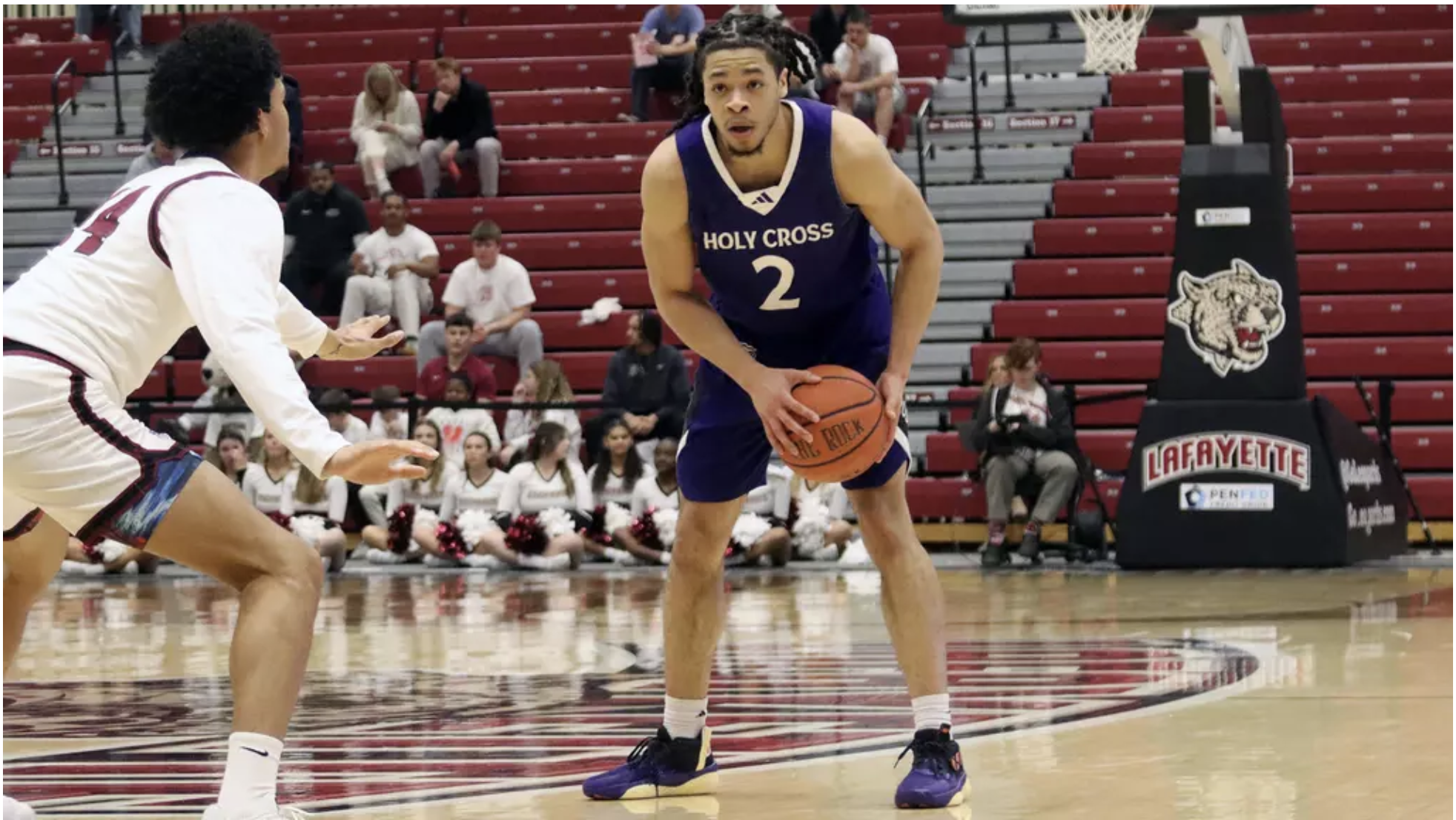
Featured image courtesy of Holy Cross Athletics
Leave a Reply