Todd Rado ‘26
Opinions Editor
During the Uvalde shooting, police waited for over an hour to intervene. 19 children were killed as a result. Within the released security footage in the building, the above image was the editor’s caption. To date, only two officers have been charged, and with only criminal negligence. Within this fast-approaching age of American fascism, this feels the perfect time to address the soon-to-be enforcers of this: the police. From their historical role in this kind of repression, the pejorative ‘ACAB’ was born – that all cops are bad. A ridiculous statement, right? The reality is a number of educated defenses can be made of this philosophy.
Myth 1: The job of the police is to protect and serve.
Ever since Warren v. District of Columbia (1981), police have had no “specific legal duty” to protect and serve. The only legal role of the police is to do whatever the government wants them to. Through riot control, forceful evictions, doling out fines for feeding the poor and arresting homeless people for being homeless, they indeed do. One would be hard-pressed to explain how the police “help” while completely beholden to the unjust law of the rich.
Myth 2: Police are not above the law.
Speaking to the prior point, police are formally encouraged to be loyal to this role – even to the degree of violating rights – through Qualified Immunity against the law. A police officer cannot be sued or held accountable for violating rights unless there is a clearly established case law which resulted in accountability of another official. The problem is that case law against police rarely cannot be established, because they have qualified immunity. Due to this circular legal rationale, police cannot be held accountable.
Myth 3: Cops are the most upstanding members of a community.
Not one, but two separate studies, Johnson (1991), p.34, & Neidig & Russell (1992) have noted that a whopping 40% of police officers have self-reported to be abusive towards their spouses and children. Many of these abusers are also well-adept at protecting themselves from prosecution due to exceptional knowledge of the law as opposed to the survivor. Many of these personally violent officers are not only kept on the force, but promoted. This trend is the same on the field, too: police officers often involved in misconduct cases and who cost the city settlements are often promoted for their behavior.
Myth 4: Cops show sufficient restraint in action.
Things police have opened fire over in the last decade include: A toy gun (suspect killed, officer not charged), A wallet (injured, Davidson v. City of Opelika, officer acquitted), A toy truck (injured, conviction overturned), For being homeless near the RNC (killed, no officers charged), over Absolutely nothing in Glendale, (killed, no one currently charged, since this shooting occurred 9 days ago as of time of writing), Dogs (up to 10,000 a year). In one case, an officer shot one for barking, and threw their corpse in the dumpster (no officers charged), a mother experiencing postpartum depression (along with her baby) in Kansas City (both killed, no officers currently charged), multiple wellness checks, such as against Yong Yang (killed, no officers charged. This happens about 60 times per year, too), and last but not least, over an acorn bouncing off a car (traumatized, officers involved not charged). This is not a comprehensive list. Perhaps these case examples would be exceptional if those involved faced the law, but the majority in these cases officers are, at the absolute worst, fired.
Myth 5: The problem is a few bad apples.
The ‘Blue Wall of Silence’ demonstrates otherwise. What is this? Within most police departments, as reported by Human Rights Watch, there exists an informal, fraternal code between officers never to report a fellow badge for misconduct. Chances are, due to this omnipresent and untraceable rule, the few ‘good cops’ your community enjoys know of the habits of the department’s bad cops, but choose not to come forward with them. If this were not an issue of institutional rot, and, then perhaps the entire Hanceville, Alabama police department would not have been recently completely abolished (all officers placed, of course, on paid leave) due to how the cops there were, collectively, an “ongoing threat to public safety”.
Myth 6: this is a problem of education.
The problem with this is cops are not legally allowed to be adept. In 2000, a court maintained the practice of police firing candidates for being too smart. The state wants enforcers, not competent people. Competent officers may have morality, and thus more of a penchant to disobey. All of this is not even touching upon the unique and systemic racism of the police. And this level and scale of pure, collective cruelty can only suggest one thing: the system is not broken or corrupt, it’s working precisely as intended: terrorizing the working class to scare people out of organizing for substantial change. And during the next few years, police will be emboldened to be all the more aggressive, hateful, and violently charged in service of the American state, and will have the full support of the law to do so. If you are a witness, use your legal right to record the officer. If you are a suspect, remember to invoke your right to silence, ask if you are being detained, and if so, say nothing. Be aware of your rights, so you know when they are violated. And never forget that police are not your friends.
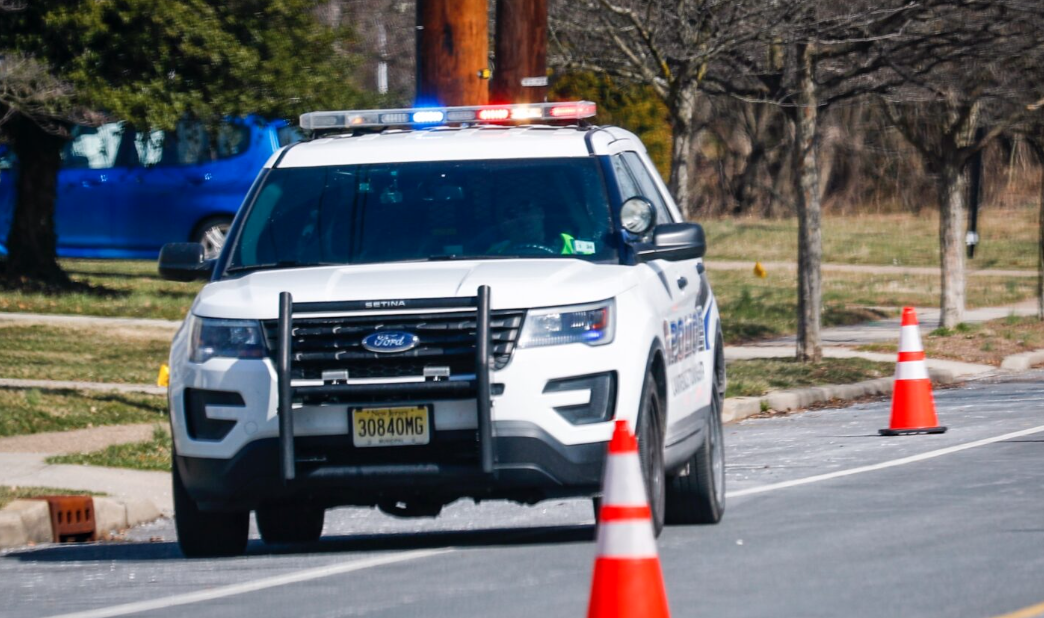
Featured image courtesy of New Jersey Monitor
Web Edited by Zexuan Qu ’28
Leave a Reply to In Defense of Uncivil Politics – The SpireCancel reply