Sean Rego ’26
Opinions Editor
With all the conflict in the world, something that continuously bothers me is how exactly we reach peace and the role of violence in accomplishing such. Never in the history of humanity has the world fully been at peace. From the illustrious ages of Pax Romana, Britannica and Americana to the horrific battles of the last century to the simplest blood feuds of ancient times, evil has persisted in all forms. As a Christian, I believe this is the tragic nature of humanity—that we are imperfect and fall victim to sin—and that war is a horrible byproduct of our nature. With this, violence has been a tool in humanity’s history of progress and defiance against evil, and thus I wonder just how we secure peace in our geopolitical world without it.
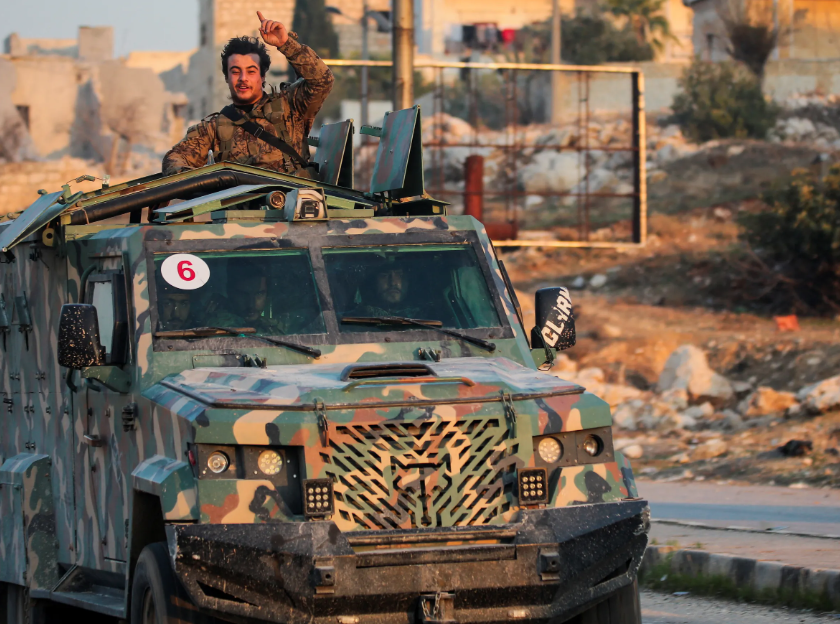
Over Thanksgiving, we saw news pour in from Syria of rebel forces retaking Aleppo from the Iran and Russia-backed Assad regime. Although the Syrian Civil War has largely been sidelined in recent years, this update reminds of the real suffering and violence happening in this once grand nation. Hundreds of thousands have died in their fight for liberation, and despite the unending costs, the rebels will not give in if a sliver of victory exists, as this news has proven. Are these fighters wrong for using violence to fight against authoritarianism?
Likewise, we were met with promising news in the Levant, in which Lebanon and Israel have agreed to monitor and block off the terrorist organization of Hezbollah from continuing its attacks on Israel (which started on October 8th and resulted in the displacement of tens of thousands). This ceasefire came after the divisive decimation of Hezbollah, which once was Israel’s biggest bordering threat, and suggest success in the military tactics of the Jewish Nation’s seven-front war. And yet, despite my own stance on the subject, I see the argument against the use of war as a measure of security.
This most strongly may appear in the Russo-Ukrainian War, where the newfangled usage of long range weapons throws our world into evermore uncertainty. I believe this move is a show of strength on the part of NATO, but in a conflict with hundreds of thousands of casualties, should we be more carefully considering the ramifications of the tool of violence? Is it something with which we should engage so ardently? Like the two cases above, there are surely people who’d say no.
However, in all three cases, I cannot agree with the dissenters. When we talk of entire nation-states, it is easy to forget the equally dangerous ramifications of hesitancy or cowardice. To tell Israel, Ukraine or any other nation that she cannot defend herself against violence is an ill-conceived idea that jeopardizes millions and can spur further attack. This is why I so fervently believe the West must act through strength if we want peace.
It’s often through the lack of force that we see horrific circumstances arise. The withdrawal from Afghanistan spelt a relapse of liberties in the country, just as the softening of sanctions on Iran let the theocrats crack down harder than ever on the Persian people. Both of these dire situations would have been avoided if stronger measures were taken by the likes of the West. For centuries, our greatest eras of peace and liberty are thanks to strong, retaliatory measures.
The path to peace isn’t an easy road by any means. As college students, I think we sometimes like to gravitate to the simplicity of demanding peace out of the blue and disregarding history and circumstance. We neglect the fact that, sometimes, the threat of force is the only keeping a nation afloat against waves of attack and totalitarianism. The United States is a great example of this: we are a country that’s built a network of allied free nations only possible because of her immense prowess on the world stage. We’ve fought back against the forces of National Socialism, Communism and tyranny to offer a chance for a better world. Does that make the so-called American Empire a perfect utopia? No, of course not, but it at least makes it a place to which billions can look for security and freedom. When my family fled the ruins of the sordid Soviet Union, they too understood how fragile peace was, and were grateful to come to a nation that was able to offer it.
In this rather loose reflection, I know I leave both myself and the reader with an unsatisfactory answer to the question of war and peace. Simply put, peace on an international level is quite hard to achieve. We can only recognize that the world is quite a shady place with a lot of problems that’ll take an eternity to fix. We must recognize that our ideals are theoretical and do not account for the imperfection of humanity. We can only cling to the bright spots of it all and try our best to better the situation and be thankful for the miracles we currently have.
And ultimately, beyond this sea of darkness, perhaps the best guidance on this dilemma comes from the belief that there exists a hope for us all. It ultimately comes not in the form of a nation or ideology, but in the faith that all of us share an innate imperfection and a gift of individual salvation—that man with man can peaceably dwell and that all nations may arise joyously—through He who reigns forever. At least in terms of the self, that is the best path to peace. Merry Christmas, and happy holidays.
Featured image courtesy of USA Today
Copy Edited by Lily Wasmund ’28
Leave a Reply