Nathaniel La Blanc ‘28
Opinions Editor
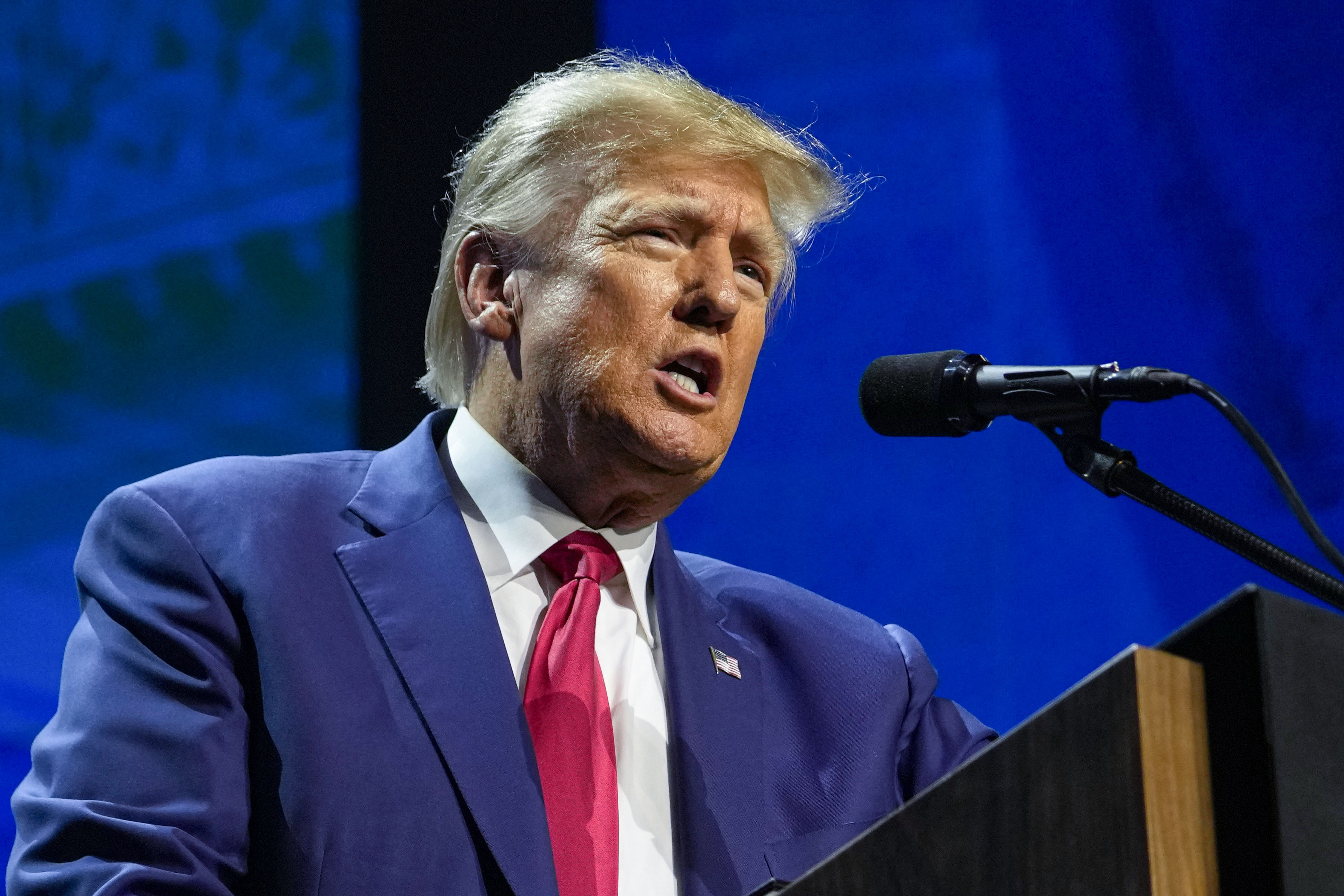
On November 5th, 2024, Donald J. Trump was reelected President of the United States, winning a decisive victory over Vice President Kamala Harris. Trump is the first President since Grover Cleveland in 1892 to win two non-consecutive terms and will begin his final term on January 20th, 2025. Republicans also took back control of the Senate and will likely narrowly retain the House of Representatives.
This election was decided by voter apathy towards President Biden and Vice President Harris rather than enthusiasm for President Trump. Trump won 75 million votes last Tuesday, a slight increase from his 74.2 million total in 2020. But the real change was in the total garnered by Vice President Harris, who won 71.7 million votes, almost 10 million fewer than President Biden’s record of 81.3 million in 2020. Trump’s electoral vote performance was the best for a Republican since 1988, winning 312 electoral votes, and carrying all seven swing states, flipping back the five he lost to Biden, holding North Carolina, and flipping Nevada which he didn’t win either in 2016 or in 2020. Trump is also the first Republican in 20 years to win the popular vote.
As widely predicted by pundits, Republicans flipped control of the Senate as the Senate map was incredibly unfavorable to Democrats. With a third of the Senate up for election, by sheer bad luck, the Democrats were stuck defending nearly twice as many seats as Republicans. Democrats also had to defend seats in safe Republican states like West Virginia, Ohio, and Montana. As expected, those three seats flipped towards the Republicans, in addition to their narrow Senate victory in Pennsylvania. Democrats, even though suffering losses, performed about as well as they could in other swing states like Wisconsin, Michigan, Nevada, and Arizona, winning the Senate races there even as Trump flipped those states in the Presidential election.
A week after the election, the House of Representatives still hasn’t been called in large part due to the sheer number of ballots in the populus California that need to be counted. However, many pundits have the House leaning ever so slightly towards the Republicans, but there remains a small chance that Democrats could pull off an upset. If Republicans can keep control of the lower chamber, they will have a government trifecta for the first time since Trump’s first term began in 2017.
The lowest point of Trump’s political career came in early 2021 when he left office after attempting to overturn the 2020 election, and supporters of his attacked the capitol on January 6th. Leaving office one week after his second impeachment, a political comeback seemed impossible. Trump continued to dominate Republican politics, endorsing many candidates for primaries in the 2022 midterms. However, many of those candidates failed, and Democrats outperformed expectations. Just a week after his party had an abysmal showing in 2022, fearing that his party would move on from him, Trump announced his final campaign for President. As trying to overturn an election is highly illegal, Trump was indicted for it both federally and in Georgia in 2023. He was also indicted in a criminal case for financial fraud and a civil case for sexual abuse, both times being found guilty by a jury of his peers. With a significant weakness in the polls going into the primaries, Trump exploited his indictments for political support, claiming without evidence that they were attempts by Biden to stop him from becoming president again. Trump also rallied congressional Republicans to scuttle a bipartisan border security bill as its passage would lessen the migrant crisis and give Democrats a win on the issue. The primary base rallied around him going into 2024, and won the Republican primary in a landslide.
After President Biden’s age caught up with him at a June 27th debate, it looked like Trump was easily the favorite to win the election. Trump also benefited from sympathy after being shot in the ear during a rally on June 13th. Democrats, on the other hand, were facing an internal civil war as a growing number of officials called on Biden to drop out of the race. When he finally did, he endorsed Harris, who subsequently enjoyed a honeymoon lead in the polls. However, disenchantment with global inflation, the crisis on the southern border, and the humanitarian crisis in Israel all led to an unshakeable discontentment with Democrats.
As Democrats begin to autopsy their loss, many have pointed out that incumbents have lost all over the world as inflation has surged due to the war in Europe and the aftermath of the pandemic. In the UK, Japan, South Africa, and India, incumbent parties have all suffered significant defeats at the ballot box. In many countries as well, such as in France, populist leaders have made significant gains in the electorate this year. However, Democrats have experience both losing to Trump and winning against Trump, and the common denominator in the losses is the lack of a competitive primary. In 2016, the field was mostly cleared for Hillary Clinton to win the nomination, and there wasn’t even a primary in 2024, with the only significantly competitive primary being in 2020. The winner of a primary is battered and bruised, but comes out stronger after being tested. If Biden abandoned his reelection bid in 2023 and Democrats held a primary, they likely would’ve had a much better chance to win this election.
Trump’s victory on the other hand is a personal one. Initially running to enact “retribution” against his political opponents, he quickly turned to running to escape justice. As the first felon elected President, Trump can use his power to prevent himself from going to jail. He can fire all the people in the Department of Justice prosecuting him for federal crimes and if found guilty of federal crimes, he can pardon himself. Even his conviction in New York and the pending case in Georgia won’t yield any jail time because of the logistical impossibility of a President serving from a cell.
But such consequences are minor when it comes to the future of our country. Democrats will be sure to autopsy their loss and hope to rectify it so they can take back the Senate and House in 2026, and the Presidency in 2028. As this is Trump’s last election, Republicans will need to find out why voters turn out for Trump so much and what they can do to replicate it. Vice President-elect JD Vance has started mimicking Trump’s rhetoric, and Democratic governor Gavin Newsom of California is already calling for a special session of the California legislature to “Trump proof” the state. However, these elections are distant, and we can rest now as the most widely anticipated election of the past four years is over.
Featured image courtesy of Google Images
Copy Edited by Alexandra Berardelli ’25
Leave a Reply