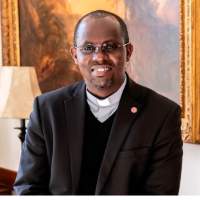
Molly Landis ’27
News Editor
Organized by Assistant Professor of Religious Studies, Audry Seah, Holy Cross hosted a symposium on April 19 and 20 to remember thirty years since the Rwandan genocide. Professor Seah is currently teaching a class called Catholicism, Genocide & Rwanda. The class explores Catholicism in Rwanda and many aspects about the genocide, including why and how it happened, what the role of the church was, and how Rwanda is undergoing the process of reconciliation in order to move forward. The symposium was a way for students in this class, as well as students in general, to explore even more topics related to the genocide to further their understanding of the conflict. April 7, 2024 marked thirty years since the Rwandan genocide. On April 19, the keynote speaker of the symposium — himself a survivor of the conflict — opened by speaking about the genocide in general and how Rwandans can work to move forward from it.
The symposium continued all day on Friday, April 20, with five speakers and a luncheon. The luncheon was a chance for students to talk to presenters on a smaller scale and engage in further conversation, asking questions and speaking about what the presenters talked about. The sessions students could attend included “After the Rwandan Genocide: Lessons for the Global Church,” “Christophe Munzihirwa, S.J. and the Impact of the Rwandan Genocide in Congo,” “Comparing Reconciliation Policies in Post-genocide Rwanda and Post-communist Poland,” “The Cow and the Canoe: Ritual Responses to Crisis in Canada and Rwanda,” and concluded with a session titled “The Mortal Dangers of Epistemic Vices: Pastoral Responsibilities in Light of Genocidal Complicity.” These talks were about reconciliation, the role of the church in the genocide, and comparisons to other conflicts and efforts of reconciliation around the world. This symposium brought in speakers from Poland, Rwanda, and Canada, as well as attracting religious scholars from other universities. This was an opportunity for professors and students alike to learn more about the genocide and its effects on the global church. A conflict like Rwanda’s does not just affect Rwanda, but reaches out and affects other countries and people.
Joshua Horn ‘27, a member of Professor Seah’s religion class about the genocide, stated the following: “I thought the symposium was a great opportunity to listen to speakers about what we are learning about in class. We were able to hear about real-world reconciliation efforts, and it was great to take our learning beyond the classroom.” As Horn says, the symposium was a great opportunity for students to learn about the genocide and the effects of reconciliation outside of the classroom from real people engaged in the efforts to reconcile and research surrounding many of the ideas that students have been talking about in class.
Copy Edited by Caroline Kramer
Leave a Reply