Jake Ruderman ’26
Sports Editor
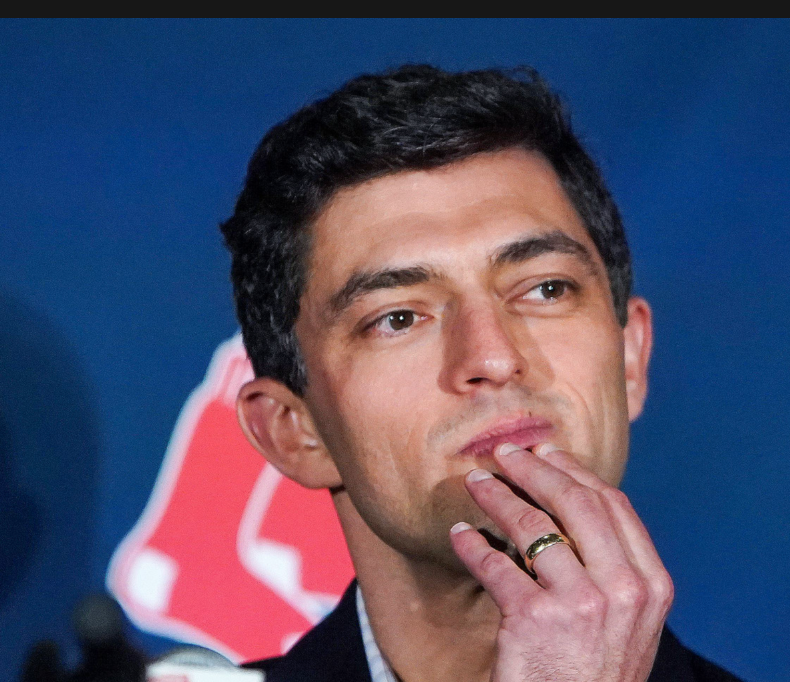
This past week, the Red Sox made the surprisingly-timed decision to fire their Chief Baseball Officer, Chaim Bloom. The Sox brought in Bloom with the hope that he would spearhead the transition from an expensive, negatively trending team, to a cheaper contender anchored by young talent and savvy signings. Much to the chagrin of Red Sox fans and ownership alike, Bloom was never quite able to thread the needle, instead finding himself a champion of mediocrity, while showing occasional flashes of both success and incompetence.
Bloom made his name with the Red Sox’ AL East rivals in Tampa Bay, consistently overseeing talented, but cheap rosters that consistently exceeded expectations. The Rays were also known for their illustrious farm and incredibly effective development system, both of which Boston envied. The Red Sox’ owners were looking to instill their own form of Tampa’s organizational principles, including slashing costs across the board, and emphasizing younger, cheaper players, and savvier veteran signings. Bloom’s hire signaled that the Red Sox’ owners were serious about setting this new organizational precedent; Bloom was only 36 at the time and had never worked in as high a position as Boston gave him. The Sox’ pivot towards youth and relative inexperience came in sharp contrast to their last President of Baseball Operations, Dave Dombrowski, whose age and older style had grown stale by the end of his tenure in Boston.
Once Bloom had the job secured, he was tasked with tackling the laundry list of problems that had been left in the aftermath of the Red Sox’ 2018 World Series win. The Sox were veteran-heavy and incredibly expensive, and had amassed a league-leading $234 million payroll, despite missing the playoffs at a disappointing 84-78. As a part of their all-in approach, the Red Sox had also depleted their farm, shipping out top prospects Yoan Moancada and Michael Kopech in 2016, and promoting young talent Andrew Benintendi and Rafael Devers in 2016 and 2017. The Red Sox’ owners saw this unfortunate amalgamation of an incredibly expensive, under-performing team with a barren farm system, and implored Bloom to fix everything at once without showing decline on the field.
Despite these steep demands, Bloom succeeded in both slashing costs and developing the farm. Over his four year tenure, Bloom oversaw the rise from the worst ranked farm system to a respectable 16th place this year. The Red Sox’ payroll has also undoubtedly decreased since Dombrowski’s departure, remaining under $200 million in three of Bloom’s four years.
But despite these seeming successes, Bloom will be most remembered for his abhorrent transactional record, one that’s particularly marred by the disgraceful Mookie Betts trade. Whether or not Bloom himself agreed with the decision to move on from the franchise superstar and once in a lifetime player, he still pulled the trigger, and still agreed to that specific deal. Even if the Red Sox’ owners refused to sign the check for Betts’ mega-extension (which, by all accounts, is what happened), they certainly did not force Bloom to send him to Los Angeles for a return of next to nothing. A man of Bloom’s supposed talents should have been able to orchestrate an upper-echelon blockbuster deal for Betts, selling him at the right price to the highest bidder, while leveraging Boston’s deep checkbooks against potential suitors. In one move, Bloom could have made serious headway in shedding payroll, filling positional need, and reinvigorating the farm, while confidently vaulting the Sox into a new era, with emphasis on numbers, not big names; yet, Bloom entirely missed the mark, shipping Betts off to Los Angeles for what can only be called an incredibly lackluster return.
Since Betts’ departure, he has amassed a 22.0 WAR, including leading the league twice, despite a down year in 2021. Every player the Red Sox received from that deal has combined for a 10.2 WAR – less than half of what Betts has been worth. Bloom also insisted on acquiring SS Jeter Downs instead of RP Brusdar Graterol due to injury concerns; Graterol has gone on to accumulate a 3.3 WAR for the Dodgers, while Downs was waived by the Sox earlier this season. To add insult to injury, the Red Sox shelled out big money for shortstop(?) Trevor Story only a few years later, and bigger money still for phenom Rafael Devers. Devers is an outstanding player, but doesn’t hold a torch to the impact Mookie had in Boston, both on the field and off. On top of all that, Bloom’s grave mismanagement of the Xander Bogaerts extension caused another essential cog to walk away, leaving an all-star-shortstop sized hole in his place. All of these moves seem to contradict each other in their own way, meandering the Sox on an aimless climb towards continued mediocrity.
While the Bloom era was supposed to be an organizational shift towards new-age analytics, savvy moves, and enhanced development, it fell flat on almost every front, leaving the Red Sox in a more confusing place than ever. Now, Bloom will look for a new front-office job elsewhere, while the Red Sox will conduct a search for their next President of Baseball Operations as their disappointing 2023 season comes to a close.
Featured image courtesy of Barry Chin/The Boston Globe via Getty Images/Bleacher Report
Leave a Reply