Michael Vail ‘24
Staff Writer
One summer morning, for no apparent reason in particular, the Scooby-Doo theme song was stuck in my head. Being a jaded college student, trained to analyze seemingly innocent works of art, I was struck by the reality that the song is not innocent by any means. Disguised as a playful anthem to a wholesome group of friends, it is actually more likely to be a commentary on exploitation and violations of fair trade. These themes become astonishingly clear upon inspection of the lyrics.
The song begins with exposition of some unnamed conflict which occurs in every episode:
Scooby-Dooby-Doo, Where Are You?
We got some work to do now.
Scooby-Dooby-Doo, Where Are You?
We need some help from you now.
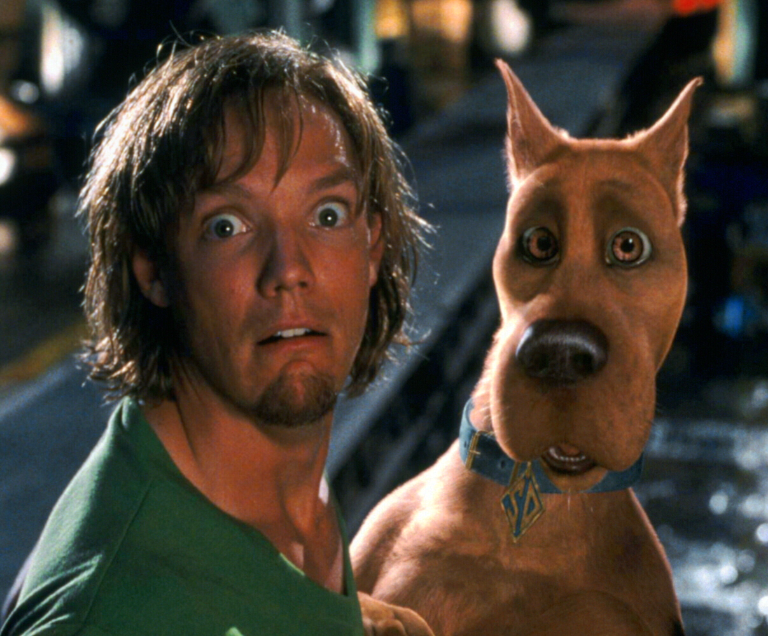
The meaning is quite straightforward. The gang, Mystery Incorporated, are attempting to solve a new mystery and seeking to deploy Scooby-Doo. They insist that Scooby will play a role in their success. Next, they address Scooby’s reluctant response:
Come on Scooby-Doo, I see you… pretending you got a sliver
But you’re not fooling me, cause I can see, the way you shake and shiver.
Scooby is so distressed about the idea of going on what he perceives to be a dangerous mission that he feigns an injury to escape their consideration. His shaking and shivering could be due to fear of the mystery as well as the fear that the gang might recognize his facade, as they do. And yet, despite Scooby’s blatantly terrified reaction, the gang persists with their proposal:
You know we got a mystery to solve,
So Scooby Doo be ready for your act. [Scooby Doo] Uh-uh Uh-uh
Don’t hold back!
And Scooby Doo if you come through
you’re going to have yourself a Scooby snack!
(That’s a fact!)
Scooby’s only spoken words throughout the song are his troubled “uh-uh”s, which are verbal disagreements with the offer. The gang still insists that Scooby should be ready despite his fears. To guarantee his participation, the gang offers him a Scooby Snack, a food item that, to date, is not FDA approved. There is no verbal confirmation in the song, but throughout the show, Scooby frequently agrees to work for the gang despite his initial concerns. This unusual tendency makes me wonder if the mysterious snacks are manufactured with addictive drugs. Nonetheless, the action can be classified as bribery. The song concludes:
Scooby-Dooby-Doo, here are you.
You’re ready and you’re willing.
If we can count on you Scooby Doo,
I know we’ll catch that villain.
It remains suspicious that after Scooby’s hesitant agreement, the gang must assure him of his readiness and willingness to participate, suggesting that they are attempting to convince him that he’s truly ready, even though he doesn’t feel that way. They also avoid liability by reminding him that even if something goes wrong, he agreed to their terms. The gang leaves a final, pressuring message that they are only guaranteed to succeed if Scooby can carry his weight.
Without a doubt, Mystery Incorporated’s recruitment tactics are riddled with manipulation, but to be precise, can we confidently claim that it violates fair trade practices? In 2001, the international Fair Trade movement defined fair trade as “a trading partnership, based on dialogue, transparency and respect, that seeks greater equity in international trade.” How does Mystery Inc. perform with respect to these criteria?
Dialogue: The dialogue is heavily one-sided. The entirety of the song consists of pleas from the gang while Scooby only contributes the aforementioned four words of disagreement: “Uh-uh, uh-uh.” Again, the show itself provides more depth to their conversations than the theme song, and in most cases, Scooby does provide verbal agreement. But this only occurs after bribery involving the questionable Scooby Snacks. This manipulation results in a poor quality of dialogue.
Transparency: The song provides no specific information about the danger of the task, due to it being a theme song and therefore understandably vague. Typically, Scooby is aware of the situation just as much as the rest of the gang, so in that sense, there is nothing to be transparent about. Everyone is equally aware of the situation.
Respect: The gang does not provide protection, safety equipment, or anything else that might suggest the slightest bit of consideration for Scooby’s well-being. They manipulate him without regret and invalidate his concerns. Additionally, Scooby’s labor is presumably unpaid, with the exception of the occasional Scooby Snack.
Across all criteria, Mystery Incorporated performs poorly (maybe except transparency, as they do not try to mask the fact that they have severely limited information to be transparent about). Of course, their actions may go unnoticed because fair trade principles are observed among humans, and although he may act humanlike, Scooby is merely a dog who engages in humanlike transactions. One might find it worthwhile to consider this: how would the legendary series be perceived if Scooby-Doo were human?
Featured image courtesy of Scooby-Doo on IMDb
Leave a Reply